






Ornate Wood Pedestal
An ornate wood pedestal brings architectural weight and sculptural presence to a room, lifting a bronze or a vase into the light.
Ornate Wood Pedestal
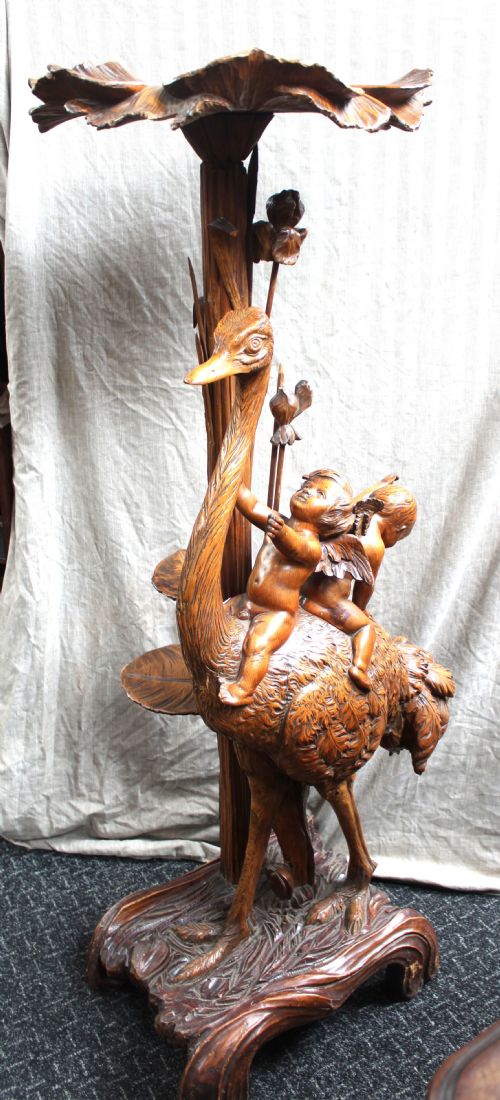
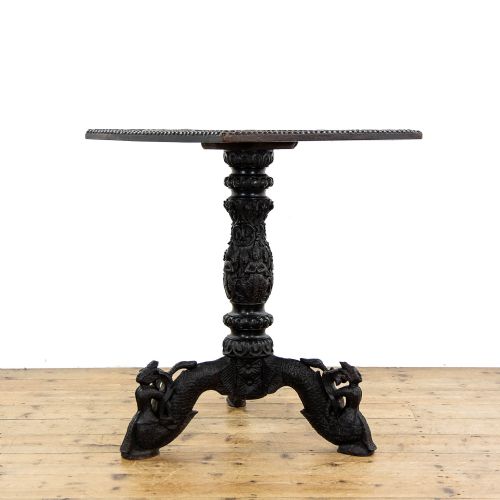
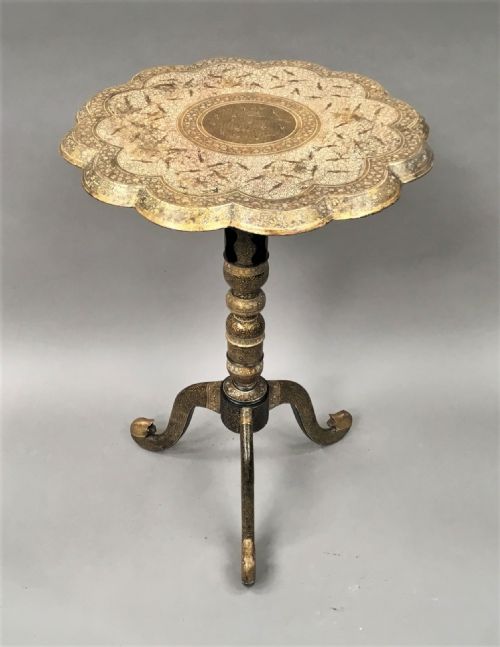
An ornate wood pedestal takes many forms across the nineteenth and early twentieth centuries, appearing as tall plant stands, torchere columns, and sculptural supports for sculpture or lamps. The examples seen here lean towards regional revival styles and colonial workshops, spanning Italian, Anglo-Indian, and French designs.
Buyers seeking this form will find pieces functioning primarily as display surfaces or column supports rather than simple furniture. They elevate objects within a domestic scheme, using height and carved detail to draw the eye.
The material vocabulary relies heavily on dense timbers and gilded surfaces, often pairing carved structural legs with contrasting table tops made of marble, alabaster, or inlaid stone.
How they were made
Cabinet makers utilised dense hardwoods such as mahogany, teak, padauk, and oak to withstand deep hand-carving without losing structural integrity. These timbers were turned on lathes or shaped by hand to create fluted columns, scrolling supports, and figural bases.
Decorative surface treatments set these pieces apart, employing heavy gilding, gold leaf, ormolu mounts, and detailed polychrome paintwork. Stone elements like marble and pietra dura inlays were meticulously fitted into timber frames to create contrasting display surfaces.
Ornate Wood Pedestal Retail Price Guide 2026
Typical asking prices for ornate wood pedestal among the pieces listed under this phrase on Sellingantiques today, from the lower quarter to the upper quarter. They describe what is for sale here now, not the wider market.
The listings show a strong presence of nineteenth-century Anglo-Indian and Italian pieces, frequently employing mahogany, teak, marble, and giltwood.
What varies in quality
The depth and ambition of the carving determine the upper tier of the range, separating generic turned columns from pieces boasting sculptural figures, dolphins, or intricate foliage. Crisp undercut work demonstrates the skill of the hand that shaped the timber.
The integration of mixed media dictates the distinction between standard items and exceptional examples. Superior pieces combine fine carved timber with high-grade marble tops, quality ormolu mounts, or precise pietra dura inlay rather than simple painted decoration.
The Ornate Wood Pedestal Glossary
- Torchere
- A tall standing column or pedestal designed specifically to hold a light or a decorative vessel. They originated to illuminate dark corners before electric lighting.
- Pietra dura
- An inlay technique using cut and fitted polished coloured stones to create geometric or pictorial designs. It appears frequently on Italian tabletops and pedestals.
- Ormolu
- Gilded bronze mounts applied to furniture and wooden pedestals for decorative contrast. The technique involves treating brass or bronze with a mercury-gold amalgam.
- Padauk
- A heavy tropical hardwood valued for its deep reddish hue and durability. It was frequently utilised in colonial cabinet making, particularly in Anglo-Indian pieces.
- Giltwood
- Timber that has been coated with a thin layer of gold leaf or gold paint. This finish catches candlelight and natural illumination in formal reception rooms.
Ornate Wood Pedestal: Frequently Asked Questions
What is an ornate wood pedestal used for?
These pieces serve as elevated display platforms for heavy decorative items, table lamps, bronze figures, or large floral arrangements. They bring height variation to room layouts.
Historically, tall stands held candles or oil lamps to light dark corners, evolving later into purely decorative furniture for sculpture and pot plants.
How do I identify the period of a pedestal?
Dating relies on combining the timber species, the carving style, and the construction methods underneath the top. Nineteenth-century examples often display deep hand-carving and regional revival influences.
Revival styles draw on Italian Renaissance or French aesthetics, while colonial workshops utilise dense local timbers like teak and padauk combined with traditional European forms.
Where should I place a pedestal in a room?
A tall torchere or plant stand works best in an empty corner, beside a fireplace, or framing a doorway where it creates vertical interest. Ensure the base sits level on the floor so heavier items remain stable.
Because many pieces feature detailed carving or painting on all sides, they can stand away from the wall rather than being pushed flat against skirting boards.
Are marble tops original to these stands?
Many nineteenth-century stands incorporate inset marble, alabaster, or pietra dura tops to provide a cool, heavy surface for plants and vases. These stone inserts were chosen to resist water damage from watering urns and planters.
Inspecting the rebate beneath the top reveals whether the stone sits flush in timber built specifically to hold its weight from the workshop's creation.