





Ornate Study Table
An ornate study table brings historical character and practical workspace together, offering distinct period charm for any home office.
Ornate Study Table
When you search for an ornate study table, you encounter a curated selection of desks and writing tables spanning the Victorian, nineteenth century, and early twentieth century periods. These pieces serve as functional workstations while showcasing elaborate historical design movements.
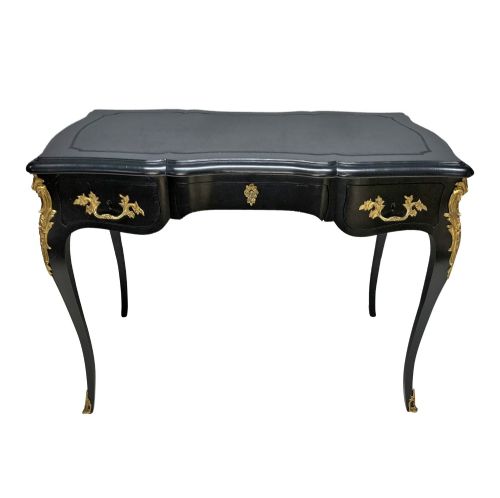
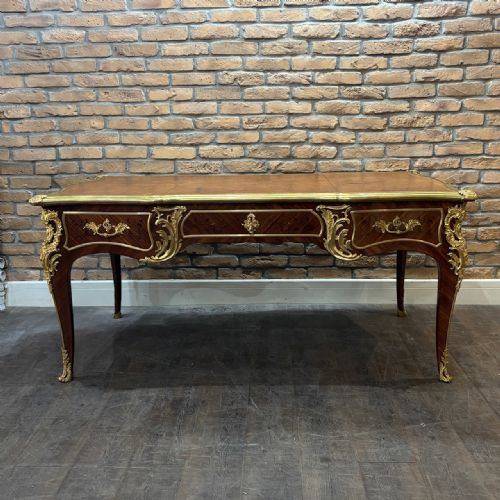
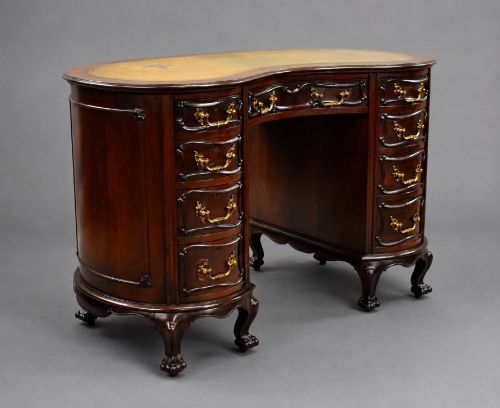
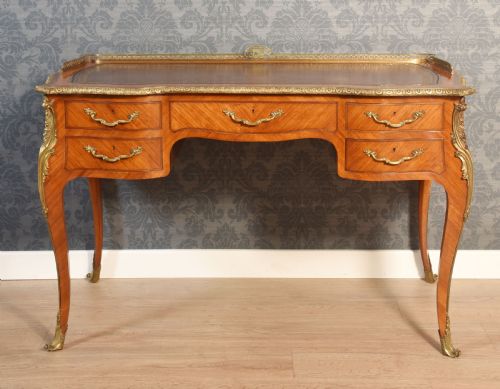
The most common forms on this page include mahogany kidney-shaped desks, partners desks, and bureau plat desks reflecting French and Louis styles. Each object provides a surface for reading and writing alongside decorative carvings or mounts.
Origins represented in these listings range from British Victorian workshops to French chateau aesthetic and Anglo-Indian colonial production. Buyers frequently select these tables to anchor a traditional study with distinctive period craftsmanship.
Materials and construction
Makers utilised dense hardwoods such as mahogany, kingwood, and lacquered wood to build the foundational frames of these desks. These timbers were selected for their durability and capacity to take intricate hand carvings.
Surface details often incorporate contrasting elements, including leather writing inserts, brass fixtures, and ormolu mounts. These decorative accents were cast, chased, and fitted by hand to enhance the visual weight of the furniture.
Ornate Study Table Retail Price Guide 2026
Typical asking prices for ornate study table among the pieces listed under this phrase on Sellingantiques today, from the lower quarter to the upper quarter. They describe what is for sale here now, not the wider market.
Desk lamps by Wild and Wessel sit alongside these writing tables, proving that nineteenth-century scholars needed proper illumination just as much as good timber.
Assessing quality and craftsmanship
Quality in these desks rests upon the crispness of the hand-carved detail and the precision with which decorative ormolu mounts are fitted to the wood. Superior examples display fluid lines in their Louis styles and seamless integration of leather inserts.
The structural integrity of the timber framing and the preservation of original patination distinguish finer items from standard productions. A higher standard of execution is evident where drawer construction utilises traditional joinery rather than modern fasteners.
The Ornate Study Table Glossary
- Bureau Plat
- A formal freestanding writing desk, typically featuring a rectangular top inset with leather and multiple drawers along the frieze. This French form often displays gilt bronze mounts.
- Ormolu
- Gilt bronze ornamentation applied to furniture and lamps during the eighteenth and nineteenth centuries. The technique involves creating an amalgam of mercury and gold.
- Partners Desk
- A large double-sided desk designed for two people to work opposite one another, featuring drawers and cupboards on both faces. These pieces were standard in nineteenth-century offices.
- Kidney Shaped Desk
- A writing table with a curved, kidney-shaped top designed to wrap partially around the user. This configuration became popular during the Victorian era for boudoirs and private studies.
Ornate Study Table: Frequently Asked Questions
What is a bureau plat?
A bureau plat is a freestanding French writing desk characterised by a leather-lined top and multiple frieze drawers. These tables are finished on all sides so they can sit in the middle of a room.
Originating in France, they often feature cabriole legs and ornamental metal mounts that reflect Louis revival styles.
How do I use a partners desk?
A partners desk is built with storage and workspace accessible from both sides, making it ideal for placement in the centre of a large room. Two people can sit opposite each other and utilise the drawers simultaneously.
These desks were historically used in legal and banking offices where associates shared a single workspace.
What woods are used on these desks?
Cabinet makers utilised structural timbers like mahogany and oak for strength, while applying decorative veneers such as kingwood to exterior surfaces. Lacquered wood and carved detailing are also common across nineteenth-century examples.
The choice of material typically reflects the period and the regional workshop tradition of the maker.
How do I care for leather desk inserts?
Leather writing surfaces require gentle cleaning with a slightly damp cloth followed by a suitable leather conditioner to prevent drying and cracking. Avoid using harsh chemical cleaners or excess water on the hide.
Protecting the leather from direct sunlight helps preserve the colour and original gilding tooling along the edges.