



Ornate Storage Chest
An ornate storage chest holds your belongings securely while bringing centuries of craftsmanship and rich material texture directly into a room.
Ornate Storage Chest
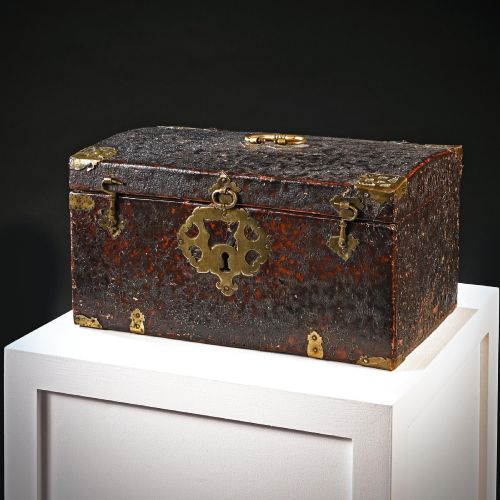
An ornate storage chest encompasses a wide variety of lidded trunks, blanket boxes, commodes, and small decorative caskets designed to hold precious items or garments. The pieces span from the late seventeenth century through the Victorian era and into the early twentieth century, reflecting diverse domestic and global traditions.
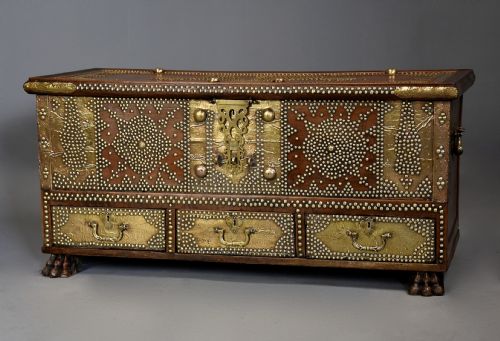
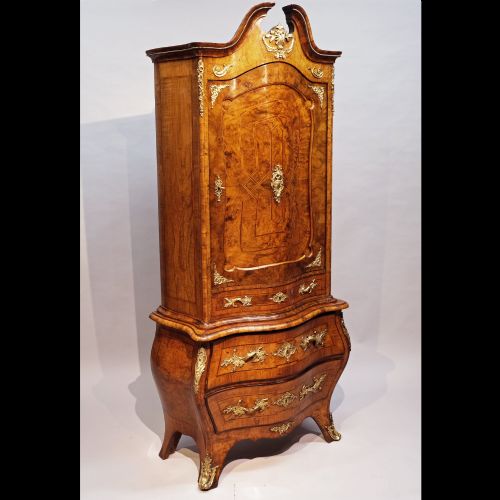
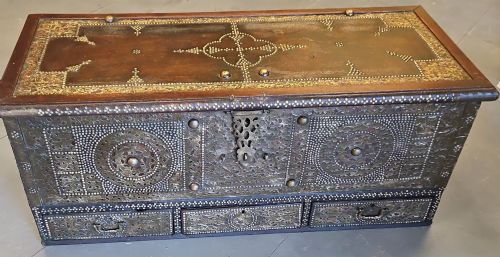
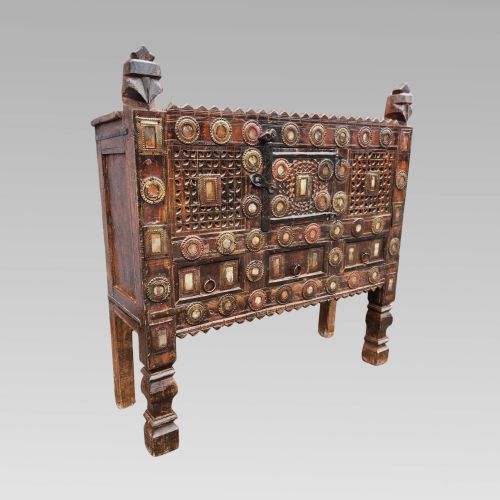
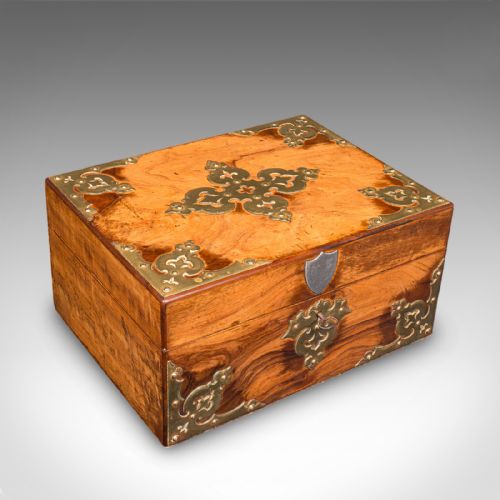
The selections available here range from substantial eighteenth-century oak dome-top coffers and seventeenth-century Italian walnut cassones to intricately carved Indian dowry chests and Zanzibar traders chests. Smaller companions such as tea caddies, jewellery boxes, and sewing cases frequently appear alongside larger case furniture like cabinets on chests.
Regional origins shape the distinct character of these items, showing influences from Anglo-Indian, Dutch Colonial, French, German, and Middle Eastern workshops. Buyers will frequently encounter hardwood structures enhanced by specialised regional joinery, surface carving, and applied metalwork.
Materials and construction
Makers utilised a robust selection of timbers including oak, walnut, burr walnut, teak, rosewood, sandalwood, and assorted hardwoods to build the primary carcass and panels of each chest or box. These woods were chosen for their durability and grain pattern, forming a solid foundation for subsequent surface decoration.
Metal embellishments play a defining structural and decorative role, featuring heavily in pieces bound with brass studs, iron mounts, and brass banding. Surfaces were further enriched through intricate wood carving, gilt decoration, marquetry inlay, leather work, and lacquering techniques.
Ornate Storage Chest Retail Price Guide 2026
Typical asking prices for ornate storage chest among the pieces listed under this phrase on Sellingantiques today, from the lower quarter to the upper quarter. They describe what is for sale here now, not the wider market.
Listings feature items spanning the 17th, 18th, and 19th centuries, alongside early 20th-century pieces originating from Britain, Europe, India, and the Middle East.
Markers of distinction
Superior examples demonstrate exceptional depth and precision in hand-carved ornamentation, such as the elaborate figural work found on Continental commodes or the intricate relief carving on Burmese and Indian boxes. The integrity of the original hardware - including hand-beaten brass studs, working locks, and hinges - distinguishes finer workshop production from standard utility items.
The choice of premium veneers like burr walnut or exotic rosewood, combined with meticulous marquetry inlay, elevates the visual weight of a cabinet or tea caddy. Harmony between the timber frame and its decorative metal or gilt additions indicates superior regional craftsmanship.
The Ornate Storage Chest Glossary
- Cassone
- A traditional Italian chest, often heavily carved or gilt-decorated, historically used for storing household valuables or wedding trousseaux.
- Commode
- A low chest of drawers or cabinet on legs, originating in France during the seventeenth century and developing diverse regional forms across Europe.
- Marquetry
- The art of applying pieces of veneer to a structural structure to form decorative patterns, pictures, or floral designs.
- Casket
- A small, highly decorated box or chest intended for holding jewellery, letters, or precious personal objects.
- Dowry chest
- A large storage trunk created to hold household goods and textiles brought by a bride to her marriage.
Ornate Storage Chest: Frequently Asked Questions
How do I care for an antique wood chest?
Keep wooden surfaces away from direct heat sources and strong sunlight to prevent the timber and veneers from drying out or splitting. Dust regularly with a soft, dry cloth and apply a quality wax polish sparingly when the wood appears dry.
Ensure that brass or iron mounts remain dry to avoid tarnishing or oxidation. Checking the environmental humidity in your room will preserve both the structural joinery and the decorative metalwork.
Where should I place a large storage chest?
Large chests and commodes anchor hallways, living rooms, and bedrooms effectively while providing functional storage for blankets, linens, or bulky items. Their decorative fronts and lids make them suitable as standalone focal points against plain walls.
Ensure there is adequate clearance around the piece for lifting lids or pulling out drawers comfortably. Smaller caskets and boxes sit well on tabletops, sideboards, and desk surfaces.
How can I tell the age of a trunk?
Examine the construction methods, tool marks on the interior timber, and the style of the hardware for clues regarding the period of manufacture. Hand-cut dovetails, forged iron hinges, and period-specific decorative motifs like Gothic Revival tracery or Regency brass inlay provide reliable dating evidence.
Compare the timber species and patination against known examples from specific regions such as nineteenth-century Zanzibar or seventeenth-century Europe.
What is the difference between a coffer and a commode?
A coffer is typically a heavy, lidded box or chest primarily designed for secure storage and transport, often featuring a hinged top and solid oak or hardwood construction. They date back centuries as fundamental household storage.
A commode is constructed with pull-out drawers and sometimes doors, standing on legs or a plinth, and developed primarily for domestic convenience in European settings during the eighteenth and nineteenth centuries.