


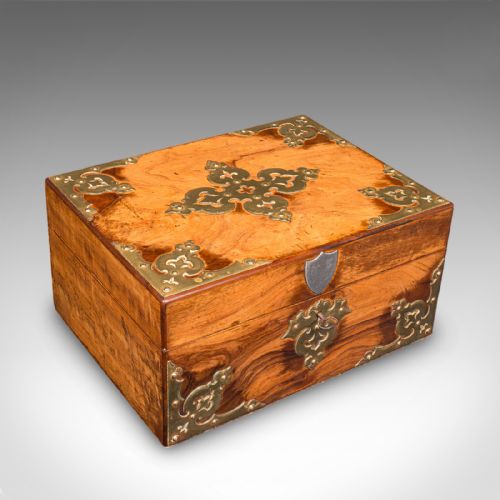


Ornate Storage Box
An ornate storage box brings heavy timber and elaborate metalwork together to secure valuables in plain sight.
Ornate Storage Box
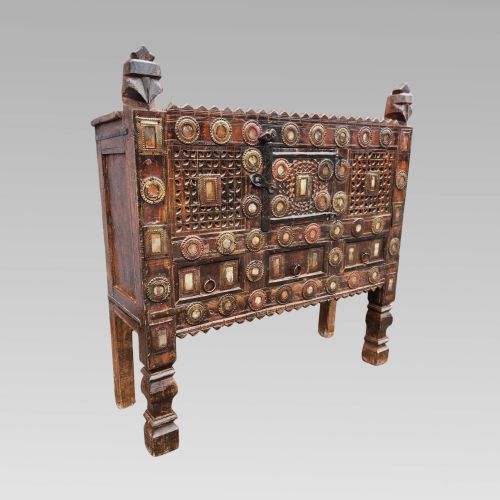
The ornate storage box covers a broad spread of containers designed to hold everything from jewellery to dowries, drawing on regional styles from Britain, Europe, India, and the Middle East. When searching for an ornate storage box, collectors encounter everything from small tabletop cabinets to large trade chests and travelling trunks.
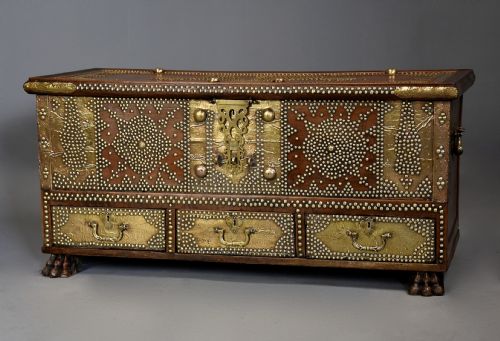
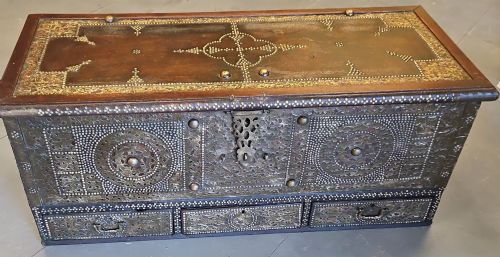
Victorian and nineteenth-century examples dominate the selections, particularly those featuring brass studwork, intricate carving, or marquetry inlay. Pieces range from tabletop sewing cases and tea caddies to substantial Dutch Colonial hardwood caskets and Zanzibar traders chests.
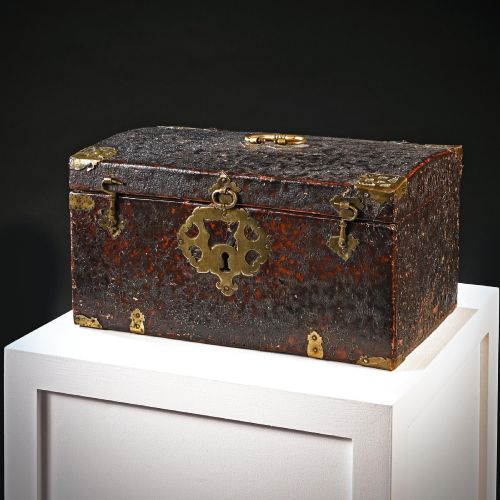
Earlier centuries appear through seventeenth-century leather-bound travelling boxes and walnut cassone chests, alongside eighteenth-century Danish oak coffer forms. These vessels served domestic and travel purposes alike, utilising sturdy construction methods suited to holding prized possessions.
Construction and materials
Wood forms the primary body of these containers, utilising native and exotic timbers including oak, walnut, teak, rosewood, sandalwood, and general hardwoods. Artisans shaped these materials into dome-top coffers, rectangular caskets, and tabletop cabinets.
Metalwork provides both structural reinforcement and decoration, deploying brass mounts, studs, copper accents, and iron bindings. Inlaid brass, marquetry, carving, and lacquer work complete the surface ornamentation found across these pieces.
Ornate Storage Box Retail Price Guide 2026
Typical asking prices for ornate storage box among the pieces listed under this phrase on Sellingantiques today, from the lower quarter to the upper quarter. They describe what is for sale here now, not the wider market.
Materials span brass, wood, teak, iron, metal, hardwood, walnut, and oak across multiple centuries.
Standards of craftsmanship
Quality rests on the precision of the joinery and the depth of the decorative programme, whether expressed through tight dovetail joints or deeply carved teak panels. Finer examples integrate metal mounts seamlessly into the timber framework rather than relying on surface application alone.
The choice of materials dictates the upper tier of the range, marked by dense exotic hardwoods, intricate rosewood marquetry, and complex brass inlay. Condition of the original surface finishes, interior linings, and metal hardware further separates standard utility trunks from exceptional decorative pieces.
The Ornate Storage Box Glossary
- Cassone
- A large Italian chest, typically made of walnut and heavily decorated, used historically for storing household goods and valuables.
- Marquetry
- The art and craft of applying pieces of veneer to a structure to form decorative patterns and pictures.
- Casket
- A small, often ornate box or chest used for holding jewellery, documents, or other precious items.
- Dowry chest
- A large storage container prepared for a bride, often featuring elaborate regional carving and metalwork.
- Tea caddy
- A small box designed specifically for storing dry tea leaves securely, often featuring internal compartments.
Ornate Storage Box: Frequently Asked Questions
What were these boxes used for?
These vessels held personal valuables, documents, tea, sewing equipment, or textiles depending on their scale and internal layout.
Larger versions functioned as travel trunks or dowry chests, while smaller caskets sat on tabletops to safeguard jewellery.
How do I date a wooden box?
Dating relies on examining the timber species, construction joints, fixings, and stylistic motifs present on the exterior.
Earlier pieces often display hand- cut joinery and native oak or walnut, while nineteenth-century examples frequently incorporate exotic woods and machine-made components.
Where were these decorative boxes made?
Production spanned British workshops, European centres, and colonial outposts across India, Burma, and the Middle East.
Traders and travellers commissioned local artisans abroad, resulting in distinct regional styles like Anglo-Indian carvings and Zanzibar brass studwork.
How do I care for antique wood?
Keep wooden boxes away from direct sunlight and extreme temperature fluctuations to prevent timber splitting or warping.
Apply a light application of suitable wax polish occasionally to nourish the grain without building up heavy residues.