



Ornate Silver Dishes
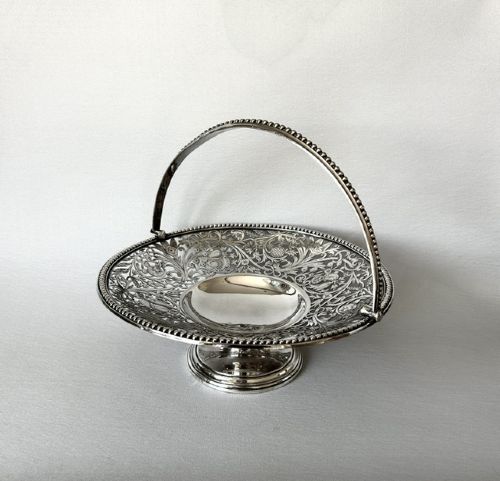
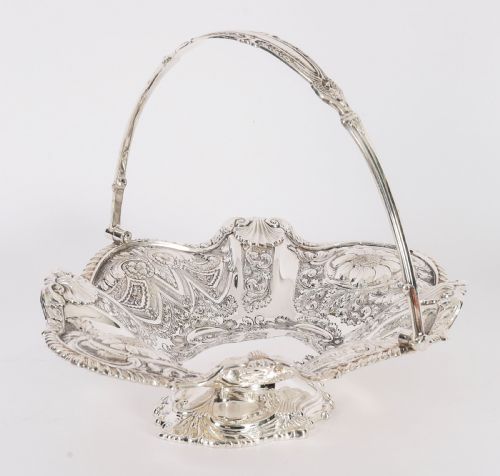
These ornate silver dishes bring heavy Victorian and Edwardian weight to a table, offering pierced fruit baskets, heavy chargers and small potpourri boxes.
Ornate Silver Dishes
Ornate silver dishes encompass a variety of forms found on this page, including fruit baskets, decorative bowls, sugar bowls, chafing dishes, and potpourri boxes. Buyers searching for these items encounter diverse historical periods spanning the nineteenth century, the Victorian era, the Edwardian period, and mid century examples.
The objects frequently display revivalist aesthetics such as Rococo Revival, Baroque Revival, and Regency styles alongside Art Nouveau and Continental designs. Many of these pieces serve specific functions for food and table presentation, ranging from large sideboard chargers and bread baskets to small preserve dishes and wine tasters.
Origins vary widely across the selection, featuring English London hallmarks, Thai solid silver work, Spanish and German craftsmanship, and Italian food warmers. Forms include footed bowls, pierced vessels, and handled swan dishes that combine utility with decorative metalwork.
How they were made
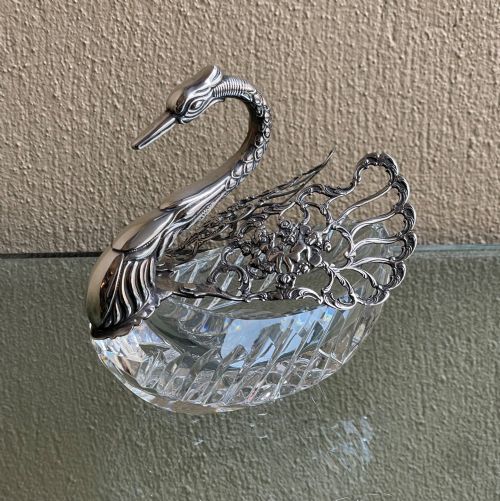
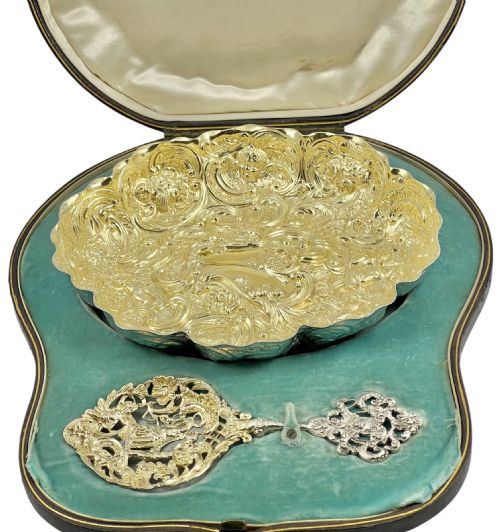
Combination pieces integrate cut glass and cranberry glass inserts held within metal mounts or frames. Gilt finishes add a layer of gold to silver surfaces, particularly on interior elements of sugar bowls and presentation dishes.
Ornate Silver Dishes Retail Price Guide 2026
Typical asking prices for ornate silver dishes among the pieces listed under this phrase on Sellingantiques today, from the lower quarter to the upper quarter. They describe what is for sale here now, not the wider market.
Swans make multiple appearances here, taking the form of cut glass and silver serving dishes designed to glide across the dining table.
What varies in quality
The depth and clarity of hand-wrought repousse relief work separate standard production from superior pieces, particularly on large chargers and fruit baskets where figural battle scenes or floral motifs demand skilled chasing. Weight and gauge of the metal also dictate structural integrity, distinguishing solid silver and heavy plate from lighter constructions.
Artisanal execution in pierced patterns and the integration of mixed materials, such as fitted cut glass or carved horn, influence the sophistication of the dish. Maker attribution and documented provenance from established firms add historical weight to the physical manufacture.
George W. Scott & Sons Ltd·Gioielleria Agliardi Cassino·Dan Holy
The Ornate Silver Dishes Glossary
- Silver plate
- A layer of silver fused or electroplated onto a base metal core such as copper or nickel silver. This technique provides the visual appearance of solid silver at a lower production cost.
- Silver gilt
- Silver that has been coated with a thin layer of gold on its surface. It protects the underlying silver from tarnish and creates a rich two tone effect inside bowls and dishes.
- Repousse
- A metalworking technique where the artisan hammers the metal from the reverse side to form a raised design in relief. It defines the ornate surface texture of many nineteenth century baskets and chargers.
- Pierced
- Metalwork that has been cut through to create openwork patterns and decorative lattices. This method lightens the visual mass of large fruit baskets and bread bowls.
- Wine taster
- A small, shallow silver vessel with a handle, traditionally used by merchants and connoisseurs to sample wine. They often feature dimpled surfaces that reflect candlelight to inspect colour and clarity.
Ornate Silver Dishes: Frequently Asked Questions
How were ornate silver dishes used?
These dishes served functional roles during formal dining and household administration, holding fruit, bread, sugar, and preserves at the table. Covered boxes and potpourri baskets sat in reception rooms to scent the air or contain small items.
Larger pieces like chafing dishes and food warmers kept courses hot during extended meals, while sideboard chargers displayed wealth and craftsmanship on dining room furniture.
How do I care for silver gilt dishes?
Silver gilt requires gentle maintenance to preserve the delicate gold layer over the silver base. Avoid harsh commercial dips and abrasive polishes that strip the gilding.
Use a soft cloth with warm soapy water for cleaning, dry thoroughly immediately afterward, and store away from damp environments to prevent oxidation.
What is the difference between solid silver and silver plate?
Solid silver consists of uniform precious metal throughout the piece, such as sterling silver or higher purity standards. It holds intrinsic material value and develops a distinct patina through decades of handling.
Silver plate applies a thin coating of silver over a base metal foundation, offering the lustre of silver without the heavier weight and cost of solid construction.
How can I tell Victorian pieces apart from Edwardian ones?
Victorian items often lean into heavy revivalist aesthetics like Rococo and Baroque styles, featuring elaborate ornamentation, deep repousse work, and formal symmetry. The forms tend to be opulent and substantial.
Edwardian pieces frequently display lighter Art Nouveau influences, softer floral motifs, and more restrained geometric lines, reflecting changing tastes at the turn of the twentieth century.