



Ornate Side Chair
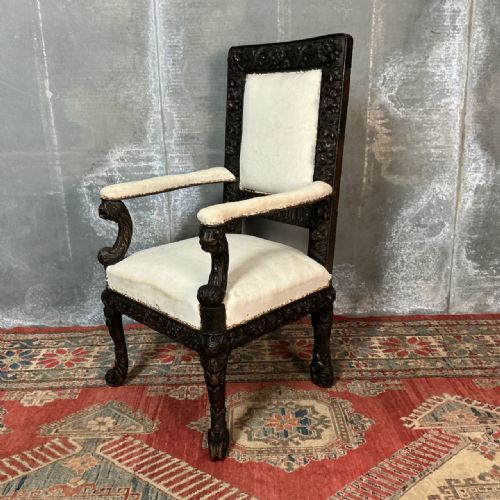
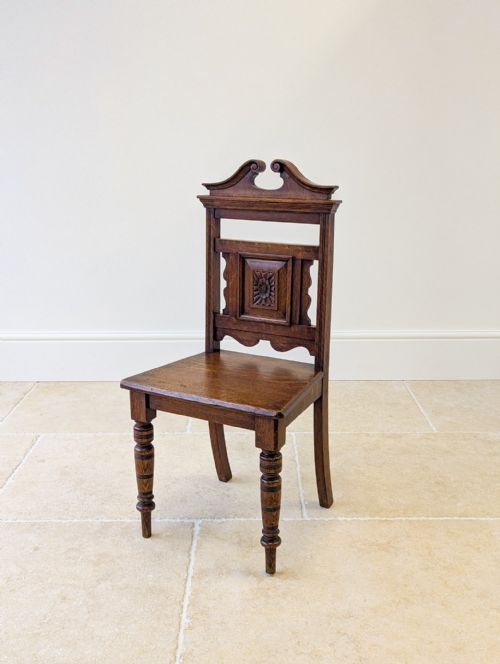
An ornate side chair brings historic carving and rich timber into a room, serving as both a functional seat and a striking decorative accent.
Ornate Side Chair
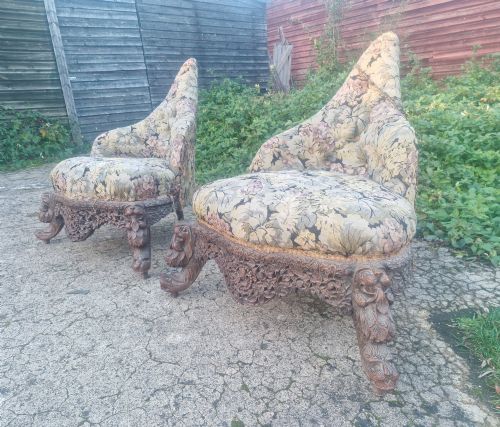
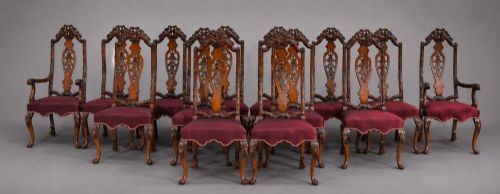
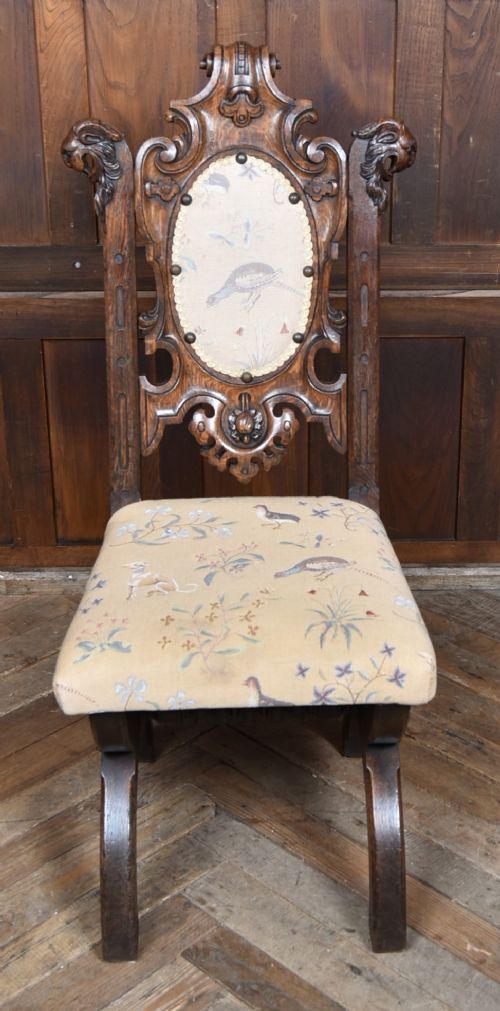
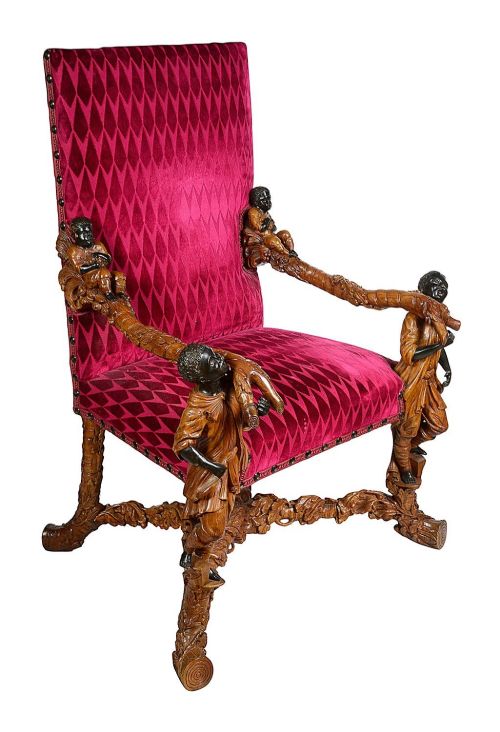
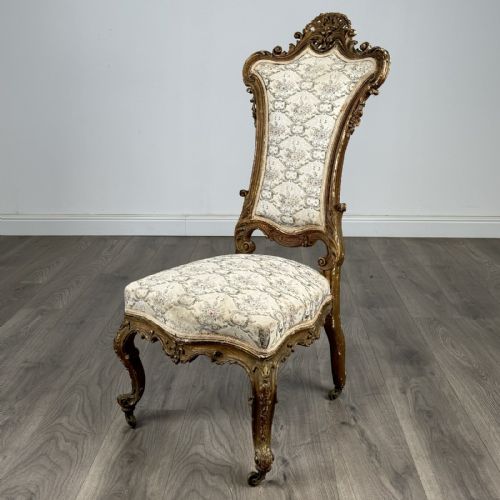
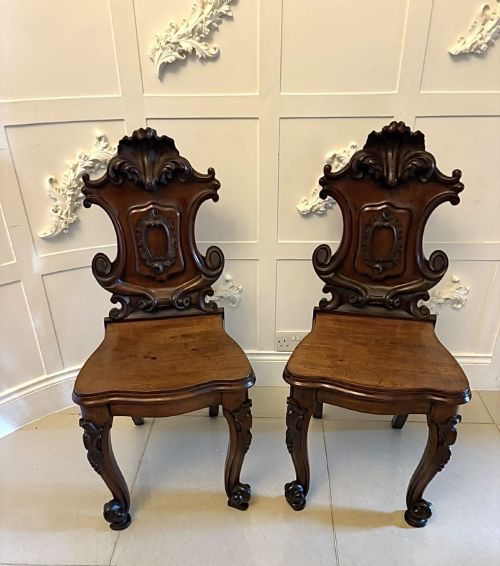
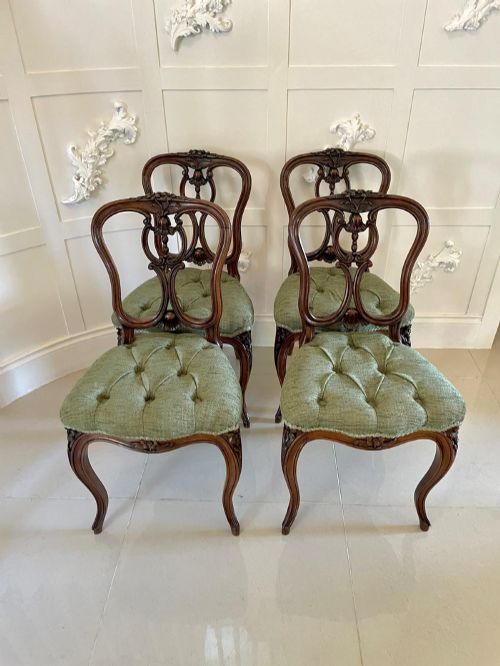
When you search for an ornate side chair, you find single seats and pairs shaped by revival movements and international craftsmanship across the eighteenth, nineteenth, and early twentieth centuries. These pieces appear as side chairs, hall chairs, salon chairs, and occasional chairs, reflecting diverse domestic and ceremonial functions.
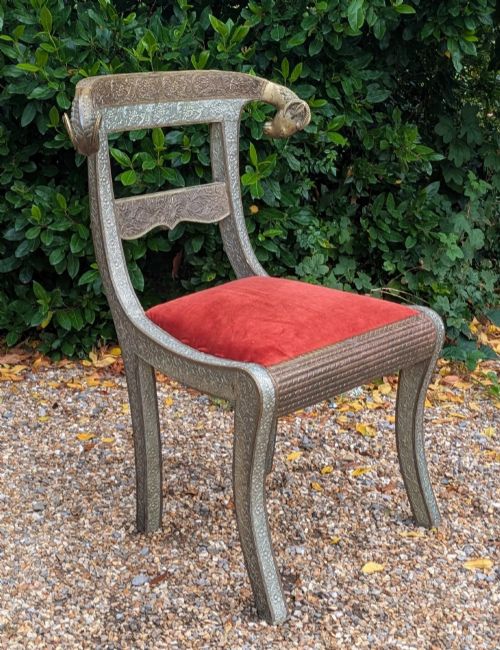
The material record on this page leans heavily toward carved walnut, oak, and mahogany, alongside exotic woods like padouk and teak. Many examples arrive with distinct regional detailing, spanning Anglo-Indian, Continental, and Victorian aesthetics.
Victorian and nineteenth-century examples dominate the selection, often displaying heavy relief carving, turned elements, and upholstered pads in velvet, fabric, or textile. Buyers encounter everything from formal parlour seating to rustic Black Forest and regional veranda chairs.
Materials and construction methods
Cabinetmakers built these chairs using dense hardwoods such as walnut, oak, mahogany, and rosewood, which accepted deep chisel work and intricate relief moulding without fracturing. Selected pieces incorporate giltwood surfaces, polished brass frames, or bone inlay to heighten the visual contrast against the timber.
Joinery combined traditional tenon and mortise framing with extensive hand carving, applied scrollwork, and marquetry. Upholstered variants integrated supportive webbing and horsehair stuffing beneath top layers of silk velvet, woven textiles, and plain fabrics.
Ornate Side Chair Retail Price Guide 2026
Typical asking prices for ornate side chair among the pieces listed under this phrase on Sellingantiques today, from the lower quarter to the upper quarter. They describe what is for sale here now, not the wider market.
One exceptional chair comes complete with a carved back showing a dancing bear, courtesy of the nineteenth-century Black Forest manner.
Distinctions in grade and execution
The standard of carving defines the upper tier of these chairs, separating mechanical, shallow impressions from deep, undercut relief work executed by skilled hands. Crisp detailing on acanthus leaves, animal figures, and human profiles indicates superior workshop training.
Structural integrity and timber selection further separate standard production from exhibition pieces. Sound joints, well-figured grains in the mahogany or walnut, and original brass or gilt highlights retain their presence through centuries of use.
The Ornate Side Chair Glossary
- Sgabello
- A Renaissance wooden chair featuring a box-like base or trestle supports and an ornately carved backrest. These forms frequently appear in Italian regional furniture.
- Giltwood
- Timber treated with a thin layer of gold leaf or metallic powder applied over a prepared ground. It provides a bright reflective finish on revival salon and hall seating.
- Marquetry
- Decorative veneer work arranged in pictorial or geometric patterns using various coloured woods. It often decorates the backsplats or seats of nineteenth-century walnut examples.
- Padouk
- A heavy, durable tropical hardwood with a reddish-brown tone used in Ceylonese and Indian decorative seating. Its dense grain allows for intricate relief carving.
- High-Back
- A chair style featuring an elongated vertical backrest designed to project above shoulder height. This form occurs frequently in seventeenth-century revival and Flemish designs.
Ornate Side Chair: Frequently Asked Questions
How do I use an ornate side chair in a modern room?
Place an ornate side chair in a hallway, bedroom, or corner to act as an architectural accent rather than primary seating. Their carved frames and distinct silhouettes contrast effectively against plain walls and contemporary interiors.
Keep the surrounding space uncluttered so the carved details on the timber or gilt surfaces remain visible. They function well as solitary focal points or paired beside a small table.
How do I identify a revival style?
Revival styles borrow motifs from earlier historical eras, such as the seventeenth-century Baroque, Rococo, or Italian Renaissance, but manufacture them during the nineteenth century. Look for machinery-assisted precision mixed with hand-applied relief carving that mimics older construction methods.
Examine the condition of the timber, the type of screws or fixings used, and the wear patterns on the feet. These physical traits help distinguish nineteenth-century interpretations from original period pieces.
How should I care for antique wood and upholstery?
Dust carved wooden frames regularly with a soft, dry cloth to prevent dirt from settling in the deep recesses of the relief work. Avoid harsh chemical cleaners and keep antique timber away from direct heat sources and strong sunlight.
Protect upholstered velvet and textile surfaces by vacuuming gently with a brush attachment on a low setting. Professional conservation ensures delicate fabrics and gilt finishes remain stable over time.