





Ornate Porcelain Clock
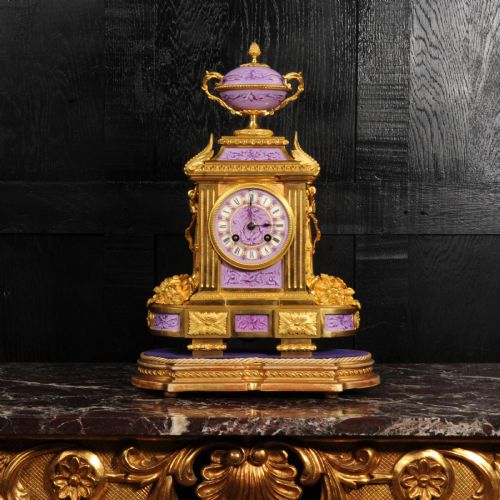
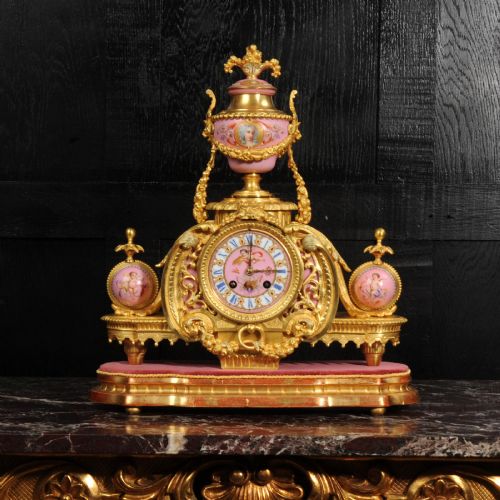
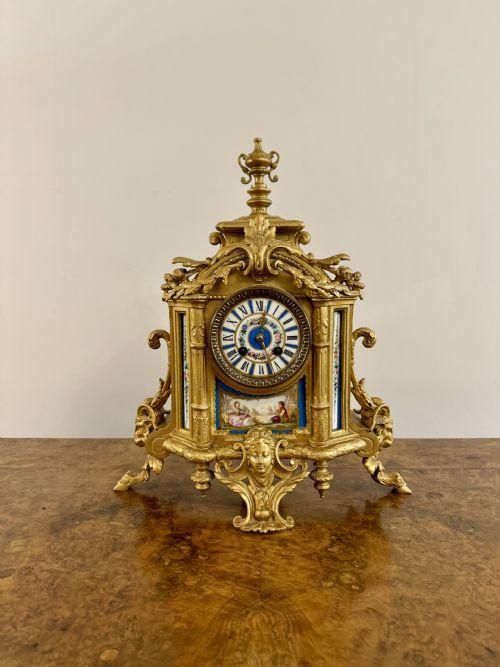
An ornate porcelain clock brings Victorian and 19th-century French display into a room through gilt bronze, ormolu, and hand-painted ceramic panels.
Ornate Porcelain Clock
When a buyer searches for an ornate porcelain clock, they find mantel clocks, clock garniture sets, boudoir clocks, and lyre clocks originating largely from nineteenth-century France. These pieces combine glazed ceramic bodies with cast metal mounts, often housing bell-striking movements designed to sit prominently on a fireplace mantel.
The most common examples on this page date from the 1850s to the 1890s, spanning the Victorian period and the French Second Empire. Makers incorporated Sèvres-style panels, enamel dials, and gilt bronze frames to satisfy a demand for elaborate interior decoration.
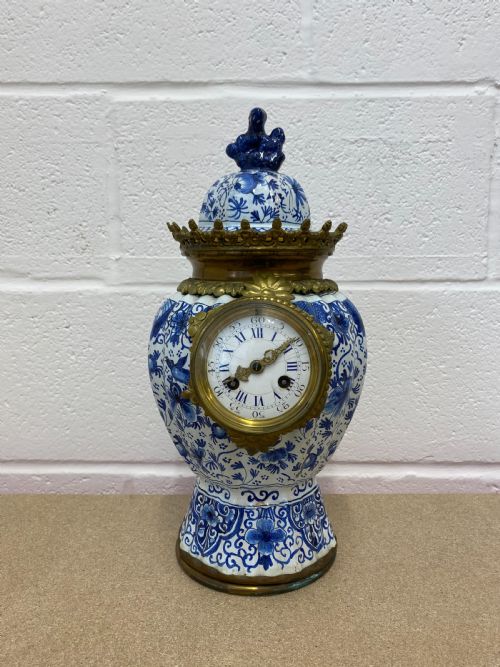
Regional variations appear alongside French production, including Delft pieces with lids and Vienna porcelain boudoir clocks. These variants offer distinct ceramic traditions while maintaining the elaborate decorative standards associated with the search phrase.
Materials and construction
Craftsmen built these clocks using porcelain bodies paired with ormolu, gilt bronze, and brass mounts. Glazed ceramic panels feature hand-painted scenes or floral motifs, framed by cast metal details that define the rococo revival and Louis XVI styles.
Movements were integrated with enamel dials and glass covers, occasionally protected beneath glass domes on wooden or velvet-lined stands. The combination of ceramic firing and metal casting required collaboration between bronze founders, porcelain painters, and clockmakers.
Ornate Porcelain Clock Retail Price Guide 2026
Typical asking prices for ornate porcelain clock among the pieces listed under this phrase on Sellingantiques today, from the lower quarter to the upper quarter. They describe what is for sale here now, not the wider market.
Periods represented span from the 1850s through to Edwardian production around 1900, including Victorian garniture sets.
Distinctions in quality
Quality rests in the crispness of the gilt bronze or ormolu casting and the fineness of the hand-painted porcelain panels. Clocks bearing the signatures of notable makers or maintaining matching garniture sets demonstrate higher standards of nineteenth-century production.
The integration of the movement within the ceramic and metal housing also separates standard pieces from finer examples. Fully restored mechanics and original enamel dials indicate careful preservation of the clock structure.
Achille Brocot·Japy Freres
The Ornate Porcelain Clock Glossary
- Ormolu
- Gilded bronze produced through a mercury amalgamation technique, frequently used for the ornate mounts on nineteenth-century French clocks. This finish provides a bright, lasting golden surface.
- Garniture set
- A matching centre clock accompanied by side pieces such as vases or candelabra, designed to sit together on a mantelpiece. These sets created a balanced decorative scheme in Victorian interiors.
- Lyre clock
- A clock shaped like the ancient musical instrument, typically featuring porcelain and ormolu mounts. The form gained popularity during the Louis XVI revival.
- Crystal regulator
- A mantel clock housed in glass panels that reveal the mechanical movement within. These pieces often feature enamel dials and delicate painted decoration.
- Sèvres style
- A term describing porcelain panels painted in imitation of the French royal factory's output. These panels usually display pastoral scenes or floral bouquets against coloured grounds.
Ornate Porcelain Clock: Frequently Asked Questions
What is a clock garniture set?
A clock garniture set includes a central mantel clock accompanied by matching decorative pieces, such as vases or urns, designed to display together.
These sets were arranged on fireplace mantels to create a symmetrical decorative display during the nineteenth century.
How do I care for an antique porcelain clock?
Keep the clock away from direct sunlight and dramatic temperature changes to protect the porcelain panels, enamel dials, and gilt surfaces.
Professional mechanical service ensures the gear trains and striking mechanisms continue to function properly over time.
Where were these clocks made?
The majority of these pieces originated in France during the nineteenth century, reflecting periods of revival including rococo and Louis XVI styles.
Additional examples emerged from regional workshops in Vienna and through Delft ceramic production.
What is an ormolu mount?
Ormolu refers to gilded metallic mounts cast in bronze or brass to adorn the porcelain bodies of these mantel clocks.
These mounts provided structural support while adding elaborate scrollwork and figurative details characteristic of Victorian design.