



Ornate Oak Mirror
An ornate oak mirror brings deep grain, carved relief, and heavy presence to a room, drawing the eye instantly.
Ornate Oak Mirror
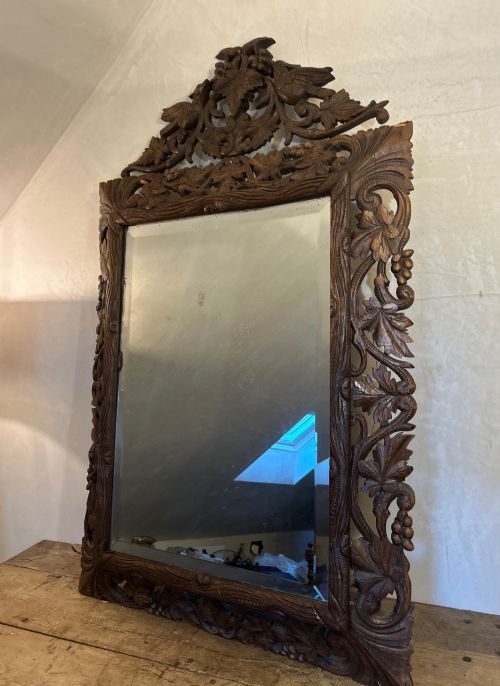
An ornate oak mirror stands as a substantial furnishing defined by heavy timber frames and deep relief carving. These pieces appear across various periods, from eighteenth-century examples to later twentieth-century interpretations.
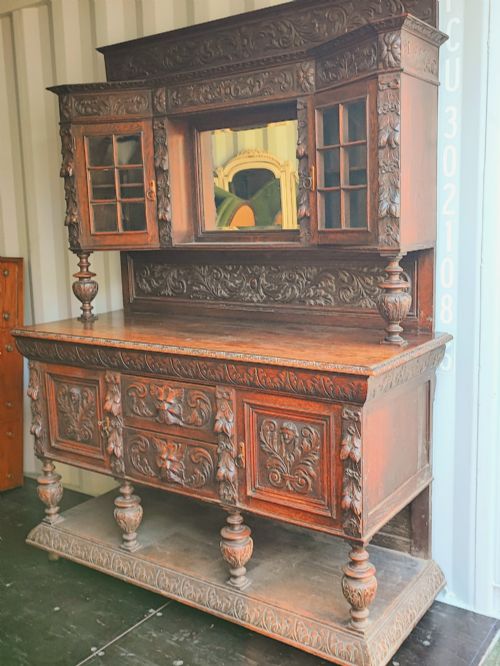
The most common version met on this page is the wall mirror or overmantel mirror framed in carved oak, frequently incorporating styles such as French Renaissance Revival and Jacobean Revival. Alongside pure mirrors, the selection includes related forms like oak sideboards, hall stands, and side cabinets featuring integrated mirror backs.
Origins span English and continental workshops, displaying regional preferences for dark timber, gesso details, and bevelled glass plates. Buyers encounter both compact wall-hanging formats and large architectural overmantels designed to anchor a principal reception room.
How they were made
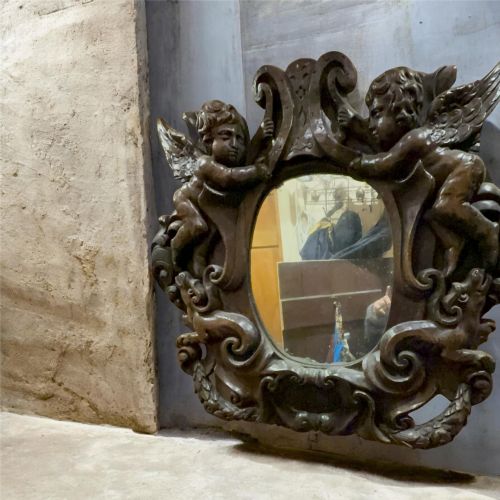
Makers built these frames using solid timber, predominantly oak, chosen for its strength and capacity to hold crisp, deep hand-carved decoration. Carvers worked directly into the wood to produce foliate scrolls, strapwork, and figural motifs characteristic of revivalist aesthetics.
Surfaces often combined exposed timber grain with applied gesso, gold leaf, or paint to highlight specific decorative elements. Original mirror plates were secured within the rebate using traditional backing boards, frequently retaining historic bevel edges and silvering variations.
Ornate Oak Mirror Retail Price Guide 2026
Typical asking prices for ornate oak mirror among the pieces listed under this phrase on Sellingantiques today, from the lower quarter to the upper quarter. They describe what is for sale here now, not the wider market.
A heavy oak frame often carries the quiet ghost of an old wall hook, suggesting it has watched the same parlour for generations.
What varies in quality
The depth and sharpness of the hand carving separate standard production from superior examples, as skilled carvers achieved three-dimensional relief with clean undercut details. Timber selection also dictates merit, with tightly figured grain and uniform colour holding greater visual weight than plain or patched boards.
Integration of secondary materials matters greatly, distinguishing pieces with original gilding, intact gesso ornament, and historic mirror plates from those with later replacements or heavy restoration.
The Ornate Oak Mirror Glossary
- Overmantel mirror
- A large mirror designed to hang specifically above a fireplace mantelpiece. These pieces often feature wide proportions and substantial decorative frames.
- Gesso
- A plaster-based mixture applied to wood frames to create a smooth surface for gilding or painting. Artisans carved intricate relief details directly into this ground layer.
- Bevel edge
- A sloping angle cut around the perimeter of the mirror glass plate. This technique catches the light and frames the reflection.
- Jacobean Revival
- A nineteenth-century design style emulating seventeenth-century English furniture. It utilises dark oak, geometric moulding, and strapwork carving.
- Foliate scroll
- A decorative carving motif shaped like curling leaves and vines. It appears frequently on the corners and crests of revival frames.
Ornate Oak Mirror: Frequently Asked Questions
Where should an ornate oak mirror be hung?
These mirrors suit principal reception rooms, hallways, and dining spaces where their substantial frames can command the wall. Overmantel versions belong above a fireplace, while wall-hung formats perform well opposite a light source to brighten the interior.
Because of their considerable weight, secure wall fixings into solid masonry or proper stud work are essential. Positioning them at eye level ensures the carved details and reflection function correctly within the room.
How do I identify the period of an oak frame?
Dating relies on examining the construction methods, joinery on the reverse, and the style of the carving. Eighteenth-century examples display hand-cut elements and older timber patination, whereas Victorian and later revival pieces often incorporate machine-sawn backing boards and distinct revival motifs.
Hardware such as screws, fixings, and the composition of the mirror plate itself offer further clues to age. Original mercury or early silvered glass shows characteristic ageing spots and uneven thickness.
How do I care for antique oak and glass?
Maintain the wood by dusting with a dry, soft cloth and occasionally applying neutral beeswax to nourish the dry grain. Avoid modern liquid polishes containing silicones that can degrade historic finishes.
Clean the mirror plate using a minimal amount of glass cleaner applied to the cloth rather than directly onto the glass, preventing moisture from seeping behind the frame rebate and damaging the silver backing.