





Ornate Metal Casket
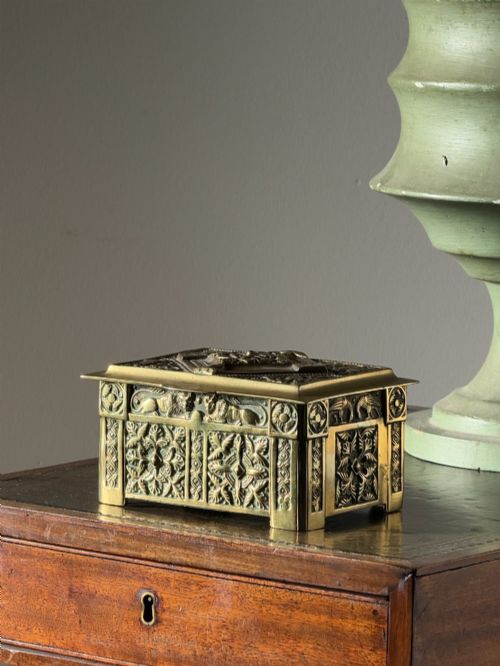
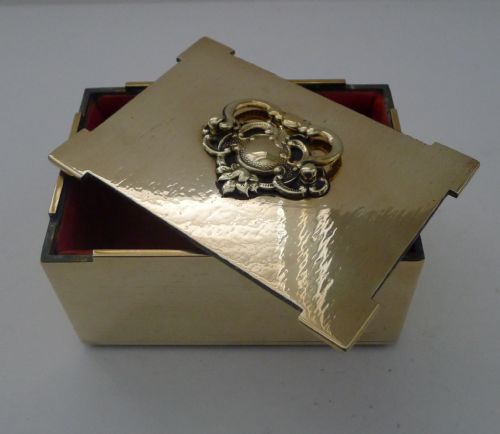
An ornate metal casket holds small treasures and brings heavy decorative presence to a surface, forged from cast brass, ormolu, and silvered metal.
Ornate Metal Casket
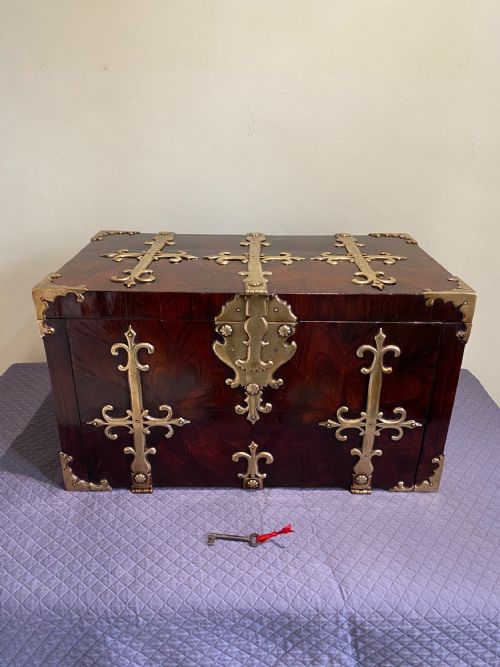
When you search for an ornate metal casket, you are looking at substantial storage vessels designed for jewellery and small valuables, often executed in heavy brass, bronze, or ormolu. These pieces range from nineteenth-century revival styles to seventeenth-century coffers, functioning as decorative display items as much as secure containers.
The versions most likely to be met on this page are nineteenth-century French and Italian examples, frequently featuring cast brass or gilt-metal surfaces. Alongside these, buyers encounter specialised forms such as pietra dura inlaid boxes and heavy German silver safes.
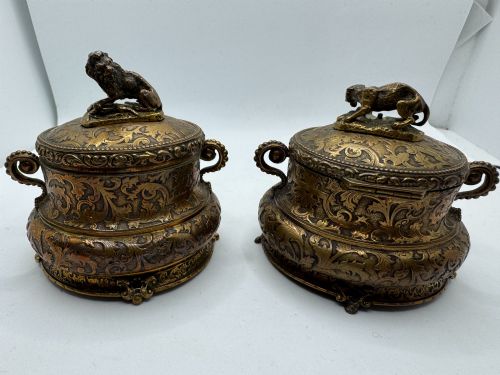
Makers and workshops utilised various revival aesthetics, spanning Victorian Gothic, Rococo, and French Renaissance Revival idioms. The scale shifts from small jewellery caskets with dog finials to large, impressive bronze boxes intended for prominent placement.
Materials and construction
Makers constructed these caskets using heavy cast brass, bronze, and gilt metal, often pairing the metalwork with contrasting natural materials like marble, slate, and kingwood. Surface enrichment involved silver plating, gilding, and the meticulous insertion of hardstone pietra dura panels.
Techniques relied heavily on metal casting, chasing, and stone inlay, allowing workshops to produce deeply textured surfaces and structural frames. Interiors frequently utilised fitted linings to protect contents, while structural assembly involved robust metal fasteners suitable for strongboxes and coffers.
Ornate Metal Casket Retail Price Guide 2026
Typical asking prices for ornate metal casket among the pieces listed under this phrase on Sellingantiques today, from the lower quarter to the upper quarter. They describe what is for sale here now, not the wider market.
Listings feature pieces spanning the seventeenth century through the early twentieth century, incorporating materials like marble, slate, and kingwood.
Assessing quality and execution
Quality in an ornate metal casket rests upon the crispness of the metal casting and the depth of the chased detail. Heavy, well-finished bronze or ormolu displays sharp architectural motifs and securely mounted decorative elements rather than soft, blurred edges.
The integration of secondary materials like pietra dura or kingwood distinguishes superior examples from standard production. Precision in stone fitting and the weight of the overall construction separate ambitious nineteenth-century revival pieces and earlier safes from simpler commercial boxes.
Walker and Hall·AB Paris
The Ornate Metal Casket Glossary
- Ormolu
- Gilt bronze, where a finely ground gold-mercury amalgam is applied to a bronze object and heated. This technique produces a durable, rich golden surface finish seen on many nineteenth-century French boxes.
- Pietra dura
- An artistic technique using cut and fitted, highly polished coloured stones to create images or geometric patterns. These panels frequently form the lids of Italian jewellery caskets.
- Coffer
- A strongbox or chest traditionally used for holding valuables and money. Earlier seventeenth-century iterations utilised heavy iron or silver construction for security.
- Finial
- A relatively small decorative ornament that terminates the top of an object. Examples on this page include sculptural dog figures mounted on casket lids.
- Kingwood
- A dense, richly figured timber native to Brazil, prized by cabinetmakers. It appears as a contrasting structural material alongside metalwork on period coffers.
Ornate Metal Casket: Frequently Asked Questions
What were ornate metal caskets used for?
These boxes served primarily to secure and display high-value personal possessions, including jewellery, coins, and small documents. Their heavy construction provided physical security while their decorative finishes suited prominent placement in domestic interiors.
Over time, their role shifted toward decorative display as craftsmanship and revival styles gained popularity among collectors.
How do I date a metal casket?
Dating relies on identifying stylistic revival periods, construction methods, and material choices recorded across the piece. Nineteenth-century examples often display Rococo or Renaissance revival motifs, whereas seventeenth-century pieces show heavier defensive construction.
Maker marks, where present, help anchor the production era to specific active decades of a firm.
Are these caskets suitable for daily use?
Most period pieces function well for storing small modern items like jewellery or keepsakes. Their robust metal frames and internal compartments remain practical for desktop or dressing table placement.
Care should be taken with delicate historic linings and exterior gilt surfaces during regular handling.
How do I clean an ormolu casket?
Maintenance requires gentle dusting with a soft, dry cloth to prevent accumulation of debris within chased metal crevices. Agressive polishing must be avoided to protect thin gold layers on gilt metal and ormolu surfaces.
Consulting a conservator is recommended if deeper cleaning of stone inlays or fragile metalwork becomes necessary.