



Ornate Metal Candlesticks
Ornate metal candlesticks bring weight and steady illumination to a room, spanning periods from Regency to the twentieth century.
Ornate Metal Candlesticks
Ornate metal candlesticks encompass a variety of lighting forms designed for domestic interiors and formal spaces, including paired candelabra, chamber sticks, and converted lamp bases. When searching for ornate metal candlesticks, buyers encounter heavy cast forms and sculptural designs rooted in historical revival styles.
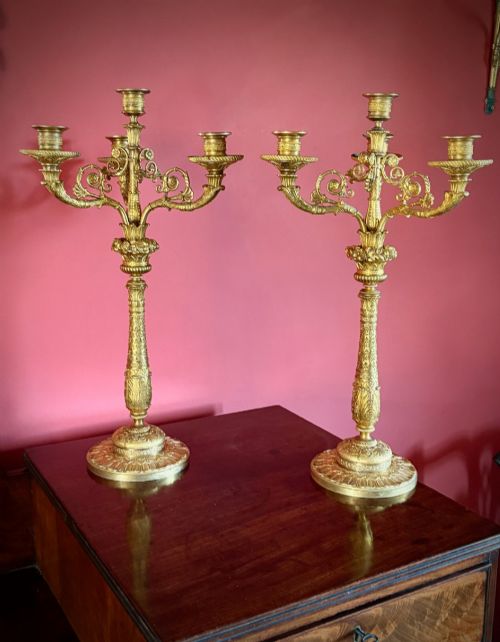
The material palette draws heavily on brass, bronze, silver plate, and ormolu, often paired with marble bases. These pieces frequently adopt decorative vocabulary from Regency, Victorian, Rococo Revival, and Baroque repertoires.
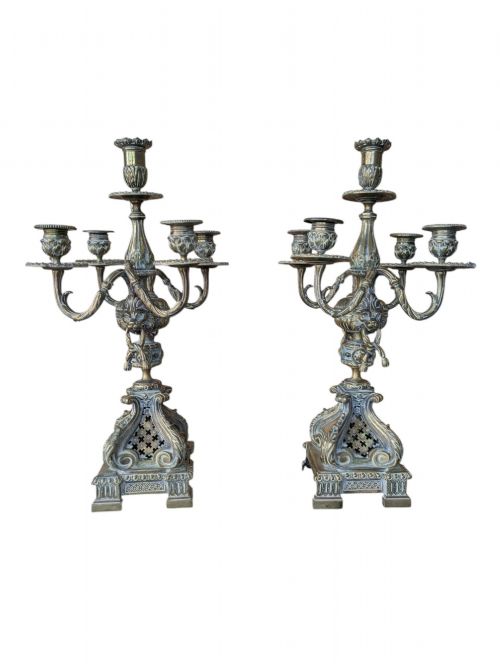
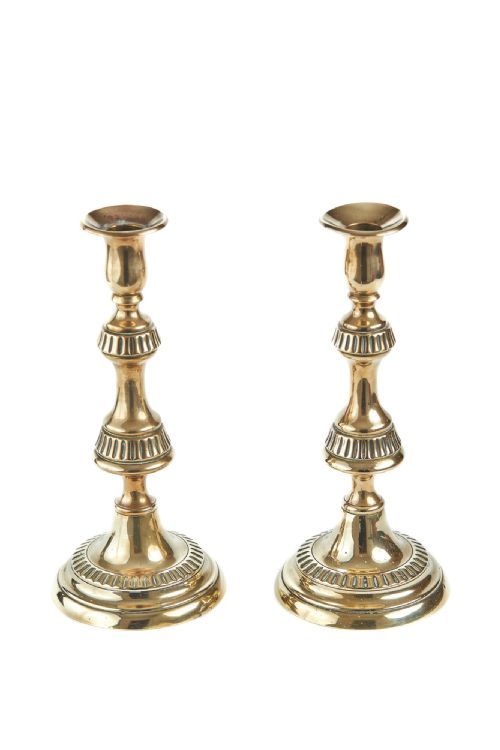
Objects range from simple single-socket brass candlesticks to elaborate multi-light candelabra featuring figural elements and intricate chasing. The standard height and configuration vary from modest chamber sticks to grand multi-arm table lights.
Materials and construction
Production relies heavily on metal casting techniques, using brass, bronze, and gilt metal to achieve sculptural depth and intricate surface detail. Molten metal poured into moulds allowed makers to produce elaborate scrollwork, flora, and figural motifs characteristic of nineteenth-century revival styles.
Surface finishing involved silver plating, fire gilding with ormolu, and hand-chasing to enhance highlights and shadow. Combinations of bronze and marble appear frequently, providing structural stability and pleasing visual contrast.
Ornate Metal Candlesticks Retail Price Guide 2026
Typical asking prices for ornate metal candlesticks among the pieces listed under this phrase on Sellingantiques today, from the lower quarter to the upper quarter. They describe what is for sale here now, not the wider market.
Listings feature brass, bronze, and silver-plated candlesticks alongside multi-light candelabra spanning the nineteenth and early twentieth centuries.
Evaluating craftsmanship and execution
Quality rests primarily on the crispness of the casting and the precision of the secondary hand-chasing work. Superior examples retain sharp relief in ornamental details such as acanthus leaves and scrolling arms, whereas weaker pieces show softened contours from worn or secondary moulds.
The choice of materials and the weight of the metal distinguish standard production from finer workshop output. Solid cast bronze and heavy brass assemblies demonstrate greater durability and tactile substance than lighter, thinner constructions.
Blagden Hodgson Co
The Ornate Metal Candlesticks Glossary
- Ormolu
- Gilded bronze, where a layer of gold amalgam is applied to a bronze base and heated to drive off the mercury. This technique creates a rich, matte golden surface seen on French candelabra.
- Candelabra
- A branched candlestick holding multiple lights on separate arms. These fixtures often feature central stems and removable bobeches to catch dripping wax.
- Chamber stick
- A short candlestick fitted with a wide saucer base and a loop handle for carrying room to room. They typically date from the Regency and Victorian periods.
- Silver plate
- A thin layer of silver fused or electroplated onto a base metal such as copper or brass. Old Sheffield plate represents an early fusion method involving a silver sheet layered over copper.
Ornate Metal Candlesticks: Frequently Asked Questions
How do I clean tarnished brass candlesticks?
Use a soft cloth and a gentle metal cleaner formulated for brass, taking care to avoid harsh abrasives that remove fine surface details.
Work around chased areas carefully and buff gently to restore the natural sheen without stripping older patination.
Can these candlesticks be converted into lamps?
Many antique candlesticks and candelabra are adapted for electricity by running wiring through the central column. This modification allows period lighting forms to function safely in modern domestic settings.
Reversible conversion methods are preferred to preserve the original metal components of the base and stem.
How do I date a pair of brass candlesticks?
Dating relies on examining the assembly methods, base construction, and stylistic cues such as Regency proportions or Victorian ornamentation. Tool marks and wear patterns on the underside offer further clues to age.
Comparing the casting weight and decorative vocabulary to documented nineteenth-century examples helps narrow the production window.