





Ornate Marble Urns
Ornate marble urns bring grand classical architecture indoors, combining sculpted stone with gilt metal mounts to anchor a room.
Ornate Marble Urns
Ornate marble urns encompass decorative vessels, lamps, and clock components executed in varied stones from the nineteenth century. Buyers searching for ornate marble urns encounter neoclassical designs, French Empire pieces, and Louis XVI style revivals.
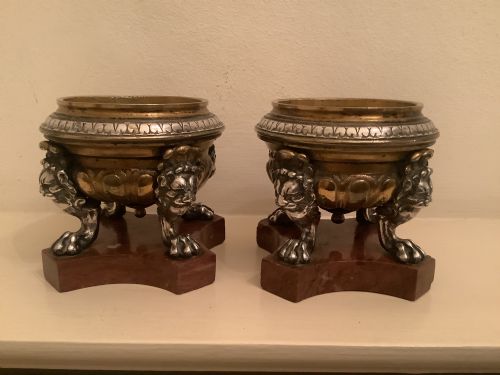
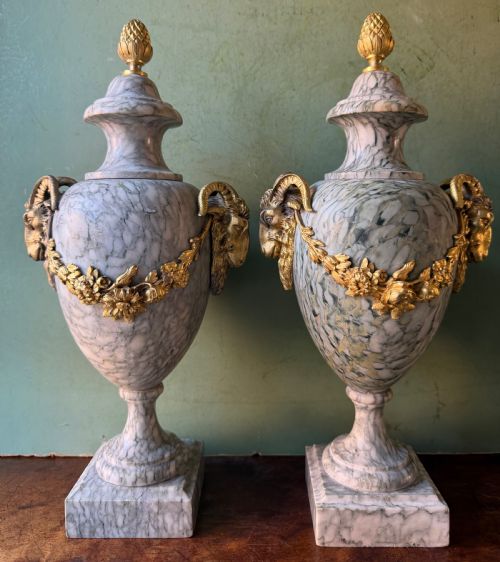
The selection on this page leans heavily towards French taste, featuring bronze and ormolu mounts paired with veined marble bodies. These pieces typically take the form of table lamps, mantel garnitures, and decorative vases resting on classical plinths.
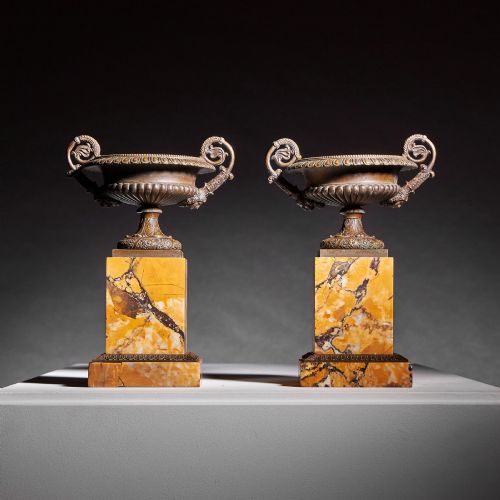
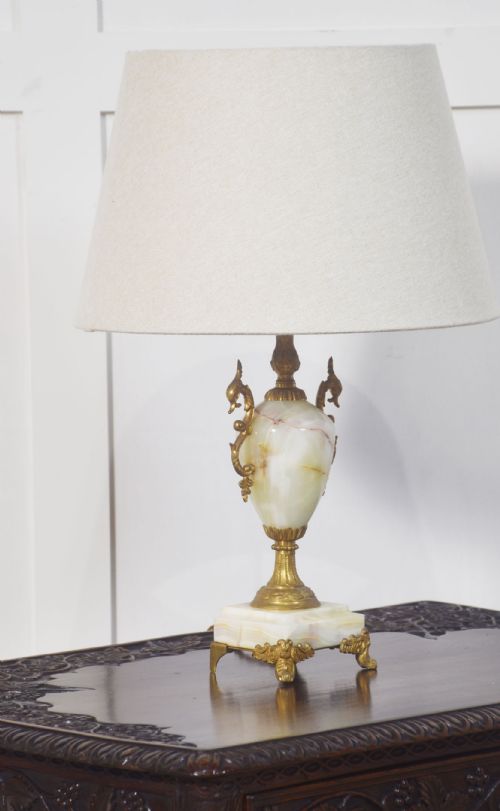
Many surviving examples function as lighting, having been converted to table lamps during later periods while retaining their original stone and metal bodies. Others remain purely decorative urns, tazzas, or central components of three-piece clock sets.
How they were made
The construction relies on the union of turned stone and cast metal, utilising marble, onyx, or alabaster alongside bronze, ormolu, and gilt brass. Stonemasons shaped the vessels on lathes, while metalworkers cast mounts in bronze or spelter before applying gilt or silvered finishes.
Makers integrated materials by fixing cast bronze or ormolu handles, collars, and paw feet directly onto the stone bodies. Enamel and fabric elements occasionally appear in supporting roles on clock dials or lamp shades.
Ornate Marble Urns Retail Price Guide 2026
Typical asking prices for ornate marble urns among the pieces listed under this phrase on Sellingantiques today, from the lower quarter to the upper quarter. They describe what is for sale here now, not the wider market.
Materials recur across marble, ormolu, bronze, and onyx, frequently combined within single decorative objects.
What varies in quality
Quality rests in the crispness of the metal chasing and the depth of figure within the marble itself. Finer specimens display sharply articulated ormolu mounts and heavily veined stones such as campan vert, whereas simpler items utilise plain white marble or cast spelter.
The weight of the bronze and the precision with which the metal meets the stone distinguish the workshop standards. Superior examples maintain balanced proportions where the classical form of the urn dictates the scale of the surrounding mounts.
The Ornate Marble Urns Glossary
- Ormolu
- Gilt bronze produced through a mercury amalgamation process, yielding a rich golden surface on metal mounts. This technique defines the high-end French decorative objects of the eighteenth and nineteenth centuries.
- Campan vert
- A mottled grey and green veined marble frequently utilised in French neoclassical pieces. It provides a striking, polychrome surface that contrasts with bright metal mounts.
- Tazza
- A shallow bowl or vase elevated on a stem and foot, often fashioned in pairs during the nineteenth century. These display classical forms derived from antiquity.
- Louis XVI style
- A revival aesthetic drawing on the symmetry, straight lines, and classical motifs of the late eighteenth-century French court. It incorporates ribbons, swags, and acanthus leaves into metalwork.
- Portico clock
- A mantel clock housed within a architectural frame supported by columns of marble or wood. These timepieces sit centrally within Garniture sets flanked by matching urns or candelabras.
Ornate Marble Urns: Frequently Asked Questions
Are these urns wired for modern electricity?
Many urns and amphorae on this page have been converted into table lamps during the twentieth century, incorporating electrical fittings while preserving the original stone and bronze body.
Buyers should inspect the specific listing details to determine whether the wiring is modern or requires professional rewiring to meet current safety standards.
How do I identify a Louis XVI revival piece?
Louis XVI revival pieces display classical architectural symmetry, crisp ormolu mounts, and restrained ornamentation such as beaded borders and acanthus leaves.
These items date predominantly to the nineteenth century, emulating the furniture and decorative arts created during the reign of the French king.
What is the difference between bronze and spelter?
Bronze is an alloy of copper and tin that takes fine detail during casting and accepts mercury gilding readily, resulting in a durable and heavy mount.
Spelter is a cheaper zinc-based metal alloy used on less expensive nineteenth-century pieces, which feels lighter and exhibits a softer, more brittle cast.
How should I clean marble and ormolu?
Marble requires gentle cleaning with a soft, damp cloth using neutral soap, avoiding acidic substances that can etch the polished stone surface.
Ormolu mounts should be dusted dry with a soft brush, avoiding chemical metal polishes that strip away the original fire gilding.