






Ornate Gilt Brass Candelabra
Ornate gilt brass candelabra bring elaborate candlelight and gleaming metalwork into a room, drawing the eye with their sculptural presence.
Ornate Gilt Brass Candelabra
When searching for ornate gilt brass candelabra, a buyer examines multi-branch lighting fixtures designed to hold several candles simultaneously. The selection spans the nineteenth century up to the early twentieth century, incorporating Victorian, Regency, and various French revival styles.
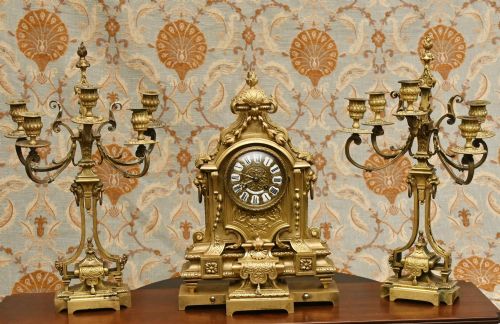
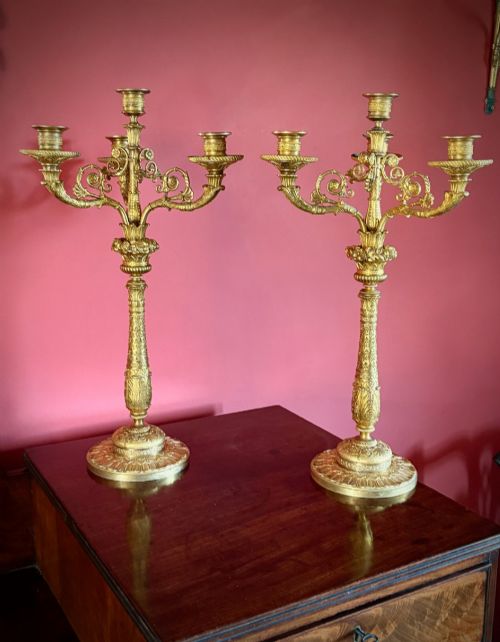
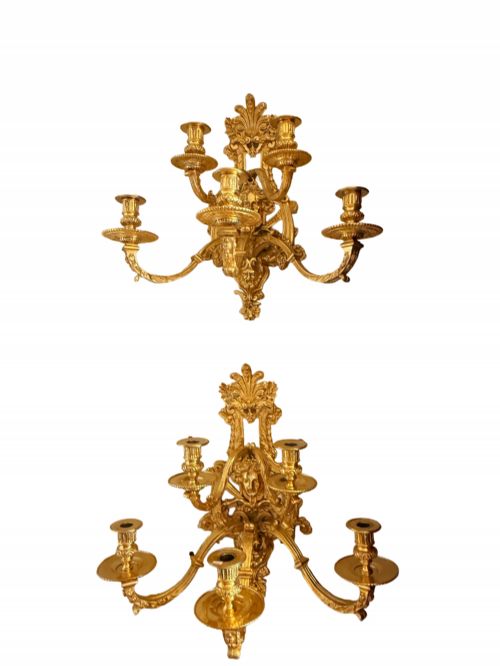
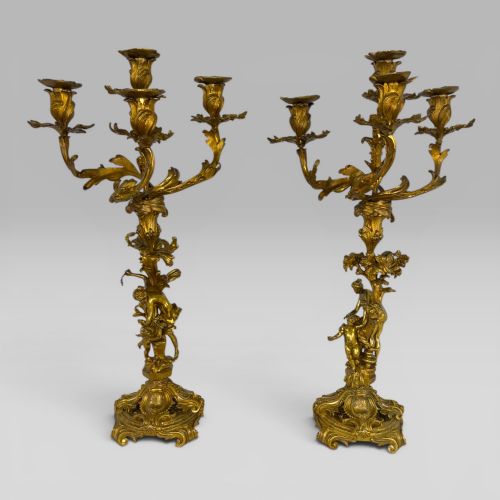
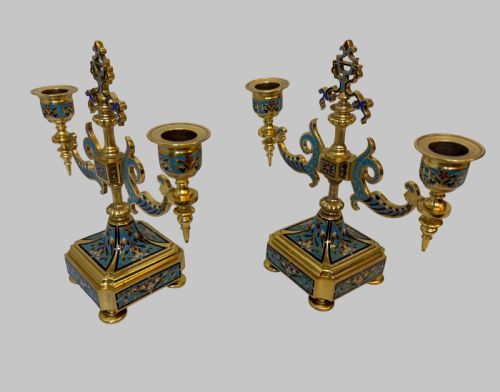
The most common versions encountered here are pairs of table-standing candelabra, alongside matching clock garniture sets, wall sconces, and hanging lights. These items frequently combine cast metal structures with supplementary materials like marble bases, crystal drops, or champlevé enamel details.
Origin points cluster heavily around French workshops influenced by Rococo and Louis XVI aesthetics, alongside British Victorian productions. Buyers encounter everything from simple two-light wall lights to large figural pieces featuring multiple arms and branches.
Materials and construction methods
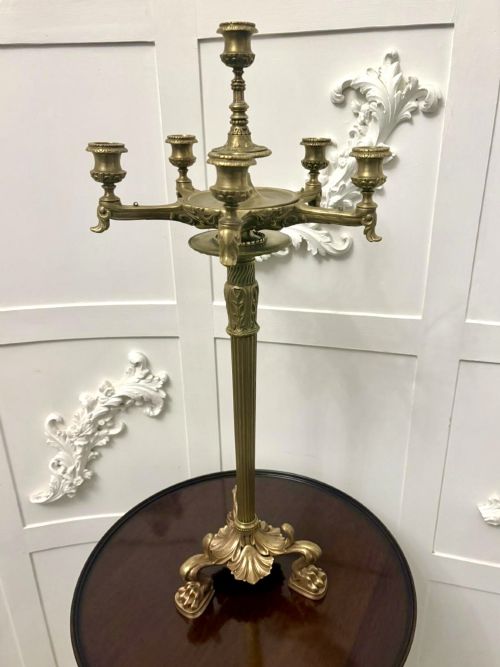
The construction of these pieces relies on cast brass, ormolu, and gilt bronze, which provide a durable metallic skeleton for the intricate ornamentation. Metal founders utilised lost-wax and sand-casting techniques to achieve deeply sculpted floral, scroll, and figural motifs before applying fire gilding or surface plating.
Many items integrate contrasting elements such as white or coloured marble plinths, glass crystals, and enamel work to enhance the visual richness of the design. Assemblages were mechanically joined using threaded rods and screws, allowing for complex multi-tier structures that held three, four, or six branching lights securely.
Ornate Gilt Brass Candelabra Retail Price Guide 2026
Typical asking prices for ornate gilt brass candelabra among the pieces listed under this phrase on Sellingantiques today, from the lower quarter to the upper quarter. They describe what is for sale here now, not the wider market.
Listings span the nineteenth and early twentieth centuries, featuring French and British origins alongside materials like gilt bronze, brass, ormolu, and marble.
Markers of distinction in craftsmanship
Quality separates through the crispness of the metal chasing and the depth of the underlying cast, where superior examples exhibit sharp relief and hand-finished detailing rather than soft, generalised contours. The weight and stability of the piece, particularly where brass meets marble or crystal, indicate the substantial nature of the materials employed by the maker.
The durability and warmth of the original gilding or ormolu surface further divide standard production from exceptional artistry, maintaining its golden lustre without uneven wear or harsh polishing. Additionally, the balanced alignment of the arms and the structural integrity of the joints dictate how successfully the candelabra holds its form over time.
The Ornate Gilt Brass Candelabra Glossary
- Ormolu
- A method of applying finely ground high-carat gold to a bronze base using a mercury amalgam, creating a rich golden finish. This technique was widely mastered by French artisans during the eighteenth and nineteenth centuries.
- Garniture set
- A coordinated group of ornamental objects, typically consisting of a mantel clock accompanied by a matching pair of candelabra or vases. These sets were designed to display centrally on a fireplace mantle.
- Champlevé
- An enamelling technique where troughs or cells are carved into the surface of the metal and filled with vitreous enamel powder before firing. The resulting coloured patterns provide vivid contrast against the gilt brass framework.
- Sconce
- A wall-mounted lighting fixture designed to carry candles or electric bulbs upon projecting arms. They frequently echo the decorative motifs found on larger freestanding candelabra.
- Rococo revival
- A nineteenth-century design movement inspired by the asymmetrical scrolls, shell motifs, and naturalistic curves of the eighteenth-century French court. This style dominates many of the florid cast metal pieces found in this category.
Ornate Gilt Brass Candelabra: Frequently Asked Questions
How do I clean gilt brass candelabra?
Maintenance requires only a soft, dry cloth to remove dust from the intricate recesses of the casting. Harsh metal polishes must be avoided entirely because they strip away the thin layer of original gilding.
Moisture should also be kept away from any integrated marble or enamel components during cleaning. Gentle care preserves both the historic surface and the metallic lustre.
Were these candelabra converted to electricity?
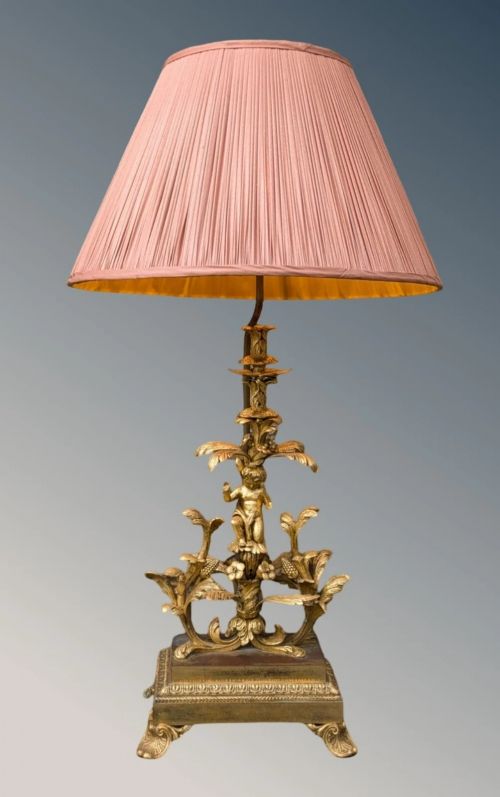
Many examples retain their original configuration for holding wax candles, while others have been adapted over the decades to function as table lamps or wired wall lights. Conversions often utilise hollow channels within the central stem to run modern wiring safely.
Buyers should inspect the individual listing details to determine whether a piece operates via traditional candles or electricity. Both candle-holding and electrified versions appear frequently across the periods represented.
How do I date a nineteenth-century candelabrum?
Dating relies on examining the casting quality, the specific style revival being referenced, and the assembly methods used beneath the base. Mid-century Victorian pieces often feature heavier brass construction, whereas later nineteenth-century items lean heavily into French Rococo and Louis XVI revival vocabulary.
Associated elements like marble types or clock movements within a garniture set also provide helpful chronological clues. Comparing the overall weight and screw types helps narrow down the decade of production.
What is a clock garniture set?
A clock garniture set pairs a central mantel clock with two matching side pieces, typically candelabra or decorative urns. These matched groupings were created to sit together on a surface and present a unified decorative theme.
The materials and motifs match identically across all components of the set. They became exceptionally popular in middle and upper-class drawing rooms during the Victorian era.