

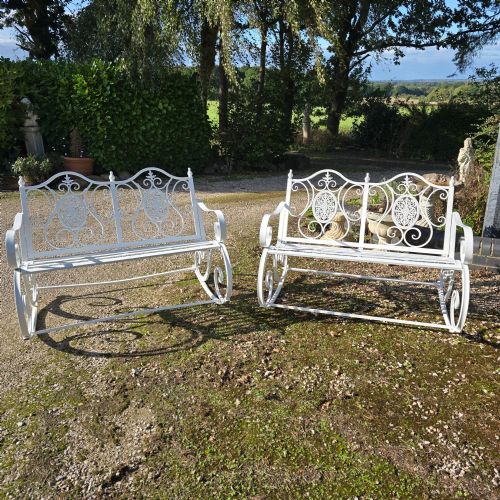
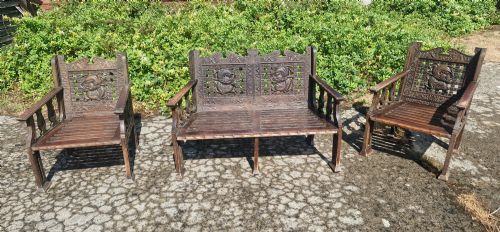
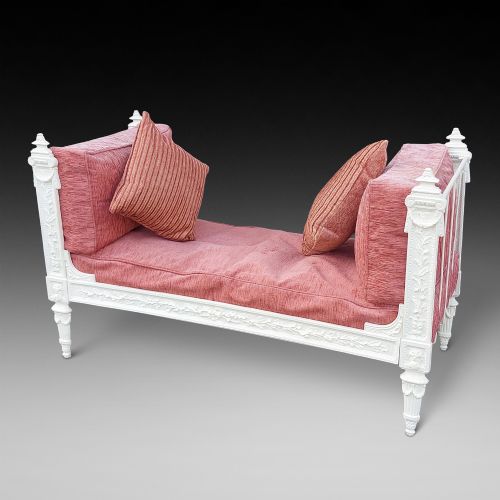
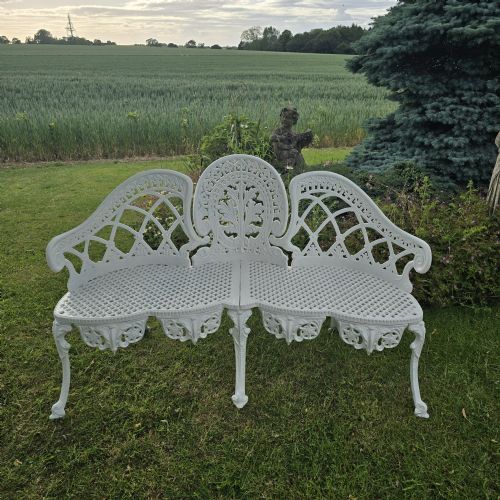
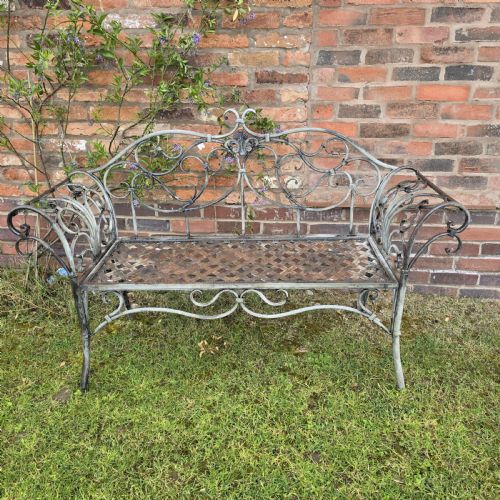
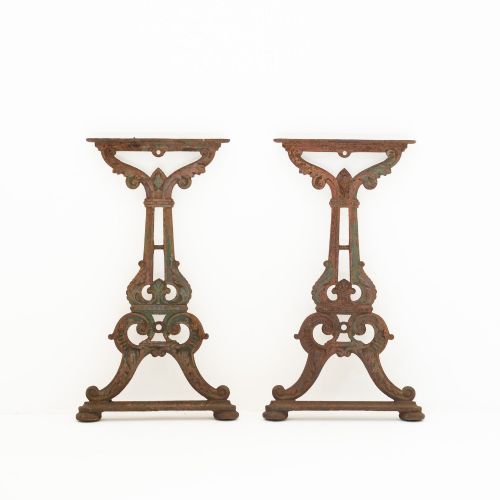


Ornate Garden Bench
An ornate garden bench anchors a terrace with heavy metalwork and timber, offering a durable seat designed to weather the seasons.
Ornate Garden Bench
An ornate garden bench brings heavy architectural structure and elaborate metal decoration to outdoor spaces, drawing on a tradition of robust manufacture. When searching for an ornate garden bench, buyers encounter pieces intended for lawns, conservatories, and sheltered porches alike.
The selections available here range from solid nineteenth-century ironwork to twentieth-century variations, including pairs of benches, daybeds, and matching seating suites. Victorian examples dominate the record, bringing distinct foundry styling to domestic and public gardens.
Forms extend beyond standard seating to include bench ends, settees, and rocking benches, demonstrating how versatile these garden furnishings were. Many pieces combine cast iron supports with timber slats or feature entirely metallic construction.
How they were made
Makers utilised cast iron and wrought iron for structural frames and decorative panels, often pouring molten metal into intricate moulds to achieve high-relief ornamentation. This foundry work allowed for elaborate scrollwork, floral motifs, and sculptural ends.
Timber elements such as wooden slats were paired with metal frames, whilst other pieces relied solely on painted metal, cast aluminium, or fabric upholstery for interior conservatory use. Protective paint finishes were applied to shield the iron and wood from outdoor weathering.
Ornate Garden Bench Retail Price Guide 2026
Typical asking prices for ornate garden bench among the pieces listed under this phrase on Sellingantiques today, from the lower quarter to the upper quarter. They describe what is for sale here now, not the wider market.
Listings feature periods spanning the nineteenth century through the 1940s, utilising cast iron, wrought iron, teak, and paint.
What varies in quality
Quality rests upon the crispness of the foundry casting and the depth of the decorative detail, where sharper relief denotes superior pattern work. Pieces attributed to prominent foundries like Coalbrookdale display refined finishing that distinguishes them from simpler commercial production.
The integrity of surviving materials dictates the overall standard, particularly whether cast components retain their original structural strength and surface finish. Refurbished and restored examples vary according to how sympathetically their metalwork and timber have been maintained.
The Ornate Garden Bench Glossary
- Cast Iron
- A hard, brittle alloy of iron and carbon poured into moulds to create complex decorative shapes. It forms the heavy structural and ornamental basis for Victorian garden seating.
- Bench Ends
- The cast iron side supports of a garden seat that hold the backrest and seat rails. These structural components frequently carry the most intricate foundry decoration.
- Conservatory Suite
- A matched grouping of seating and tables designed for semi-enclosed glass spaces. These suites often incorporate lighter construction or more delicate carving than purely outdoor furniture.
- Daybed
- A long seating unit combining the functions of a chair and a bed for resting. In garden furnishings, these feature extended iron frames suited for reclining.
Ornate Garden Bench: Frequently Asked Questions
Where should an iron bench be placed?
Heavy metal seating suits sheltered garden spots, lawns, or hard terraces where the solid weight provides stability on uneven ground.
Placing the piece near a wall or hedge also offers protection from the strongest prevailing winds and heavy winter weather.
How do I care for cast iron furniture?
Regular maintenance involves checking painted surfaces for wear and applying appropriate protective coatings to prevent rust formation on the metal.
Keeping timber slats clean and treating them seasonally preserves the dual-material construction typical of these traditional garden seats.
How can I date an antique garden seat?
Dating relies on examining the style of the casting, assembly methods, and any foundry marks stamped into the iron frame.
Victorian pieces typically display heavier ornamentation and specific bolt patterns that distinguish them from later twentieth-century reproductions.
Were these benches used indoors?
Many ornate metal frames and suites served inside grand nineteenth-century glasshouses, conservatories, and country house garden rooms.
Lighter French conservatory sets and daybeds were built specifically to furnish these transitional indoor-outdoor living spaces.