



Ornate Carved Entry Table
An ornate carved entry table sets a grand tone in a hallway, bringing sculptural timberwork and stone into the home.
Ornate Carved Entry Table
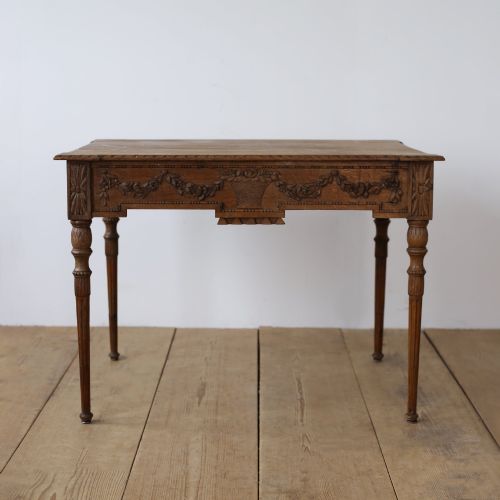
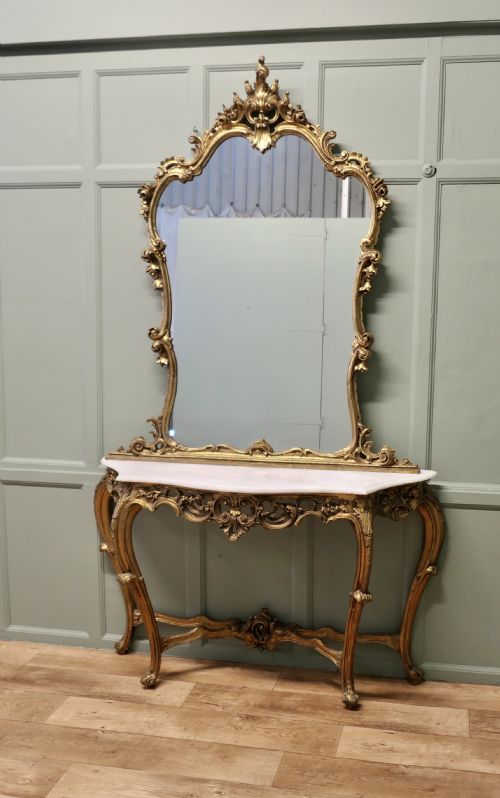
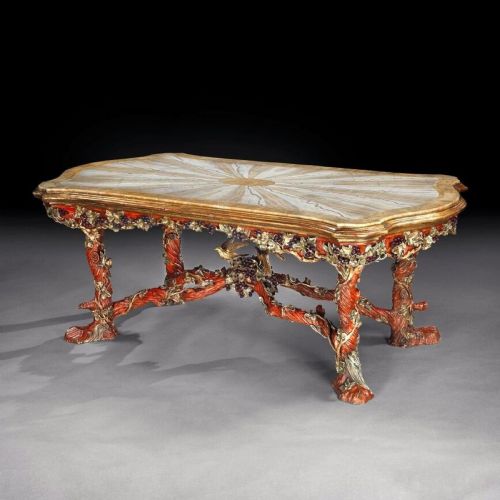
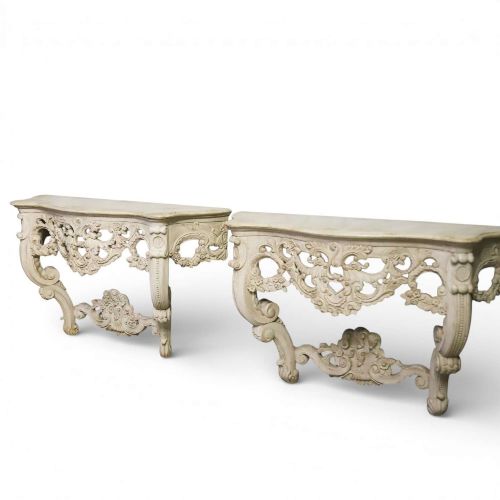
An ornate carved entry table serves as a striking statement piece in a hallway or reception space, combining functional surface area with elaborate craftsmanship. When searching for an ornate carved entry table, buyers encounter forms that range from wall-mounted consoles to freestanding centre tables.
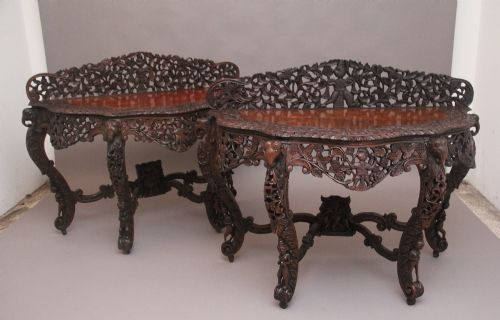
The pieces appearing on this page span the nineteenth century, the Victorian era, and the early twentieth century, showing strong ties to French and Italian Rococo revivals. Buyers are most likely to meet console tables featuring serpentine fronts, paired mirrors, or heavy marble tops supported by carved wood frames.
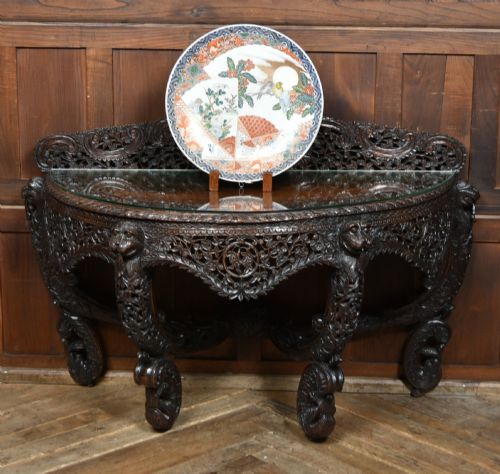
Origins vary widely across these listings, stretching from continental European workshops in France and Italy to Anglo-Indian and Burmese makers. This geographical spread introduces diverse regional timbers and decorative finishes, including giltwood, polychrome, and painted surfaces.
Materials and construction methods
Timber forms the structural backbone of these pieces, with walnut, rosewood, and carved wood providing the dense substrate necessary for deep relief work. Artisans applied gesso over carved wooden bases to prepare smooth grounds for subsequent gilding or painting.
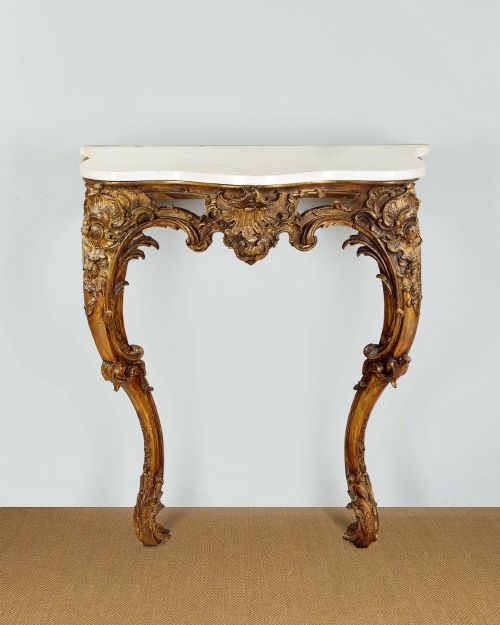
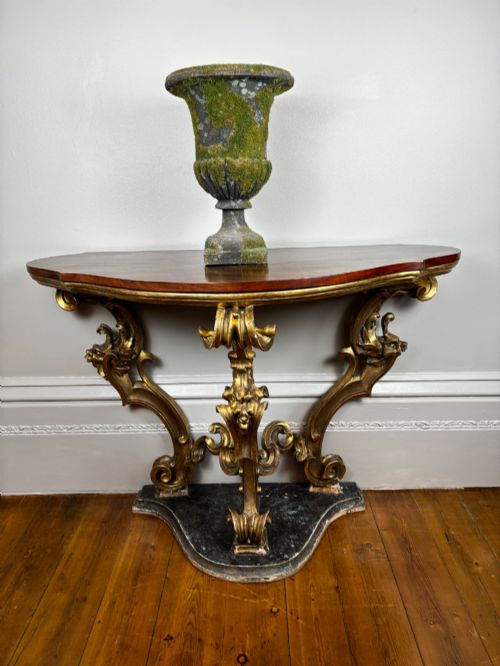
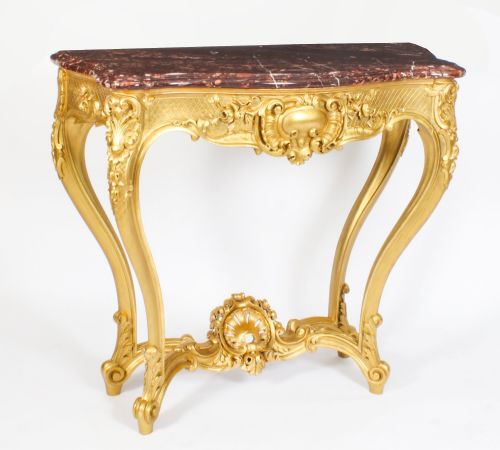
Heavy stone tops, notably marble and onyx, require substantial joinery and sturdy frames to bear their weight safely. Giltwood finishes involve the meticulous application of gold leaf over prepared surfaces, while polychrome details introduce hand-painted colour to the carved motifs.
Ornate Carved Entry Table Retail Price Guide 2026
Typical asking prices for ornate carved entry table among the pieces listed under this phrase on Sellingantiques today, from the lower quarter to the upper quarter. They describe what is for sale here now, not the wider market.
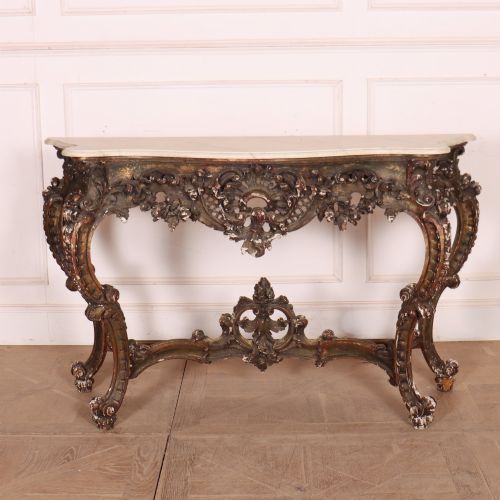
Keep an eye out for diminutive wooden putti and fierce rams' heads keeping watch beneath the marble.
Distinguishing quality in carving and materials
The depth and crispness of the hand-carving separate standard pieces from exceptional examples, as skilled carvers achieve realistic musculature and botanical detail without softness. Pierced work and undercut foliage demand advanced proficiency from the artisan, whereas mechanical or shallow tooling lacks dimension.
The choice of top material and its integration with the base dictate the overall calibre of the table. Solid marble or onyx slabs with active veining paired with heavy, fire-gilded giltwood represent the upper tier of execution.
Amleto Bertoni
The Ornate Carved Entry Table Glossary
- Console table
- A table designed to stand against a wall, historically secured with brackets or supported by front legs. These tables often feature shaped tops to fit narrow hallways.
- Giltwood
- Timber coated with thin gold leaf over a prepared gesso ground. This finish provides a luminous surface that catches hallway light.
- Serpentine front
- A furniture front curving inward at the centre and outward at the ends, or vice versa. This contour adds visual movement to console tables.
- Polychrome
- Decorated in several colours. This surface treatment appears on Italian carved wood pieces to highlight specific decorative motifs.
- Gesso
- A plaster-like mixture applied to wood as a base for gilding or painting. It allows craftsmen to crisp up fine details before finishing.
Ornate Carved Entry Table: Frequently Asked Questions
Where should I place a console table?
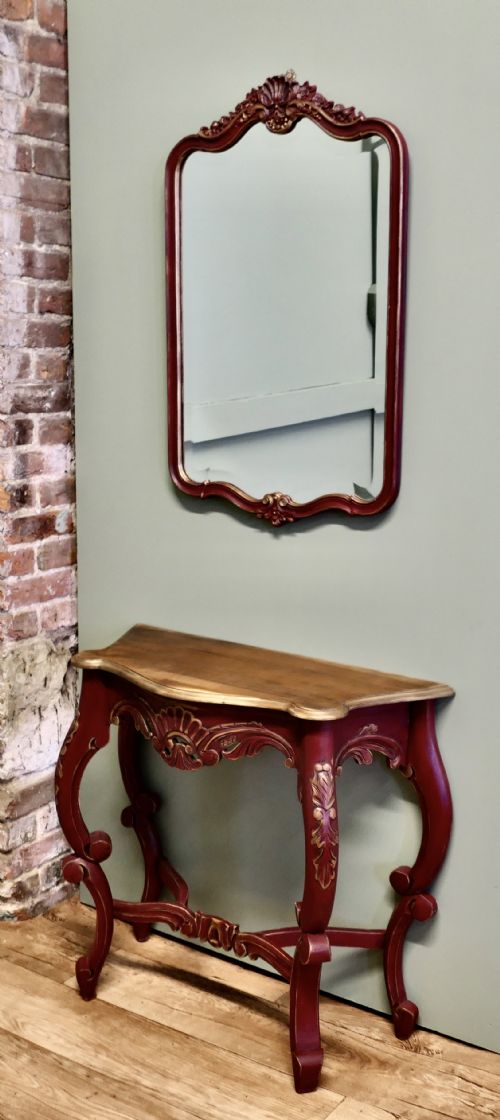
These tables find their natural home in hallways, entryways, or against large blank walls in reception rooms where their decorative profiles can be fully appreciated. Many examples paired with matching mirrors are designed to sit directly beneath them.
Because these pieces often feature finished backs or sit flush against plaster, placement depends on whether the table is freestanding like a centre table or wall-secured like a console.
How do I care for a marble top?
Marble and onyx surfaces require gentle cleaning with mild, pH-neutral soap and warm water to protect the stone from etching. Avoid acidic liquids or abrasive cloths that dull the polished finish over time.
Applying a specialist stone wax periodically helps guard against moisture rings from keys or decorative objects placed on the surface.
Are these tables freestanding?
Console tables historically relied on wall fixings or brackets for total stability, though many nineteenth-century variants feature four full legs. Centre tables are engineered to stand entirely on their own in the middle of a room.
Buyers should inspect the leg configuration and under-framing to determine whether additional wall anchoring is necessary for daily use.
How do I identify a Rococo Revival piece?
Rococo Revival furniture draws on eighteenth-century French design, featuring asymmetric C-scrolls, S-scrolls, shell motifs, and naturalistic floral carvings. The carved wood frames of these pieces typically exhibit sweeping, organic lines rather than strict geometric symmetry.
Giltwood finishes and serpentine marble tops frequently accompany these theatrical decorative elements.