



Ornate Bronze Lighting
Ornate bronze lighting brings heavy metal casting and rich gilding into domestic interiors through elaborate chandeliers, wall sconces and candelabra.
Ornate Bronze Lighting
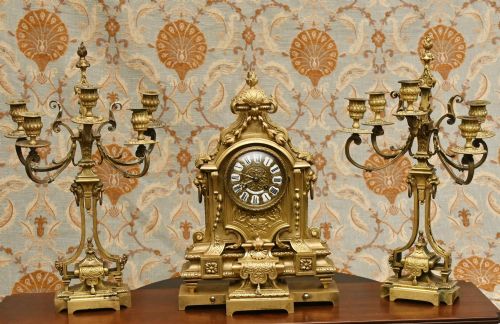
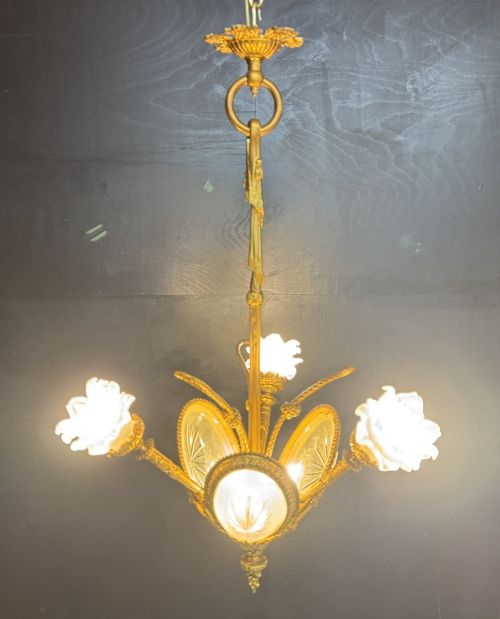
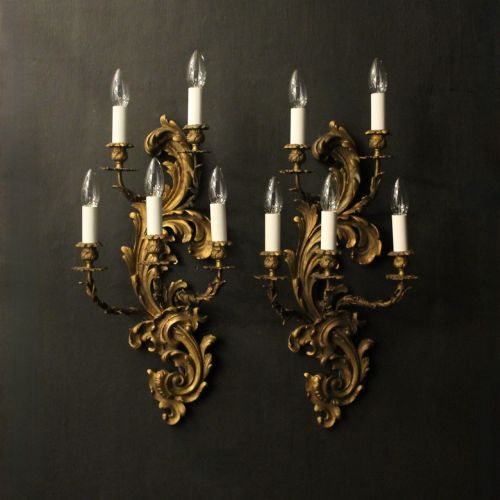
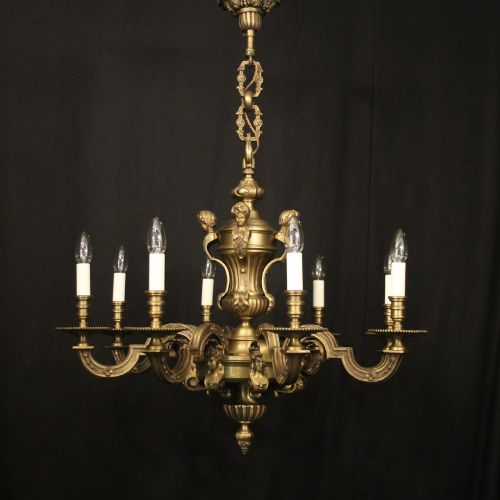
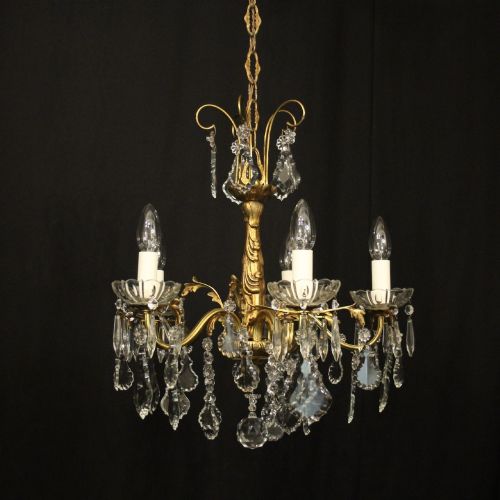
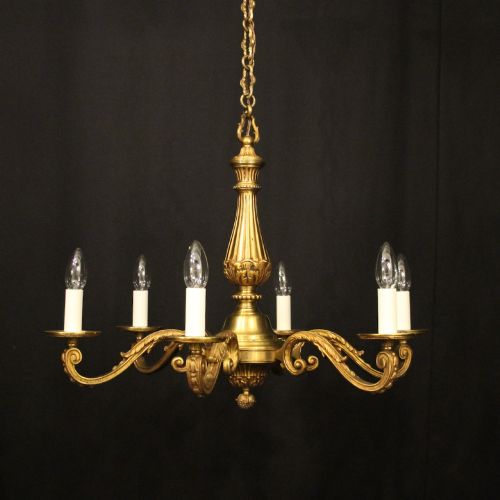
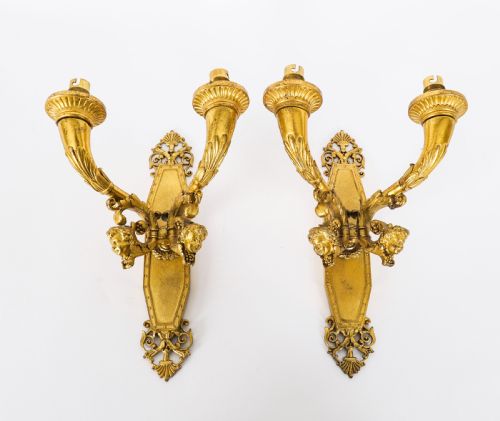
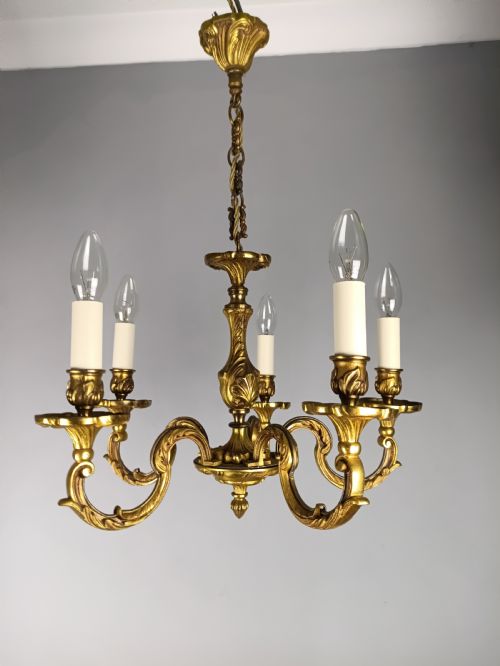
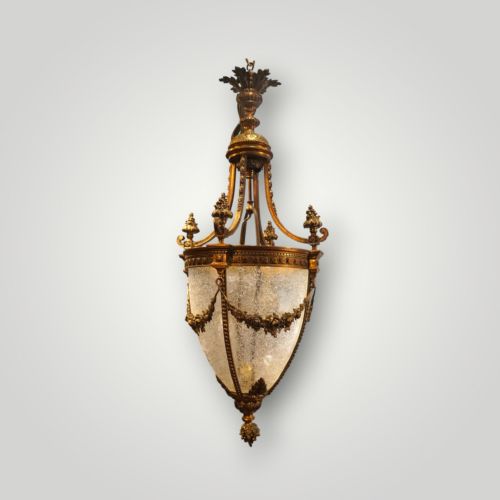
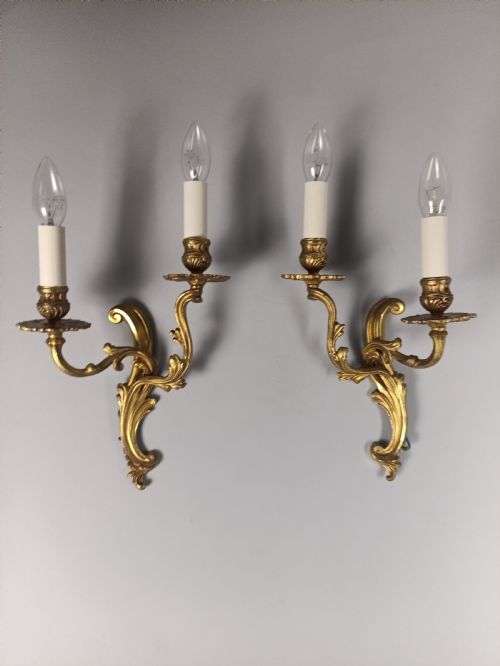
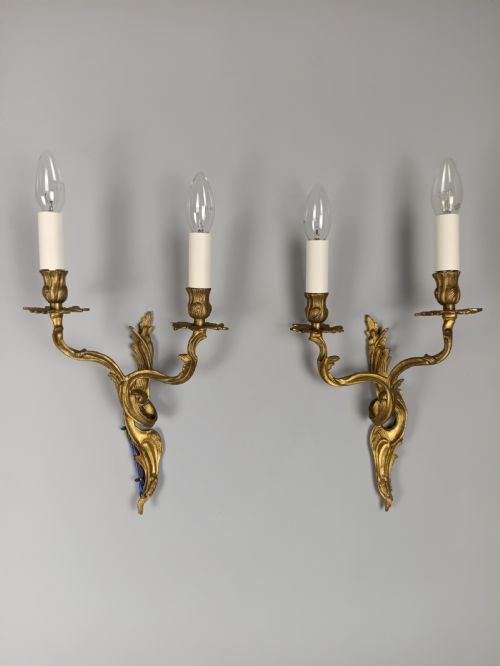
Ornate bronze lighting encompasses grand chandeliers, heavy wall sconces, candelabra and hall lanterns cast during the nineteenth and early twentieth centuries. These pieces emerge predominantly in French Rococo, Neoclassical and Victorian styles, designed to dominate a room with intricate metalwork. The versions most commonly met on this page include multi-arm wall lights and chandeliers cast in gilt bronze or gilded brass.
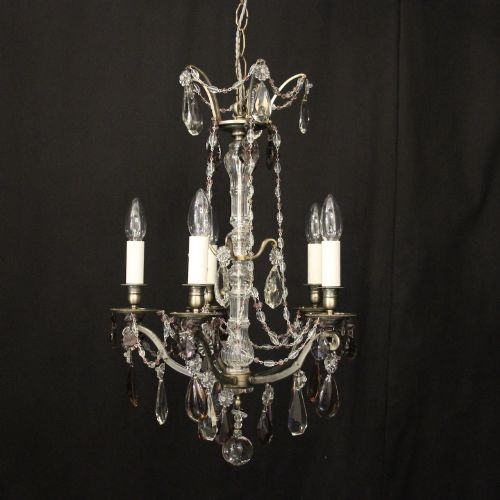
Makers and manufacturers of the period utilised heavy metal casting to produce intricate scrolls, ribbons and figural motifs that define these forms. Chandeliers often feature multiple light branches paired with crystal drops, while wall lights and candelabra display symmetrical or asymmetrical scrolling arms. Pieces span from small pairs of twin-arm wall sconces to large eight-light ceiling fixtures.
The selection ranges across several decades, showing distinct shifts from nineteenth-century revivalist exuberance to cleaner early twentieth-century interpretations. French origins dominate the aesthetic vocabulary, particularly through Louis XIV, Louis XVI and Rococo revivals that prioritise elaborate surface ornamentation. Buyers encounter these items preserved in various states, including examples wired for modern use.
Materials and Techniques
Foundries created these pieces using traditional sand casting or lost-wax techniques with bronze, brass and metal alloys. Artisans chased the cooled metal surfaces by hand, sharpening details in acanthus leaves, ribbons and figural elements before applying surface finishes. Ormolu and gilt bronze treatments involved the application of gold leaf or mercury gilding to impart a rich, reflective surface.
Many items incorporate contrasting media such as cut crystal drops, porcelain inserts, onyx bases and champlevé enamel work. Chandeliers and wall lights frequently combine glass prisms with gilt frames to refract candlelight or early electric illumination. These supplementary materials were pinned or fitted directly into cast bronze armatures during initial assembly.
Ornate Bronze Lighting Retail Price Guide 2026
Typical asking prices for ornate bronze lighting among the pieces listed under this phrase on Sellingantiques today, from the lower quarter to the upper quarter. They describe what is for sale here now, not the wider market.
Elephants occasionally support entire candelabra, proving that nineteenth-century casting foundries possessed a wonderful sense of humour.
Assessing Quality
The integration of secondary materials such as hand-cut crystal, porcelain plaques and champlevé enamel distinguishes superior pieces from standard production. Artisans who invested time in hand-finishing every hidden junction and scroll created items with enduring structural presence. The harmony between the cast bronze frame and added decorative elements dictates the overall visual success of the piece.
The Ornate Bronze Lighting Glossary
- Ormolu
- Gilded bronze produced by applying finely ground gold mercury amalgam to a bronze object. This historic technique creates a warm, deep lustre distinct from modern electroplating.
- Candelabra
- A branched candlestick designed to hold multiple candles simultaneously. These fixtures often feature central decorative stems surrounded by symmetrical candle-cups.
- Champlevé
- An enamelling technique where troughs are dug into a metal surface and filled with vitreous paste before firing. This colourful process appears on nineteenth-century candlesticks and decorative accessories.
- Girandole
- An ornamental branched candlestick or light fixture mounted to a wall, frequently incorporating a mirror backplate. The term describes decorative wall-mounted lighting with multiple arms.
- Pricket Candlestick
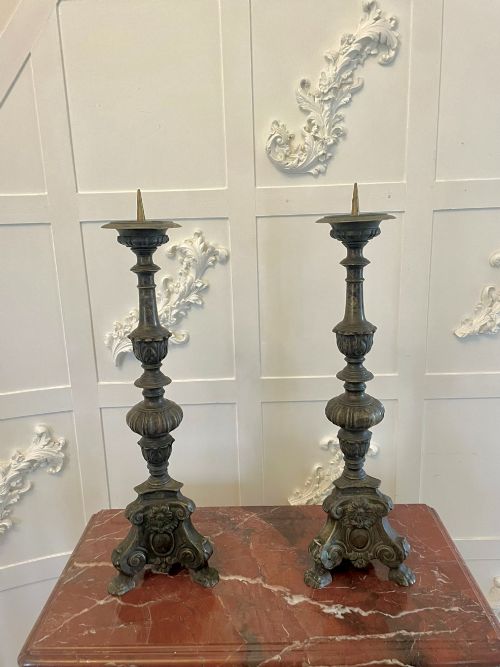
- A candleholder featuring a sharp metal spike upon which the base of a candle is impaled. This traditional form predates socket-type candle holders.
Ornate Bronze Lighting: Frequently Asked Questions
How do I clean gilt bronze?
Dust bronze pieces gently with a soft, dry brush to prevent accumulation in detailed recesses. Avoid aggressive metal polishes that strip away historical gilding.
Wash surfaces only when necessary using a damp cloth with mild soap, drying immediately with a lint-free towel.
What is the difference between ormolu and gilt brass?
Ormolu specifically denotes gilded bronze created through historical mercury amalgamation or heavy gold leaf application. Gilt brass uses a brass base metal rather than bronze beneath the gold-coloured surface treatment.
Both materials yield a bright metallic finish, though bronze offers greater weight and structural density.
How do I date an antique chandelier?
Examine the casting quality, fastening methods and stylistic revival cues to determine the era of production. Nineteenth-century pieces typically exhibit hand-chased surface details and heavier bronze armatures.
Compare the decorative motifs, such as Rococo scrolls or Neoclassical urns, against known stylistic periods.