

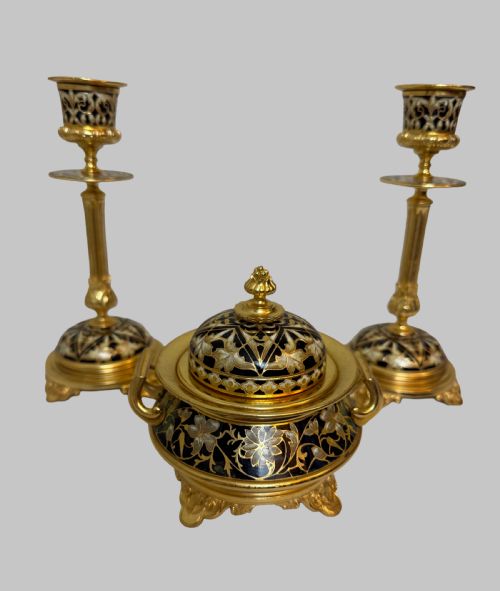


Ornate Bronze Desk Light
An ornate bronze desk light brings architectural weight and warm illumination to a study, built to last generations.
Ornate Bronze Desk Light
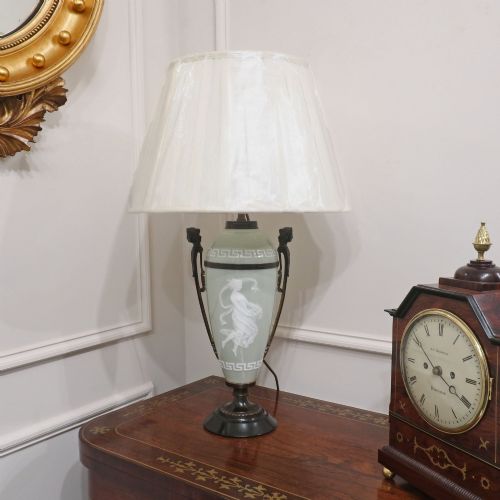
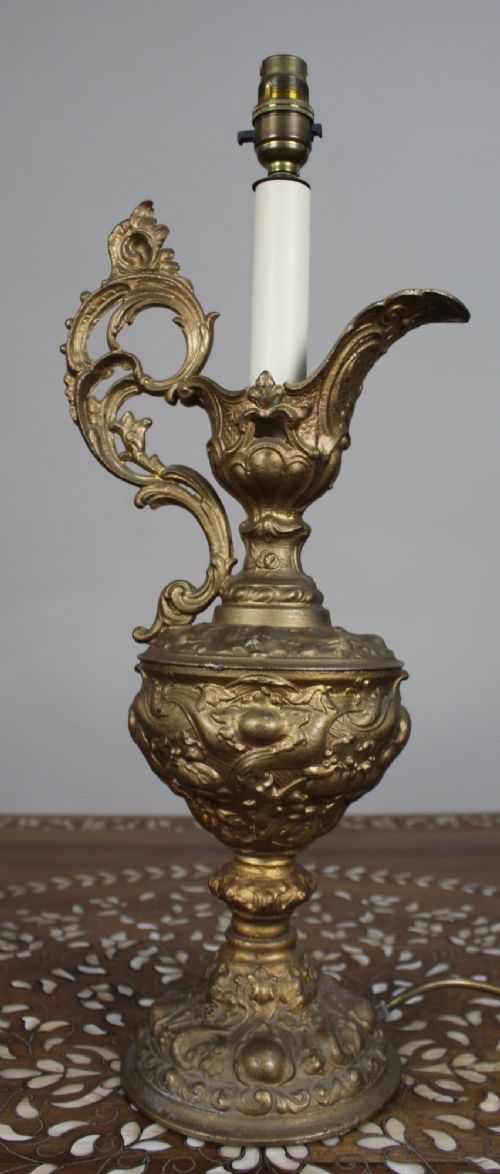
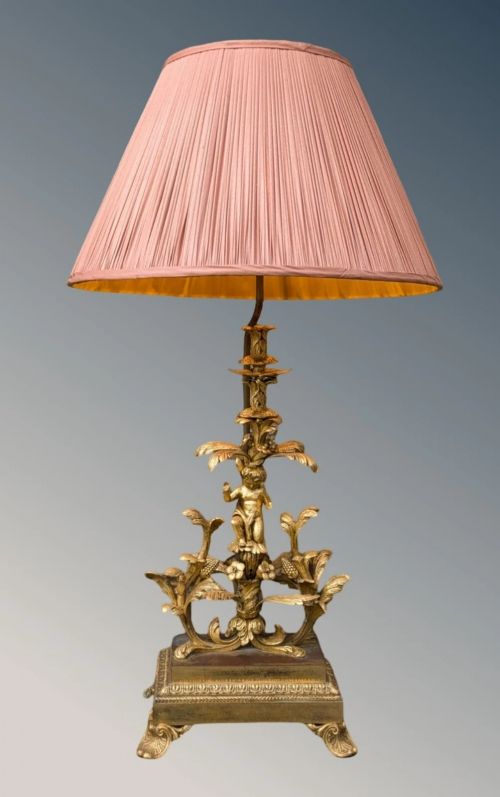
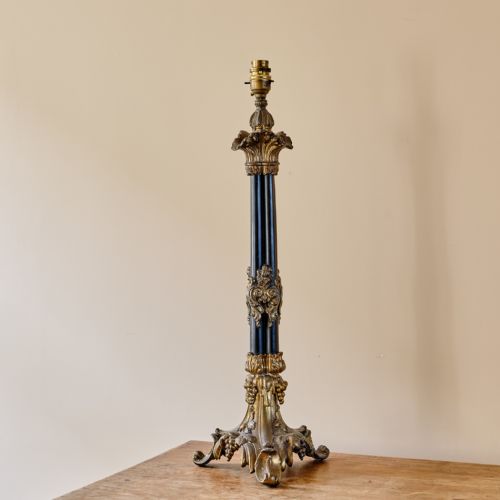
An ornate bronze desk light is typically a nineteenth century table lamp, lamp base or table light designed with classical French or Victorian ornamentation. These heavy fittings often take the form of urns, ewers, figural cherubs or mounted classical columns that have been adapted for interior illumination.
Buyers looking for this phrase meet pieces spanning the Victorian and Edwardian eras, predominantly drawing on French Neoclassical, Rococo Revival and Napoleon III aesthetics. Many examples combine cast metal with marble bases or incorporate porcelain and cut glass elements to create a dramatic silhouette.
How they were made
The primary construction relies on cast bronze, gilt bronze or ormolu, often paired with contrasting materials such as white marble plinths, glass bodies or pate sur pate porcelain. Foundry work of the period involved detailed hand-finishing, chasing and fire gilding to achieve deep relief on floral designs, cherubs and classical drapery.
Many surviving pieces began life as desk accessories, candlesticks, ewers or statuettes before being converted to table lamps at a later date. This adaptation process preserves heavy metalwork while updating the fittings for modern electrical use.
Listings feature items spanning the nineteenth century and the Edwardian era, incorporating materials such as marble, fabric, porcelain and cut glass.
What varies in quality
The choice of secondary materials marks another clear tier in quality, with solid marble plinths and heavy fire-gilded bronze mounts sitting well above lighter spelter constructions and simpler gilt metal finishes.
The Ornate Bronze Desk Light Glossary
- Ormolu
- Gilded bronze, usually produced by applying a mercury and gold amalgam to a cast bronze base and heating it to drive off the mercury. This technique creates a rich, durable surface finish characteristic of fine French decorative arts.
- Spelter
- An alloy of zinc and other base metals used as a cheaper alternative to bronze for cast figures and lamp bases. It takes patination and paint well but lacks the structural weight and tensile strength of true bronze.
- Champleve
- An enamelling technique where troughs or cells are hollowed out of a metal surface and filled with vitreous enamel before firing. It appears frequently on nineteenth century desk accessories and decorative metalwork.
- Candelabrum
- A branched candlestick designed to hold multiple candles, which is frequently converted into an electric table light. These heavy metal structures often form the grandest centrepieces on a large desk.
Ornate Bronze Desk Light: Frequently Asked Questions
How do I spot converted pieces?
Many nineteenth century lamp bases began life as bronze statuettes, ewers or candelabra before receiving electrical wiring. Examine the base and collar for drilled holes and altered mounts that indicate a later adaptation.
Original desk accessories and dedicated lamp bases retain integrated channels, whilst converted items show subtle adjustments where the cord enters the cast body.
What is the difference between bronze and spelter?
Bronze is a heavy, durable copper alloy that takes fine chasing and deep patination. Spelter is a softer, lighter zinc-based metal that was widely used for more accessible nineteenth century decorative objects.
Lifting the piece usually reveals the difference immediately, as true bronze carries substantial weight and a cooler touch compared to lighter base metal alternatives.
How do I date an antique lamp base?
Dating relies on stylistic markers such as French Neoclassical urn forms, Victorian floral motifs or Edwardian glass mounts, alongside the manufacturing techniques visible in the casting. The treatment of the bronze and the presence of marble plinths help narrow the period of origin.
Most surviving examples date from the middle of the nineteenth century through to the early decades of the twentieth century.
Where should I place a heavy bronze light?
These substantial fittings require a sturdy surface such as a large oak partner's desk, a library table or a heavy sideboard. Their visual weight grounds a room and provides focused task lighting.
Ensure the supporting furniture can accommodate the combined weight of the metal body and marble base safely.