





Ornate Bronze Candle Holders
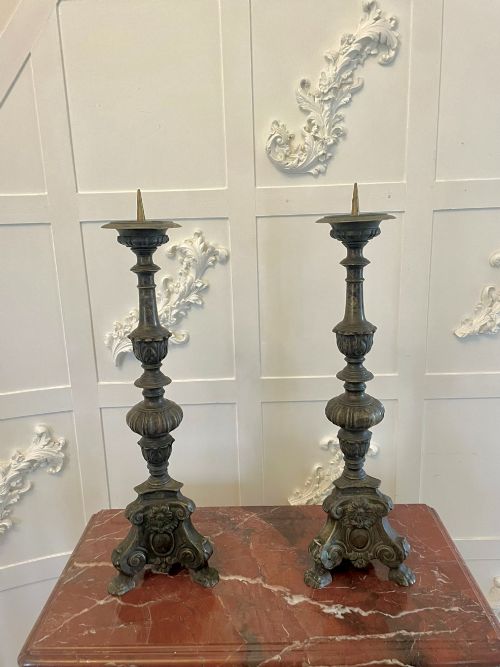
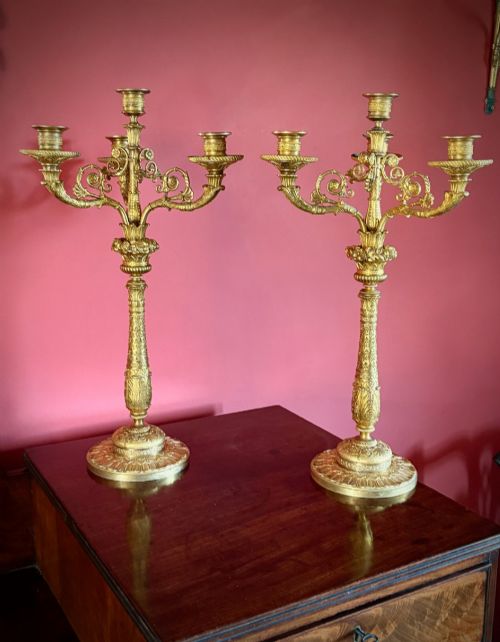
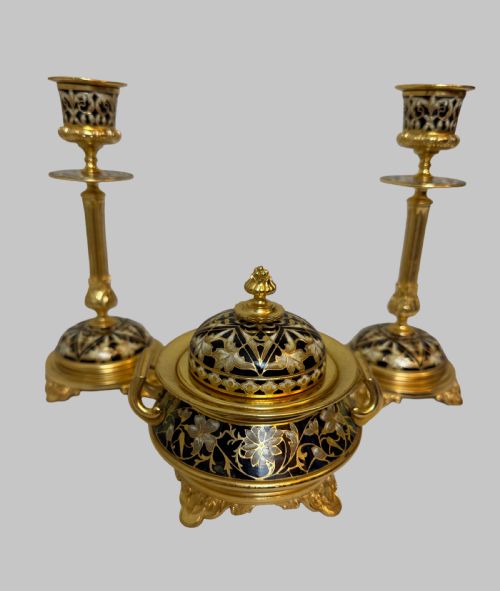
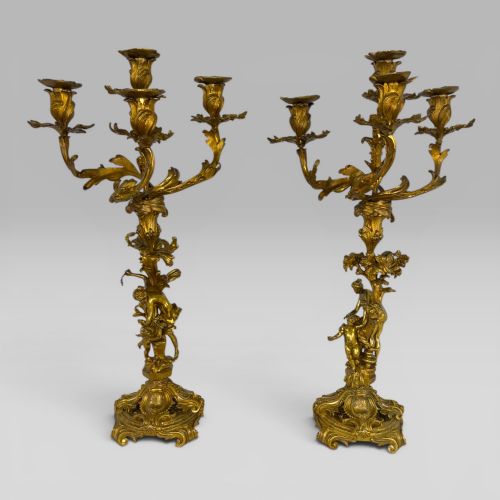
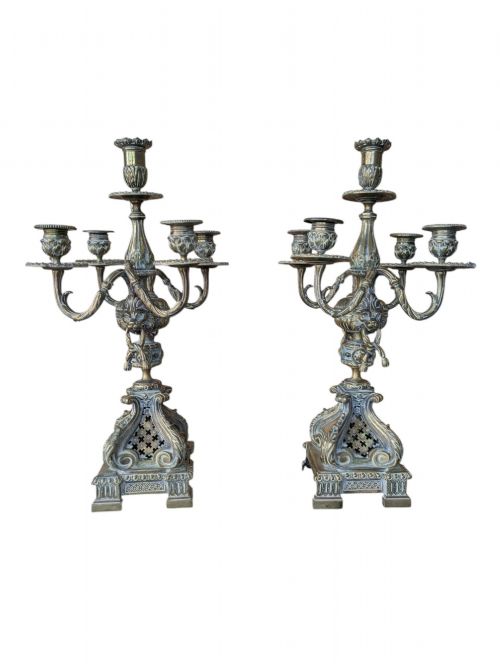
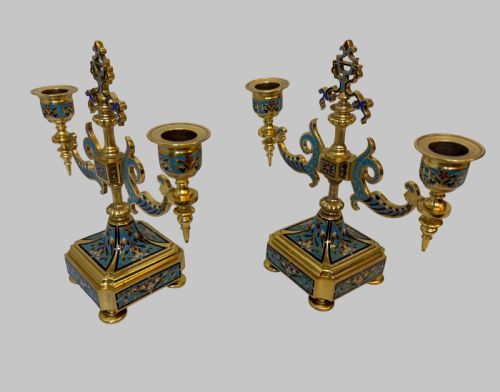
These ornate bronze candle holders bring heavy metalwork, gilt surfaces and period French or Regency styling straight into a room.
Ornate Bronze Candle Holders
Ornate bronze candle holders encompass multi-branch candelabra, single candlesticks, wall sconces and girandoles designed to illuminate interiors with polished metal and sculptural form. Most examples on this page date from the nineteenth century, including Victorian, Regency and French styles.
Makers utilised bronze, brass, ormolu and gilt metal, frequently mounting the metalwork on marble or onyx plinths. Forms range from simple chamber sticks to large five-light candelabra with figural or rococo ornament.
How they were made
Foundry workers cast bronze and brass components using traditional methods, producing detailed figures and scrollwork that define nineteenth-century production. Guilds and workshops applied gold leaf or mercury gilding, known as ormolu, to create bright reflective surfaces on the bronze substrate.
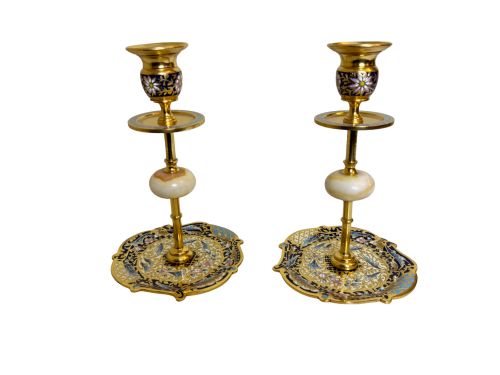
Craftsmen integrated contrasting materials such as champleve enamel, porcelain, glass and various marbles into the metal frameworks. Components were joined with threaded pins and screws, allowing multi-branch candelabra to be disassembled for cleaning and maintenance.
Ornate Bronze Candle Holders Retail Price Guide 2026
Typical asking prices for ornate bronze candle holders among the pieces listed under this phrase on Sellingantiques today, from the lower quarter to the upper quarter. They describe what is for sale here now, not the wider market.
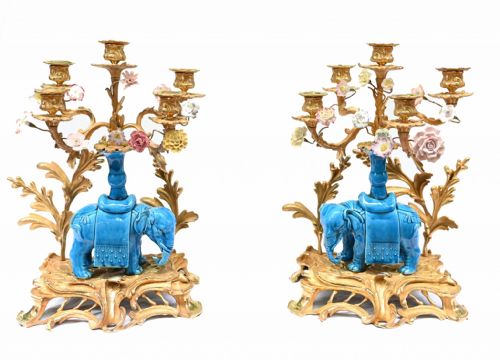
Stork candlesticks and elephant figures occasionally support the candle sockets, bringing unexpected wildlife into nineteenth-century drawing rooms.
What varies in quality
The crispness of the casting separates standard production from superior pieces, as sharper chisel work and deeper relief carving reveal skilled hand-finishing after the metal leaves the mould. Heavy gauge bronze provides greater stability and substance than thin stamped or cast metal alloys.
The preservation of the original mercury gilding or ormolu dictates visual impact, with intact surfaces showing deep warmth rather than brassy flatness. Integrated decorative elements like marble bases and champleve enamel panels vary in stone selection, colour richness and precision of inlay.
Thiebaut Freres·Auguste Cain
The Ornate Bronze Candle Holders Glossary
- Ormolu
- Gilt bronze created by applying a mixture of gold and mercury to a bronze base and heating it until the mercury vapourised, leaving a golden layer. This technique produces a distinctive warm lustre found on French and Regency pieces.
- Candelabra
- A branched candle holder designed to support multiple candles simultaneously. These pieces often feature removable branches or central finials.
- Champleve
- An enamelling technique where troughs or cells are hollowed out of the metal surface and filled with vitreous enamel powder before firing. It appears frequently on nineteenth-century French decorative objects alongside bronze.
- Girandole
- A branched wall sconce featuring a mirrored backplate that reflects candlelight into the room. The glass plate multiplies the illumination from the candles.
Ornate Bronze Candle Holders: Frequently Asked Questions
What periods do these pieces come from?
The selection spans the nineteenth century, covering Regency, Victorian, and various French revival periods including Rococo and Louis XVI. Dates stretch from the early decades through to nineteen hundred.
Items reflect stylistic shifts across Britain and France, capturing Neoclassical, Gothic and Empire aesthetics in cast metal.
How do I clean bronze candle holders?
Dust gently with a soft dry cloth to remove surface particles without disturbing the underlying metal or gilt finish. Avoid abrasive polishes that strip ormolu and patinated surfaces.
Keep pieces away from direct moisture and chemical sprays to preserve the historical finish on the bronze and stone elements.
Are all these pieces French?
Many examples originate from France, particularly nineteenth-century Parisian workshops producing ormolu, champleve and figural candelabra. Other pieces reflect British Regency and Victorian manufacturing traditions.
Stylistic markers and foundry marks often indicate whether a piece was made in British brass foundries or French bronze studios.