

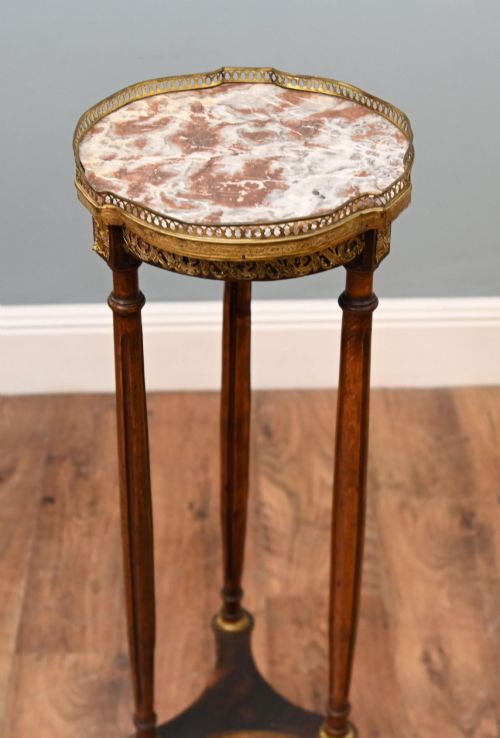
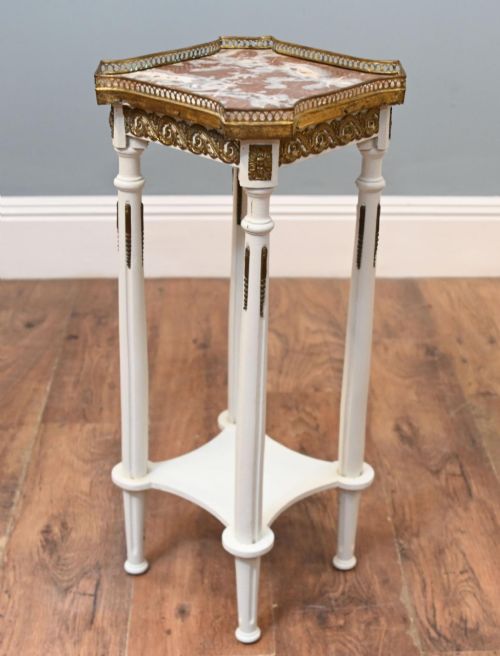
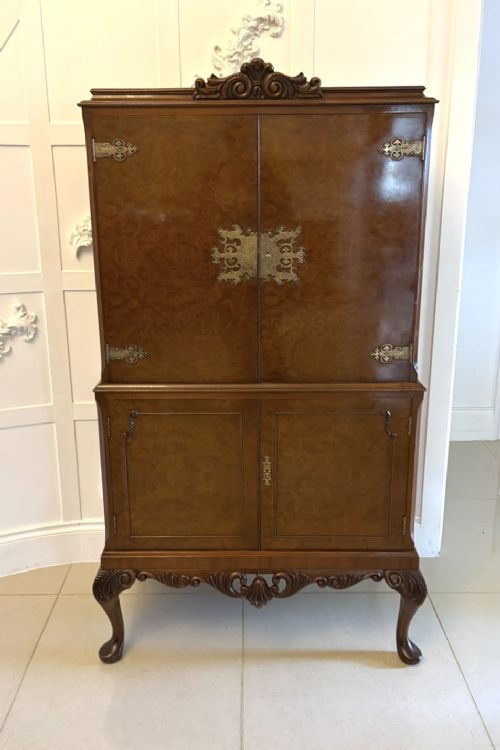
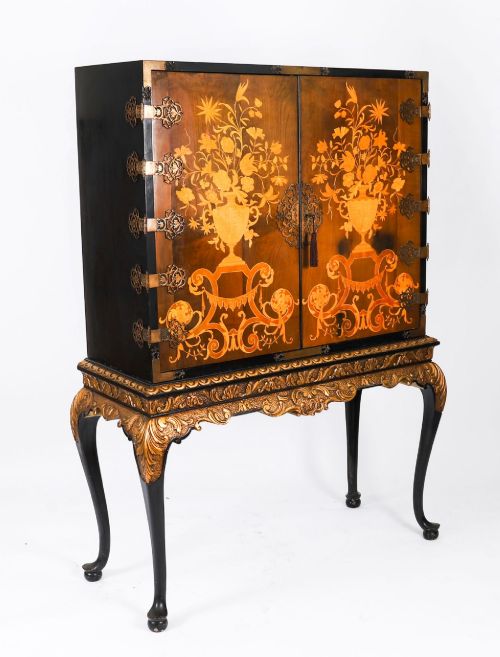
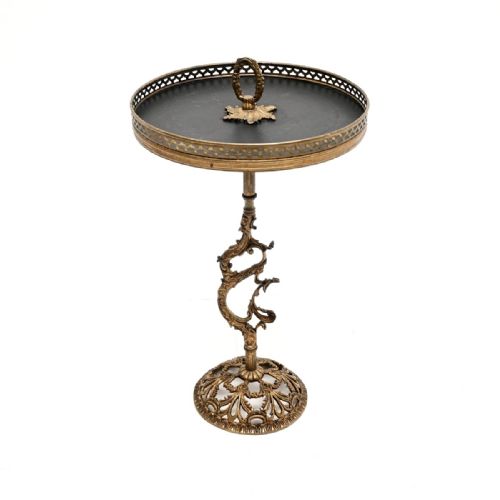
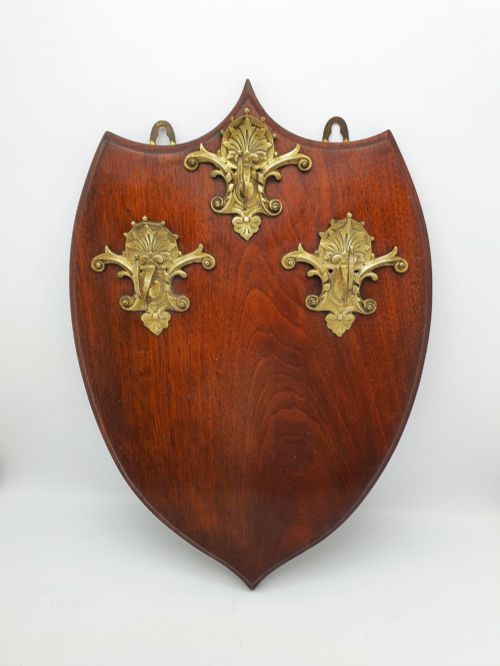
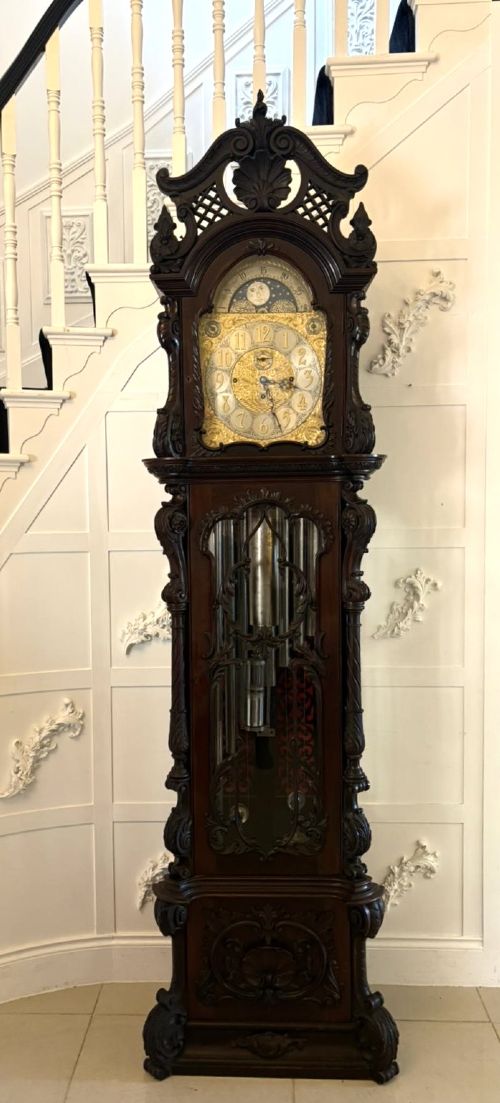
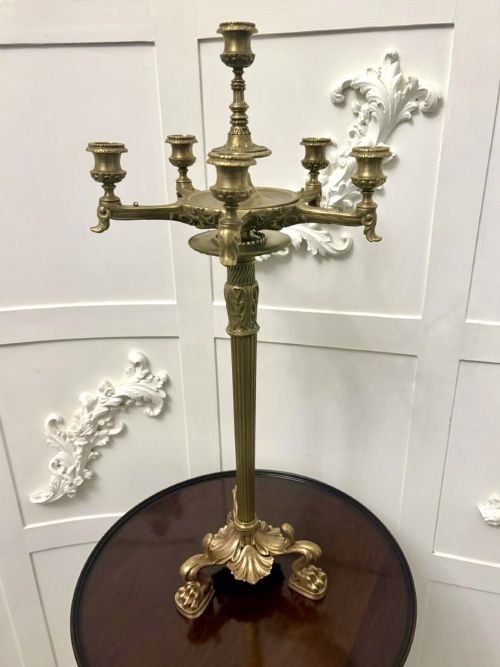



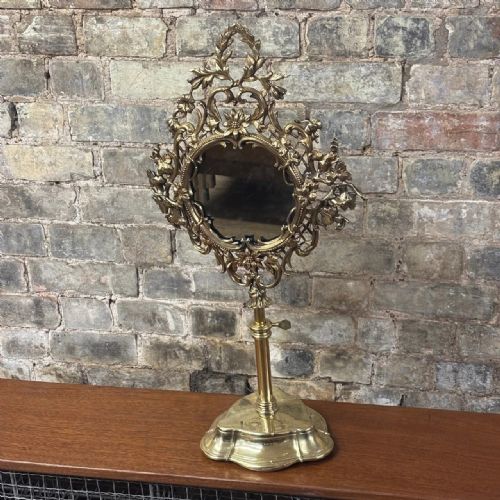
Ornate Brass Stand
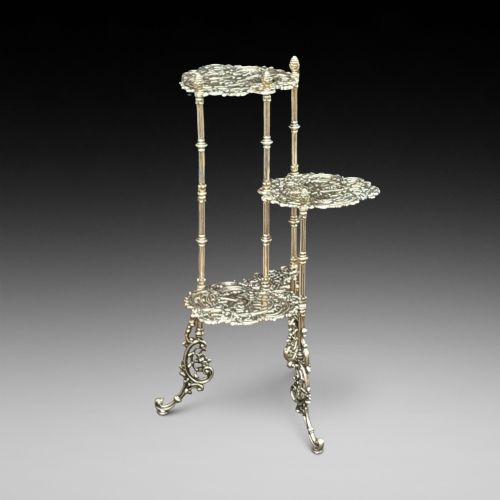
An ornate brass stand brings nineteenth-century weight and continental flair to a room, functioning as a practical support or a decorative focal point.
Ornate Brass Stand
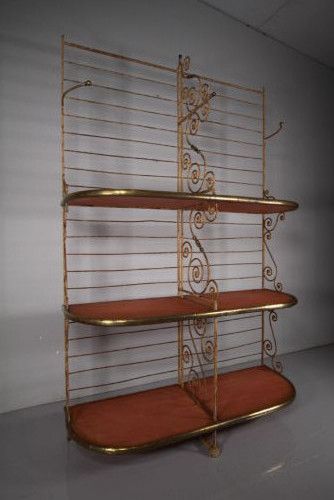
When you search for an ornate brass stand, you encounter a varied collection of nineteenth-century and early twentieth-century metalwork designed for utility and display. The selection spans domestic lighting supports, tabletop mirrors, desk accessories, and larger display pieces.
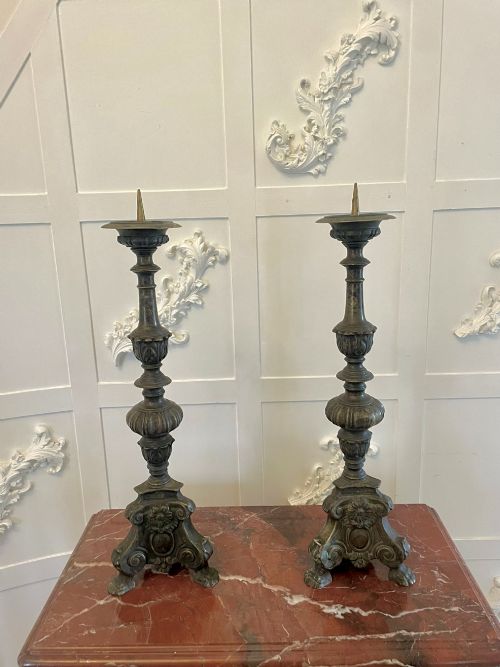
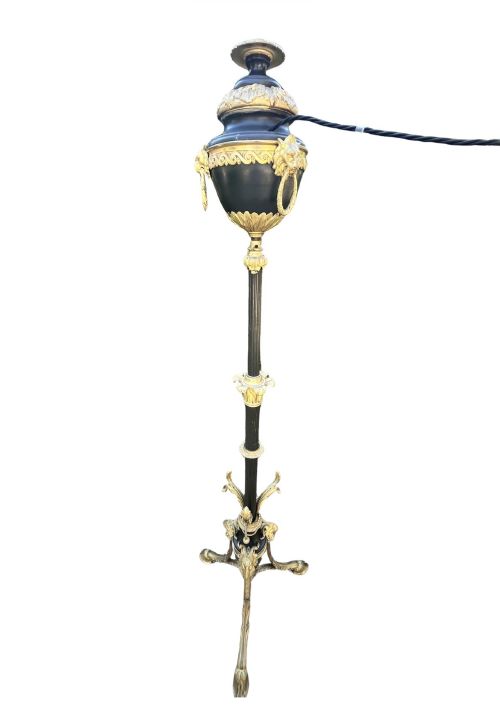
Victorian and Edwardian pieces dominate the offerings, alongside French designs influenced by Rococo Revival and Empire styles. Common forms include floor lamps, standard lamps, candlesticks, and canteens or stands incorporating auxiliary materials like glass and mahogany.
Originating largely from British and French workshops, these items reflect the heavy metalcasting traditions of the eighteen-fifties through to the nineteen-twenties. Buyers select them to anchor period interiors or to add metallic texture to contemporary spaces.
What varies in quality
Quality rests principally in the crispness of the casting and the depth of the subsequent hand-chasing. Superior examples display sharp undercuts, clean leaf veins, and securely joined components without visible pooling of solder or crude casting seams.
The choice of secondary materials marks the upper tiers of production, such as heavy fire-gilt surfaces, genuine onyx mounts, and thick bevelled mirror glass rather than thin pressed sheet metal or inferior timber bases.
Ornate Brass Stand Retail Price Guide 2026
Typical asking prices for ornate brass stand among the pieces listed under this phrase on Sellingantiques today, from the lower quarter to the upper quarter. They describe what is for sale here now, not the wider market.
Listings feature brass, bronze, wrought iron, and mahogany, spanning the 1850s to the 1920s across French and British decorative arts.
The Ornate Brass Stand Glossary
- Champlevé
- An enamelling technique where troughs or cells are hollowed out of the metal surface and filled with vitreous enamel before firing. It frequently appears on nineteenth-century French desk accessories and mirrors.
- Ormolu
- Finely chopped high-karat gold applied to a bronze or brass base using a mercury amalgamation process. The method creates a warm, enduring golden lustre on luxury revival pieces.
- Pricket candlestick
- A candle holder featuring a central sharp metal spike that impales the base of the candle rather than sliding into a socket. They appear frequently in ecclesiastical and decorative Gothic revival forms.
- Rococo Revival
- A nineteenth-century design movement mimicking the asymmetrical scrolls, C-curves, and naturalistic shell motifs of the mid-eighteenth century. It dominates the French decorative metalwork on this page.
- Boulle
- A method of marquetry using brass and tortoiseshell inlaid into cabinet wood, occasionally seen on nineteenth-century French stands and furniture. Named after the famed cabinetmaker André-Charles Boulle.
Ornate Brass Stand: Frequently Asked Questions
How do I clean an antique brass stand?
Dust the piece gently with a dry, soft-bristled brush to remove surface particles without disturbing the aged patina. Avoid aggressive commercial metal polishes that strip away historical character and thin out surface gilding.
If necessary, wipe the metal with a damp cloth and dry it immediately with a soft lint-free cloth. Preservation of the darker recessed areas usually indicates a healthier antique surface.
Are these floor lamps safely wired for modern use?
Most standard lamps and floor lamps originate from the nineteenth or early twentieth centuries and required period rewiring. Buyers should expect to have antique lighting inspected and rewired by a qualified professional before domestic use.
Original brass components and internal channels can usually accommodate modern flex without altering the visible exterior appearance of the standard.
How do I distinguish French nineteenth-century metalwork?
French pieces from the Victorian and Napoleon III periods often display finer hand-chasing, bolder Rococo scrolls, and integrated champlevé enamel or onyx. British equivalents tend toward heavier, utilitarian casting with straightforward brass or mahogany construction.
Look closely at the joinery and the detailing around the base, as French foundries placed particular emphasis on sculptural depth.