



Ornate Brass Lantern
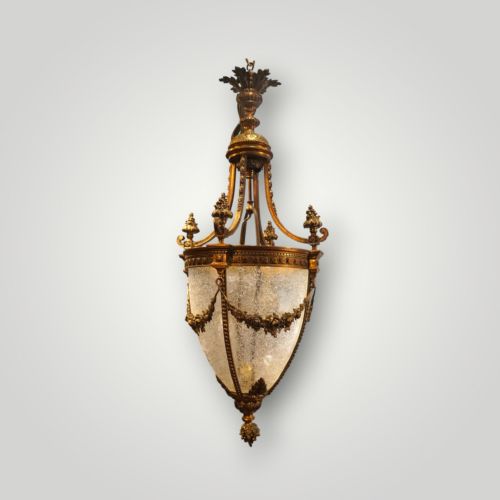
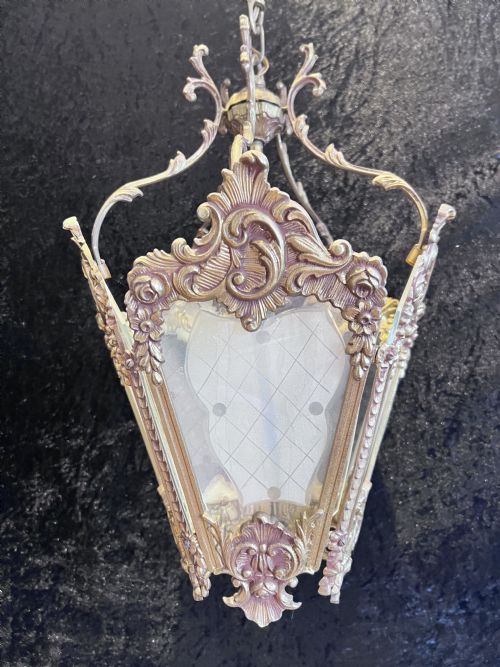
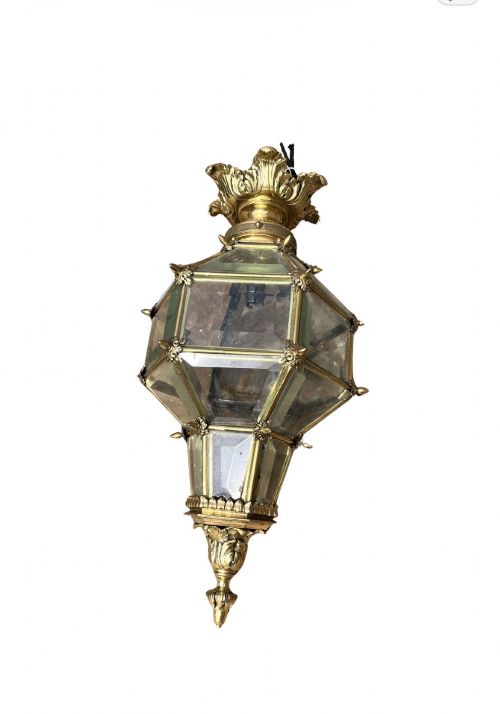
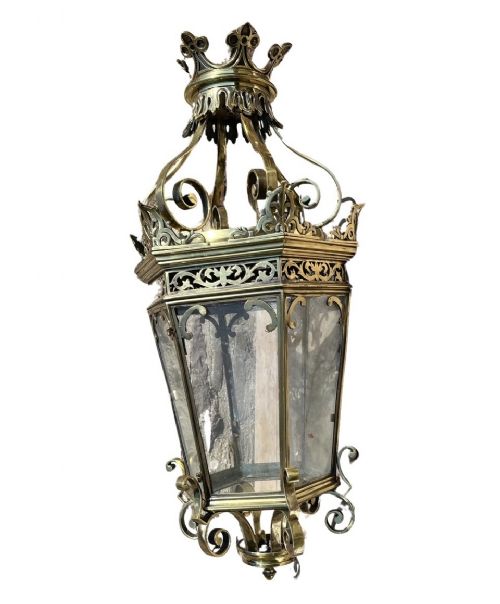
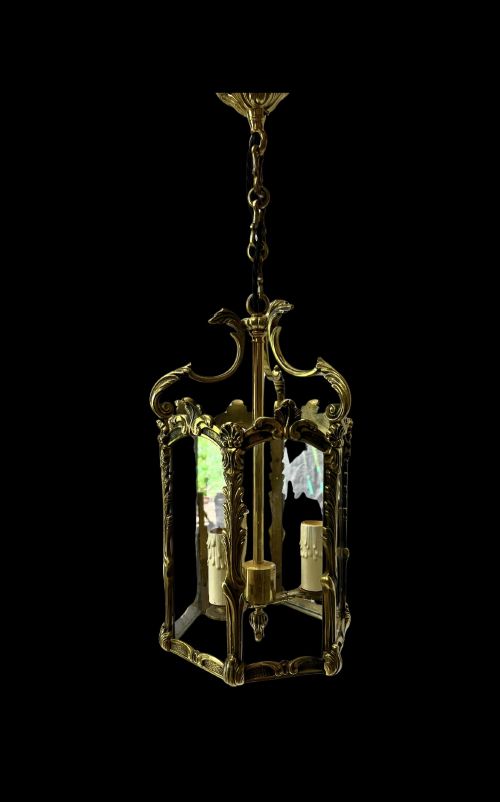
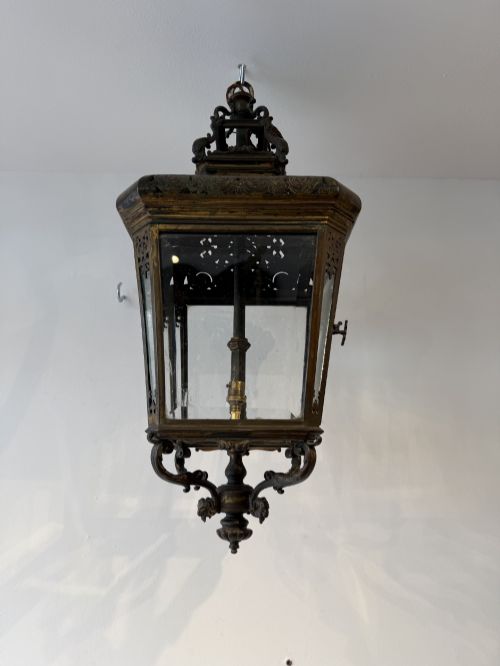
These ornate brass lantern examples bring historical French and Victorian character to a hallway, combining cast metalwork and glass to catch the light.
Ornate Brass Lantern
When you search for an ornate brass lantern, you are looking at overhead lighting designed principally for halls and entryways. The examples appearing on this page span from the nineteenth century into the early twentieth century.
Most pieces follow French Rococo, Louis XVI, or Gothic Revival styles. You will encounter hanging lamps, hexagonal forms, and single light ceiling fixtures featuring glass panels.
Makers drew on historical designs such as the Regence period to create decorative hanging lights for domestic interiors. These ceiling lights serve both a functional purpose and an ornamental role in a room.
How they were made
The construction relies heavily on brass, bronze, and gilded bronze combined with clear or coloured glass panes. Metalworkers cast and chased the brass or bronze to produce intricate scrollwork and decorative frames.
Many items incorporate hinged doors to allow access to the interior light source. Gilding was frequently applied to the brass or bronze surfaces to enhance the visual warmth of the metal.
Ornate Brass Lantern Retail Price Guide 2026
Typical asking prices for ornate brass lantern among the pieces listed under this phrase on Sellingantiques today, from the lower quarter to the upper quarter. They describe what is for sale here now, not the wider market.
Current listings feature pieces spanning the 1860s through to the 1930s, constructed from brass, bronze, glass, and gilded bronze.
What varies in quality
The sophistication of the metal casting separates standard pieces from finer examples. Heavier bronze or gilt bronze frames with crisp chasing demonstrate superior craftsmanship compared to simpler pressed brass constructions.
The complexity of the stylistic ornamentation, such as detailed French Rococo scrolling or precise Louis XVI motifs, dictates the standing of the piece. Preservation of the original gilding and the quality of the integrated glass panels also influence the overall character.
The Ornate Brass Lantern Glossary
- Gilt bronze
- Bronze that has been coated with a thin layer of gold. This technique provides a durable and rich metallic finish.
- Rococo style
- An artistic style characterised by ornate curves, scrollwork, and asymmetrical patterns. It appears frequently in nineteenth-century French lighting design.
- Louis XVI style
- A neoclassical design movement focused on symmetry, straight lines, and classical motifs. Lanterns in this style exhibit more restrained geometric ornamentation.
- Hexagonal hanging hall lantern
- A ceiling light with six sides designed specifically for entranceways and corridors. This geometry allows light to disperse evenly in narrow spaces.
Ornate Brass Lantern: Frequently Asked Questions
Where should I hang a hall lantern?
These fixtures work best in entryways, corridors, or high-ceilinged stairwells where they can act as a primary focal point.
Because they hang from the ceiling, ensure your ceiling height allows adequate clearance for people walking underneath.
How do I identify a French style lantern?
French designs typically feature distinct decorative vocabulary such as Rococo scrollwork or Louis XVI symmetry.
The use of gilded bronze and elaborate cast brass frames also points towards continental workshops of the nineteenth century.
Are these lanterns electrified?
Many surviving examples have been adapted for modern electricity over the years to function as standard ceiling lights.
Check the individual listing details to see the current wiring status of each specific hanging lamp.
What materials were used?
Makers relied primarily on brass, bronze, and gilt bronze for the structural frames and decorative mounts.
Glass panels are fitted into the sides to enclose the light source while letting illumination pass through.