



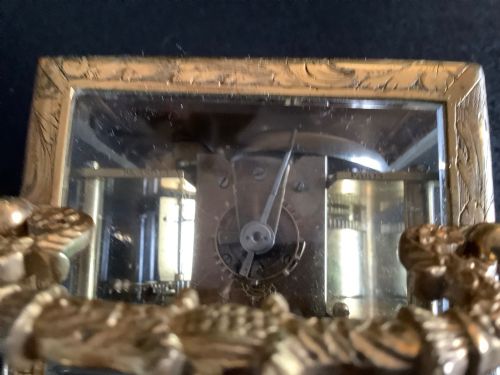

Ornate Brass Dial Clock
An ornate brass dial clock brings mechanical precision and heavy metal artistry together on a mantelpiece.
Ornate Brass Dial Clock
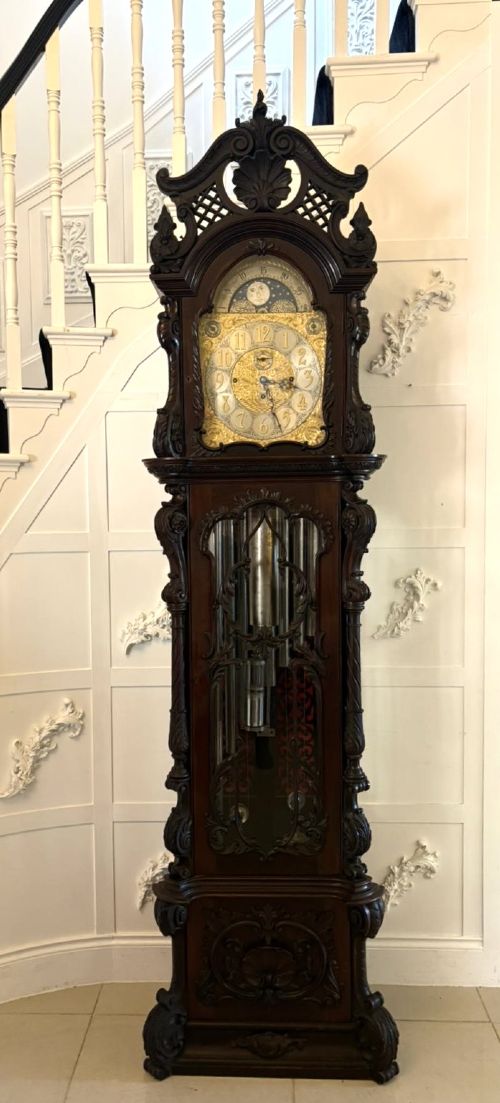
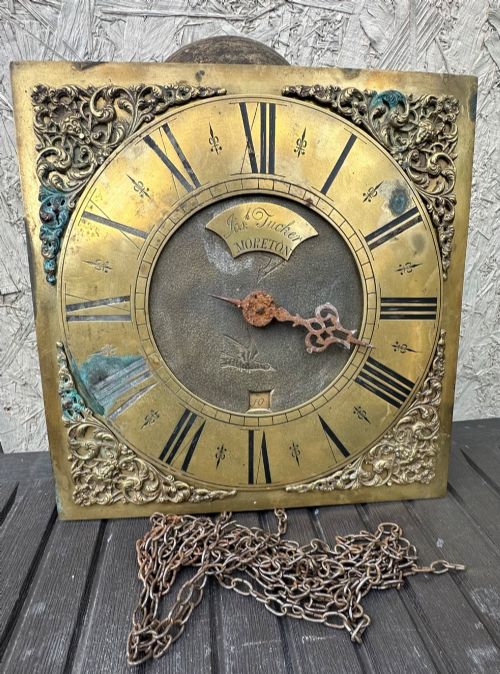
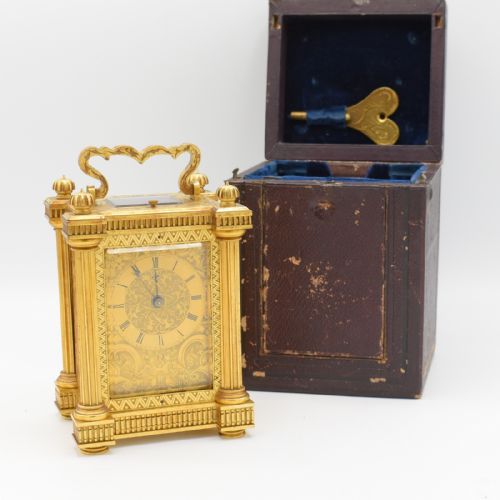
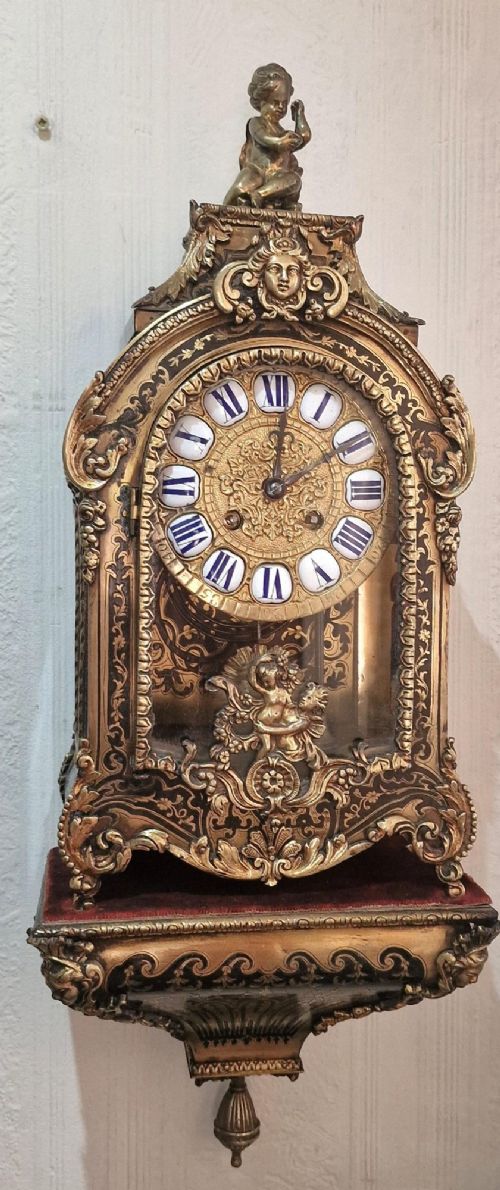
An ornate brass dial clock combines heavy cast metal cases with intricate metallic clock faces, spanning mantel clocks, wall clocks, and portable carriage designs. Buyers searching for an ornate brass dial clock usually encounter nineteenth-century French and Victorian pieces featuring elaborate decorative surrounds.
The selection ranges from early eighteenth-century wall pieces and mid-nineteenth-century fusee designs to late Victorian carriage clocks housed in glass panels. French workshops and English makers dominate the origins, frequently employing gilt brass, ormolu, and silvered metal to frame the central dial.
How they were made
Maker workshops built these timepieces using heavy brass, bronze, and marble frames, often applying fire-gilding or ormolu finishes to the metal surfaces. Glass panels protected delicate enamel dials and exposed escapement mechanisms, while porcelain panels and tortoiseshell veneers added contrasting textures.
Dials received intensive hand-engraving, silvering, and filigree mask work to create complex visual depth around the numerals. Movement construction involved brass gear trains, twin fusee setups, and platform escapements designed for consistent timekeeping.
Ornate Brass Dial Clock Retail Price Guide 2026
Typical asking prices for ornate brass dial clock among the pieces listed under this phrase on Sellingantiques today, from the lower quarter to the upper quarter. They describe what is for sale here now, not the wider market.
The inventory includes carriage clocks, wall clocks, and mantel pieces with porcelain panels and silvered metal dials.
What varies in quality
The standard of an ornate brass dial clock rests on the depth of the metal chasing and the crispness of the engraved details on the dial mask. Heavy fire-gilt surfaces and solid marble or ormolu mounts indicate superior workshop production compared to lighter plated alternatives.
Internal movement complexity separates standard timepieces from grand sonnerie and repeater mechanisms produced by prominent makers. The integration of porcelain panels, tortoiseshell cases, and fine platform escapements further elevates the standing of a piece.
Howell & James·Gontard & Bolviller·Japy Freres·William Payne·Thomas Cole·James Cole·Hunt And Roskell·James Moore·Lenzkirch·E.J.Dent·Paul Garnier·Tiffany
The Ornate Brass Dial Clock Glossary
- Escapement
- The mechanism that regulates the speed of a clock by controlling the release of the gear train. It often sits visibly behind a glass aperture on the dial.
- Fusee
- A conical pulley connected to the mainspring by a chain or cord, designed to equalise the torque as the spring unwinds. This mechanism improves timekeeping accuracy across the power reserve.
- Ormolu
- Finely ground high-carat gold mercury-gilded onto a bronze object. It provides a rich, durable metallic lustre on decorative clock cases.
- Grand Sonnerie
- A striking clock movement that chimes both the hours and the quarters automatically on bells or gongs. Such complications require precise gear interaction.
- Carriage Clock
- A small, portable spring-driven clock originally designed for travel, featuring a protective glass case and a top carrying handle.
Ornate Brass Dial Clock: Frequently Asked Questions
How do I wind a carriage clock safely?
Use the dedicated winding key on the underside or back of the movement, turning it gently until resistance stops the motion. Avoid over-winding, as this can place excessive tension on the mainspring.
Keep the clock upright during the process to protect the delicate balance wheel and platform escapement from accidental knocks.
What is a repeater mechanism?
A repeater mechanism allows the clock to chime the last elapsed hour and quarters on demand when a small lever or button on the case is pressed. This function was originally designed for telling time in the dark.
Carriage clocks equipped with this feature contain extra gear trains and acoustic gongs inside the brass case.
How do I identify a fusee movement?
Look inside the back door for a conical grooved pulley paired with a fine chain or gut line attached to the spring barrel. This distinctive shape helps distribute even power to the gear train.
Twin fusee setups typically power both the timekeeping train and the striking train independently.
Where should I place a heavy marble clock?
Position the clock on a stable, level surface such as a mantelpiece or heavy sideboard that can safely support substantial weight. A stable foundation ensures the pendulum or escapement beats evenly.
Avoid areas subject to direct sunlight, dampness, or extreme temperature fluctuations which can affect the metal and dial materials.