




Ornate Vases
These ornate antique vases bring nineteenth-century French and English display pieces into modern rooms through porcelain, bronze, and marble forms.
Ornate Vases
Ornate antique vases encompass a diverse group of nineteenth-century decorative vessels, ewers, urns, and flower holders made across England and continental Europe. When searching this phrase, collectors encounter Victorian porcelain works, French ormolu-mounted marbles, and elaborately decorated earthenware.
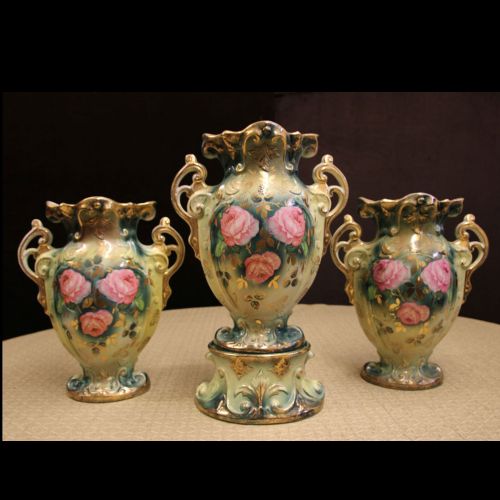
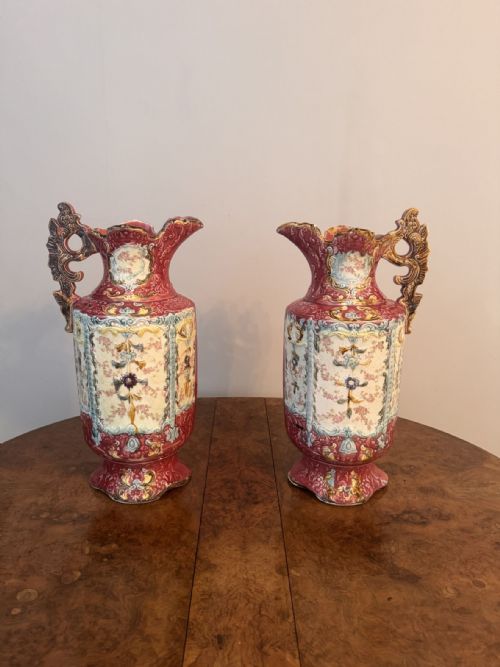
The objects span multiple decades from the Victorian era into the early twentieth century, reflecting varied design movements including Neoclassical, Rococo Revival, and Art Nouveau. Many survive as matched pairs intended for mantel garnitures or table display.
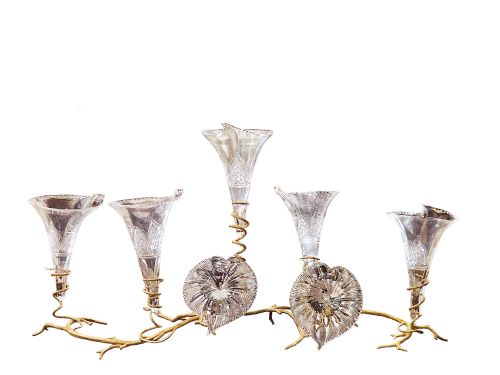
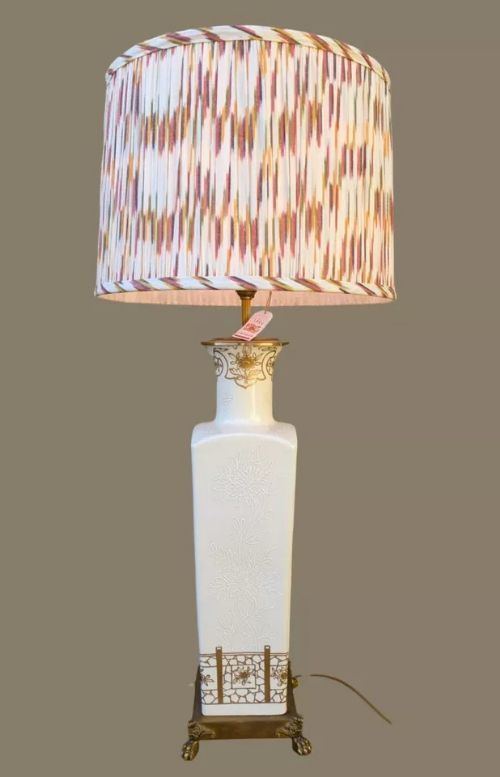
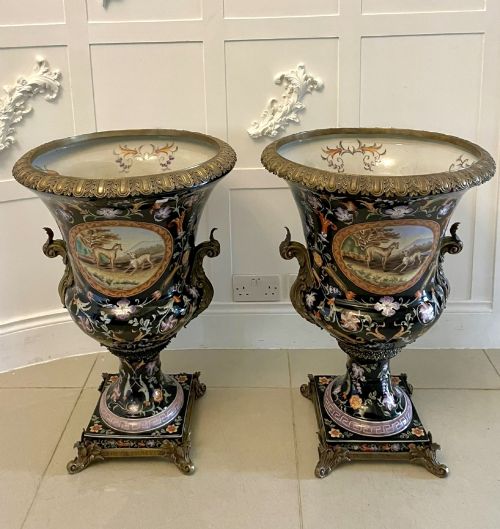
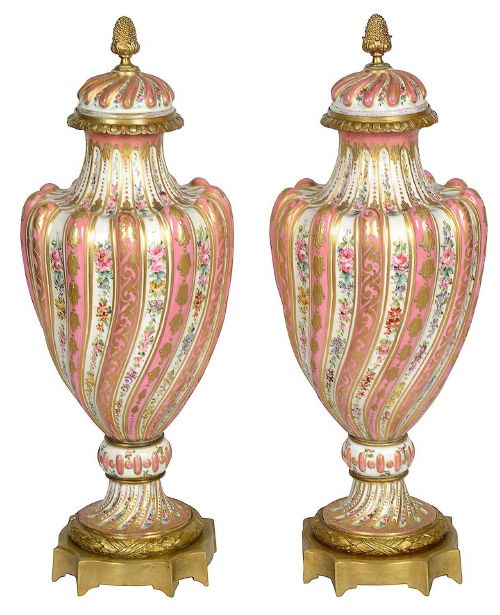
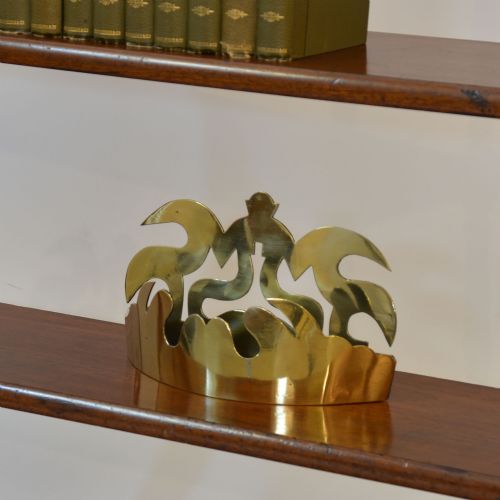
Forms range from large Sevres-style lidded vessels and heavy bronze ewers to reticulated porcelain and brass wall pockets. These pieces function primarily as decorative centrepieces rather than functional flower containers.
How they were made
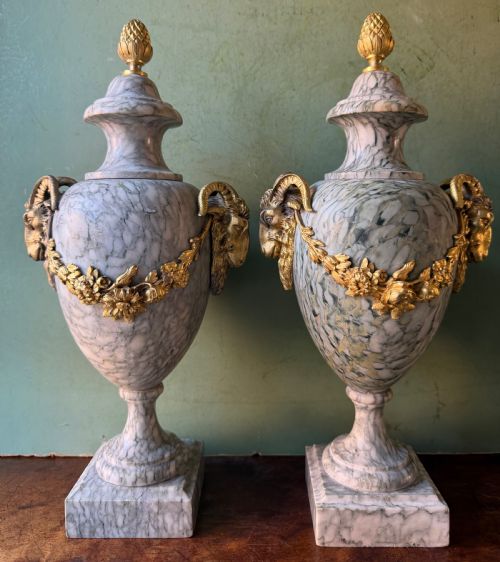
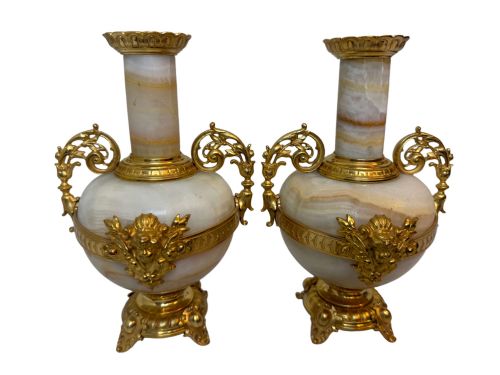
Craftsmen utilised a combination of ceramic production and metal casting, mounting porcelain and crystal bodies with cast brass, gilt bronze, or ormolu mounts. Surface decoration frequently involved hand-painting, enamel work, and applied gilding or gold leaf.
Stoneware, majolica, and hard-paste porcelain formed the main ceramic bodies, shaped by moulding or throwing before undergoing high-temperature firing. Stone components such as alabaster and Campan vert marble were turned on lathes and hand-finished.
Metal elements relied on lost-wax or sand-casting techniques to achieve intricate figural handles, pierced galleries, and decorative bases before being assembled with threaded metal rods and bolts.
Ornate Vases Retail Price Guide 2026
Typical asking prices for ornate vases among the pieces listed under this phrase on Sellingantiques today, from the lower quarter to the upper quarter. They describe what is for sale here now, not the wider market.
Listings feature nineteenth-century porcelain, brass, and gilt bronze vases originating from English and French makers.
What varies in quality
The standard of execution in metal mounts dictates much of the distinction between ordinary and superior pieces. Finer items exhibit crisp, deeply chased bronze or ormolu details where individual leaves, figures, and scrollwork remain sharp and well-defined.
Ceramic quality is judged by the refinement of the paste and the skill applied to hand-painted scenes or gilding. Pieces bearing factory marks from recognised makers or specialised ceramic artists generally demonstrate superior control over glaze application and firing.
Proportion and harmony between disparate materials also define better examples. A successful piece maintains balanced weight distribution between heavy stone or ceramic bodies and their intricate metal mounts.
Toussaint Gelton·William Duffield·Barbedienne
The Ornate Vases Glossary
- Ormolu
- A gilded bronze technique popular in French decorative arts where ground gold is applied to a copper-alloy metal base. This treatment gives mounts a bright, durable golden surface.
- Ewer
- A large jug with a wide spout and elaborate handle, traditionally used for holding water but produced in ceramic and metal as a purely ornamental display piece.
- Garniture
- A set of three or more matching decorative objects, such as vases and urns, designed to be displayed together on a mantelpiece or sideboard.
- Reticulated
- A pierced or openwork pattern cut into ceramic or metal surfaces to create intricate lattice designs. This technique requires considerable skill during the drying and firing stages to prevent warping.
- Champleve
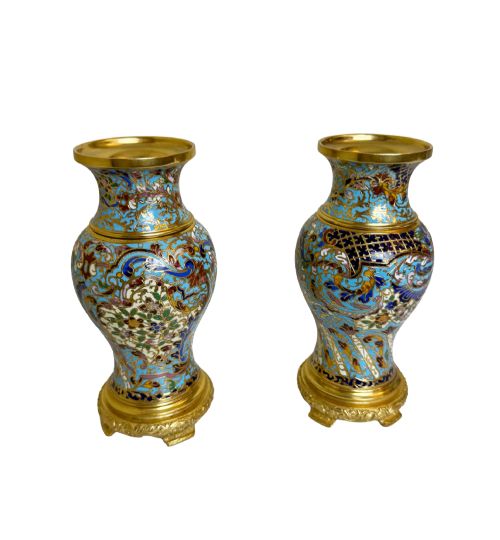
- An enamelling technique where troughs are dug into a metal surface and filled with vitreous enamel powder before firing. The resulting design displays colourful sections divided by thin metal lines.
Ornate Vases: Frequently Asked Questions
What were ornate antique vases used for?
These vessels served primarily as decorative display items within nineteenth-century drawing rooms and parlours rather than functional containers for cut flowers. Many formed part of larger garniture sets arranged on mantelpieces or flanking clocks.
Larger urns and ewers acted as architectural focal points on pedestals or tables, demonstrating the wealth and artistic taste of the household through costly materials like ormolu and hand-painted porcelain.
How do you style antique vases at home?
Displaying these pieces involves placing them where their materials and surface details catch natural light, such as on central tables, empty mantels, or open sideboards. Because many survive as pairs, keeping them together creates symmetrical balance in a room.
It is best to keep surrounding decor minimal to let the intricate brass mounts, gilding, and painted scenes remain the visual focus of the space.
How can you tell Victorian vases apart from French pieces?
French pieces from the nineteenth century frequently incorporate fire-gilded ormolu mounts, rich patination, and styles derived from Louis XVI or Rococo Revival traditions. Makers in Paris often produced elaborate Sevres-style porcelain bodies with classical motifs.
Victorian items made in England often draw upon local manufacturing strengths, utilising specialised porcelain bodies from factories like Royal Worcester alongside distinct brass or silver-plated mountings.
Are these antique vases water tight?
Many nineteenth-century decorative vessels were created exclusively for visual display and may feature internal joins, porous ceramic bodies, or mounted metal bases that are not sealed for moisture. Using them to hold water and fresh flowers can risk damaging historic interior surfaces or glazes.
For safety, collectors generally use these objects dry or employ hidden inner glass liners if floral arrangements are necessary.