

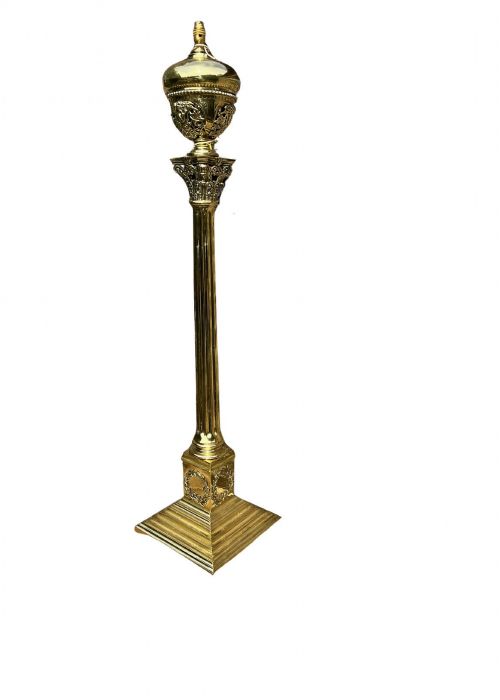


Ornate Floor Lamp
An ornate antique floor lamp brings architectural presence and adjustable illumination to a room, offering height and character that modern lighting simply cannot match.
Ornate Floor Lamp
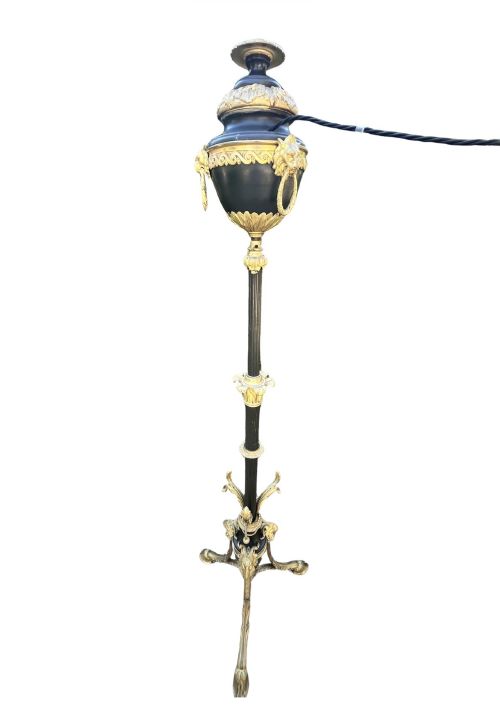
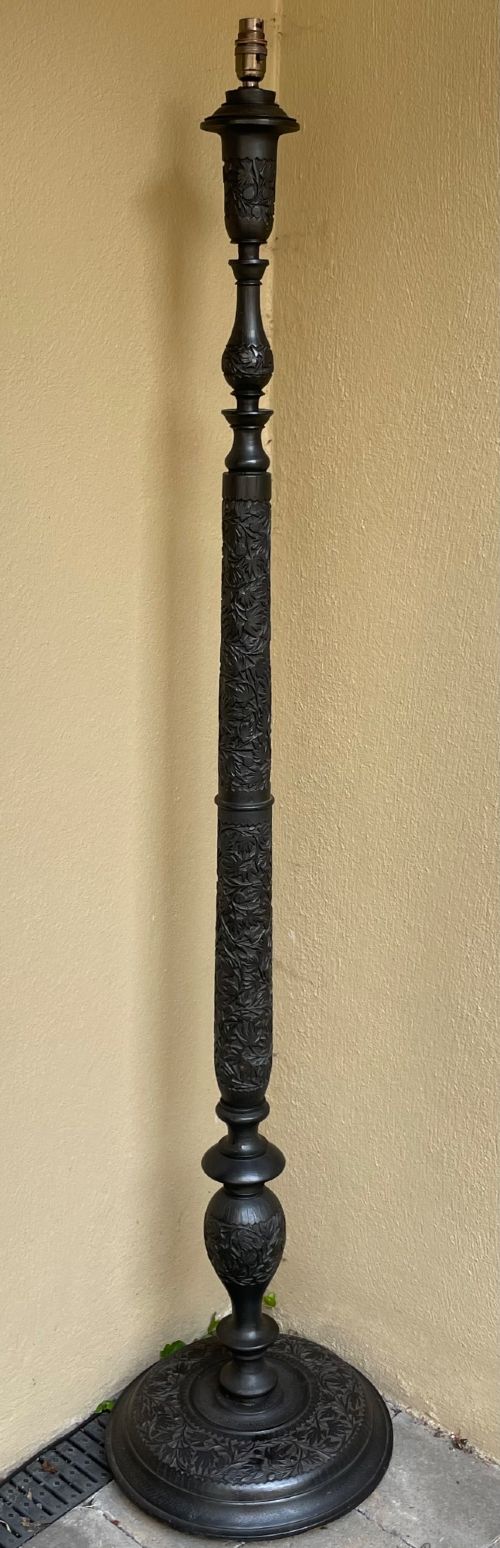
An ornate antique floor lamp functions as a major interior focal point, combining height with decorative metalwork or carved timber. These objects are most frequently encountered as standard lamps or torcheres standing tall in the corner of a reception room.
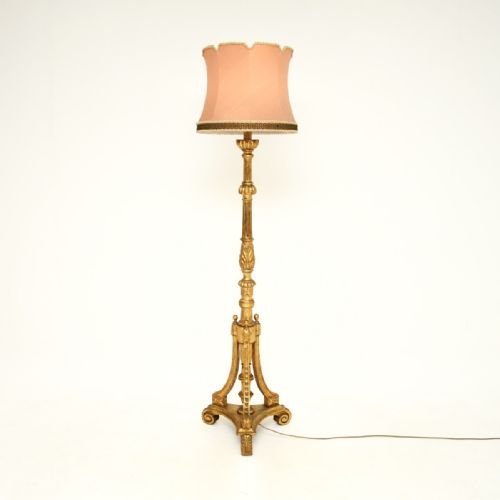
The pieces on this page span from the mid-nineteenth century through to the early decades of the twentieth century. Examples range from heavy Victorian brass columns to giltwood creations carrying French Chateau or Italian Baroque influences.
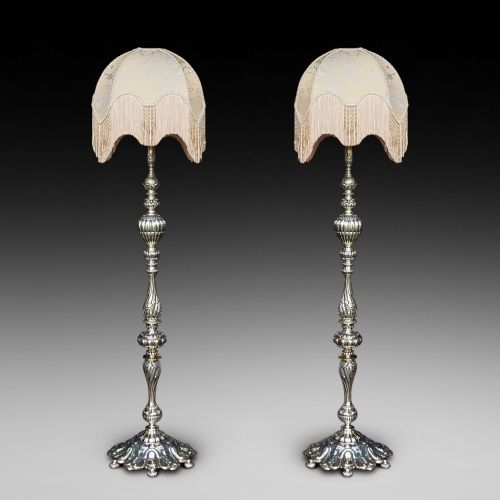
Makers and designers drew upon diverse aesthetic movements, producing Anglo-Indian, Art Nouveau, and Classical Revival models. Buyers meet everything from telescopic brass oil lamp conversions to carved wooden standards paired with fabric fringes.
How they were made
Makers utilised cast and spun brass to construct durable telescopic columns and scroll arms. These metal standards often feature intricate floral openwork bases and adjustable mechanisms designed for oil or early electric wiring.
Carved wood and giltwood examples demonstrate traditional joinery combined with heavy gilding and ormolu mounts. Artisans shaped timber into ornate Italianate, Florentine, and French boudoir forms before applying gold leaf or paint.
Shades and finishing touches incorporated fabrics such as velvet, silk, and elaborate fringe trims. Material combinations frequently paired polished marble columns with heavy brass fittings to create stable, weighted bases.
What varies in quality
The integrity of the structural metalwork and the precision of the adjustable mechanisms distinguish superior examples. Heavy cast brass components and smooth telescopic extension actions indicate higher workshop standards than lighter, pressed sheet alternatives.
Depth and crispness in carved timber ornamentation separate ordinary production from finer decorative pieces. Giltwood standards that retain deep, sharp chisel work and high-grade gold leaf gilding sit at the upper end of the scale.
Completeness of original period components, such as matching heavy brass bases, scroll arms, and period fabric elements, dictates the desirability of a standard lamp.
Messenger
The Ornate Floor Lamp Glossary
- Standard lamp
- A tall floor-standing lamp designed to illuminate a room from a raised light source. This term appears frequently alongside floor lamp in historical listings.
- Torchere
- A tall ornamental stand originally designed to carry a torch or candle, later adapted for electric lighting. These pieces often feature slender carved wooden or gilt columns.
- Telescopic
- An adjustable column design allowing the height of the lamp to be raised or lowered. This mechanical feature often utilised screw keys or internal spring mechanisms.
- Ormolu
- Gilded bronze or brass applied as decorative mounts onto furniture and light standards. The technique produces a rich gold-coloured surface finish.
- Cairoware
- Metalwork decorated with intricate silver and copper inlay in traditional Islamic geometric patterns. These decorative objects occasionally appeared on standard lamp bodies during the early twentieth century.
Ornate Floor Lamp: Frequently Asked Questions
How do I adjust the height?
Many period standards incorporate a telescopic brass mechanism secured by a thumb screw or internal ratchet. Loosening the collar allows the upper shaft to slide up or down before locking into the desired position.
Care should be taken with older extension mechanisms to support the weight of the fitting while adjusting the height to prevent strain on internal wiring or threads.
Were these originally oil lamps?
A significant portion of nineteenth-century standards began life as oil-burning floor lamps featuring reservoirs and burners. These were subsequently converted to electricity during later twentieth-century rewiring.
Conversion details often remain visible near the top collar, where original burner galleries were adapted to receive lampholders and shades.
How do I date a brass standard lamp?
Dating relies upon examining base weight, casting techniques, switch types, and stylistic cues such as Art Nouveau whiplash lines or Victorian floral openwork. Heavy cast brass bases and screw-key adjustments typically point toward late nineteenth or early twentieth-century manufacture.
Comparing the proportion of the column and the complexity of the scroll arms against documented periods helps narrow down the decade of production.