


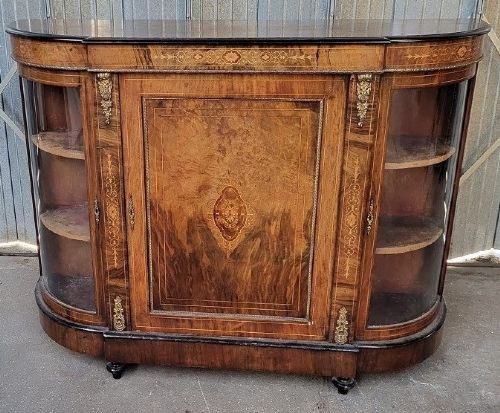


Ornate Credenza
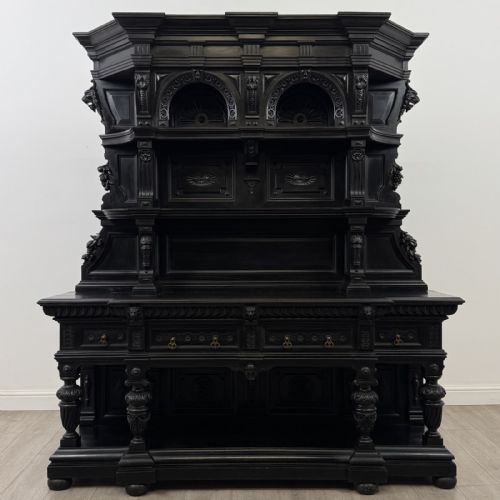
An ornate antique credenza brings nineteenth-century presence into a room through figured woods and polished metal mounts.
Ornate Credenza
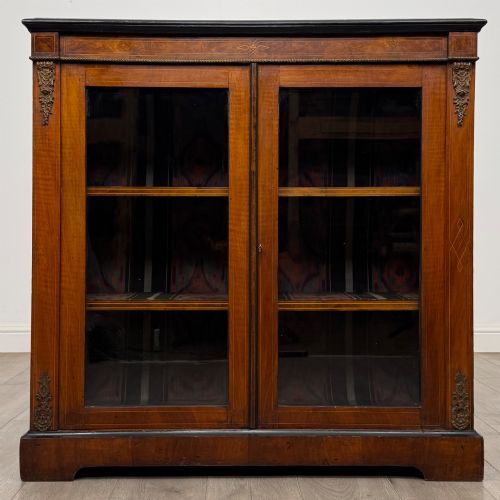
When you search for an ornate antique credenza, you encounter nineteenth-century display furniture primarily built in walnut, burr walnut, and rosewood. These low cabinets traditionally stood in formal reception rooms to hold silver, glassware, or decorative objects upon their marble or wood tops.
The pieces appearing on this page span the Victorian era, the 1860s, the 1870s, the 1880s, and into the 1930s. Alongside true credenzas, the selection includes related forms such as pier cabinets, sideboards, cabinets, and display cabinets that share similar decorative ambitions.
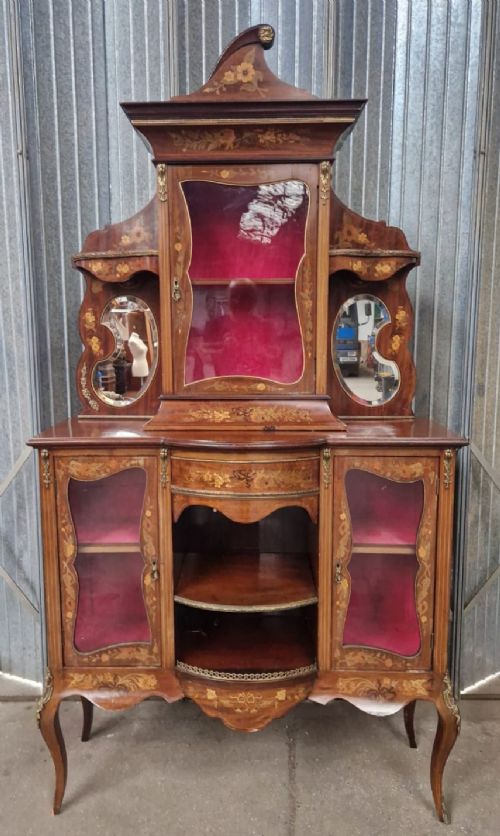
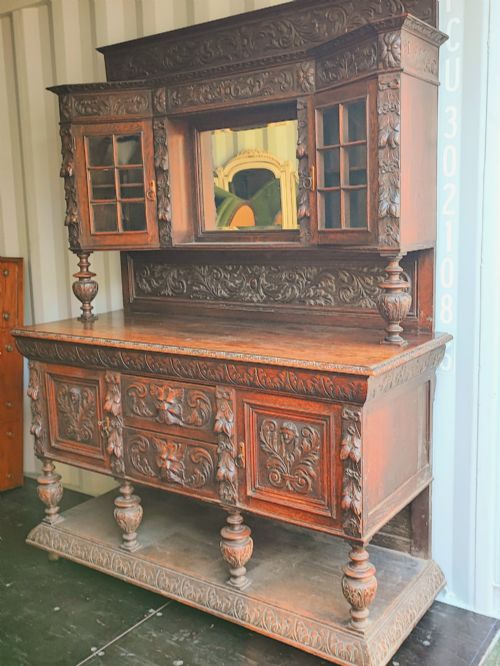
Revival styles dominate the offerings, drawing heavily on French Rococo, Louis XV, Louis XIII, Renaissance Revival, and Jacobean motifs. You find curved serpentine shapes, mirrored backs, glazed doors, and flanking side cabinets that emphasise symmetry and display.
How they were made
Cabinetmakers constructed these forms using solid frameworks of oak, walnut, or mahogany, applied with finely figured burr walnut, rosewood, and tulipwood veneers. Marquetry inlay and contrasting banding defined the flat surfaces, while carved elements lent sculptural depth.
Cast ormolu mounts, brass details, and glass panels were integrated to frame doors and highlight architectural breaks. Marble tops provided heavy, durable surfaces on specific console and cabinet forms, contrasting with polished timber interiors.
Several cabinets include secret writing drawers and hidden compartments, designed for nineteenth-century correspondence.
What varies in quality
The refinement of the carved ornament and the precision of the marquetry inlay separate standard production from exhibition pieces. Finer examples display crisply cast ormolu mounts and carefully selected burr walnut veneers with balanced, symmetrical grain patterns.
Structural complexity also distinguishes the range, such as curved serpentine shapes, fitted secretaire drawers, or integrated mirror backs with turned columns. The integration of materials like marble and specialised timber banding reflects the original maker's ambition.
Sigmund Jaray, Wien
The Ornate Credenza Glossary
- Credenza
- A low cabinet, often fitted with glazed central doors and flanking curved compartments, designed for display and storage in nineteenth-century reception rooms. They frequently feature ormolu mounts and inlaid wood surfaces.
- Ormolu
- Gilt bronze mounts applied to furniture edges, doors, and feet for decorative contrast. This technique was widely utilised during the Victorian period to emulate French styles.
- Burr walnut
- Timber sliced from walnut tree growths that produce intricate, swirling grain patterns. It served as a favoured veneer for high-status Victorian cabinets.
- Marquetry
- The art of applying small pieces of wood veneer to a structure to form decorative patterns or pictures. It appears frequently on the doors and panels of revival cabinets.
- Pier cabinet
- A narrow upright cabinet designed to fit wall spaces between windows. They often incorporate glass doors and velvet-lined interiors for displaying porcelain.
Ornate Credenza: Frequently Asked Questions
What is an antique credenza used for?
These low cabinets served as formal display furniture in nineteenth-century drawing rooms and dining spaces. They held porcelain, glassware, and silver behind glazed or paneled doors.
Today, they function as sideboards or media consoles, providing surface display space and concealed interior storage for modern living rooms.
How do you style a credenza?
Pair the cabinet with a complementary mirror or painting hung directly above the surface to anchor the piece visually. Keep the top arrangement balanced with lamps, ceramics, or sculptural objects.
Allow the figured burr walnut and ormolu mounts to remain the primary focus by avoiding clutter across the timber or marble top.
What woods were used for credenzas?
Walnut and burr walnut form the primary timber choice across most nineteenth-century examples. Rosewood, oak, mahogany, and tulipwood also appear frequently in bandings and carcases.
Exotic timbers like padauk feature in specific Anglo-Indian revival pieces within the selection.
How do you date a Victorian credenza?
Examine the secondary woods inside the carcase, the style of the brass and ormolu mounts, and the complexity of the veneer work. 1860 and 1870 examples often favour heavy French revival influences with elaborate marquetry.
Later pieces from the 1880s and the 1930s introduce Arts and Crafts oak or specialised cocktail cabinet interiors.