





Ornamental Clock
An ornamental clock sits at the heart of a room, bringing together mechanics and decorative arts from the eighteenth and nineteenth centuries.
Ornamental Clock
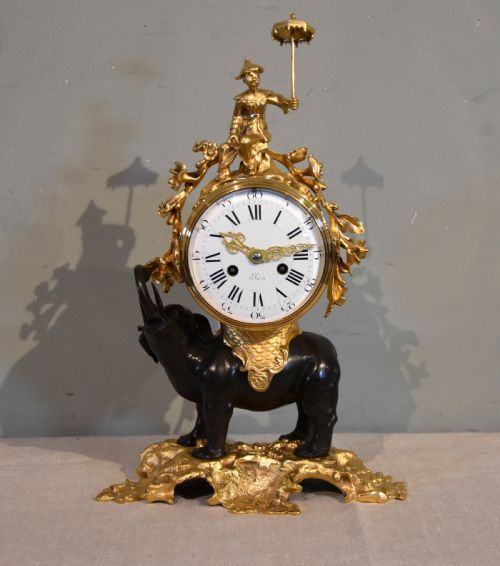
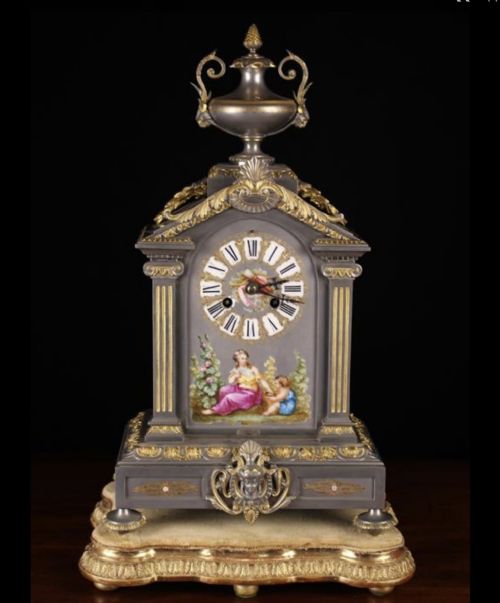
An ornamental clock combines timekeeping with elaborate sculptural or architectural decoration, serving as both a functional object and a decorative centrepiece. When searching for an ornamental clock, buyers encounter a diverse selection ranging from robust bracket clocks to intricate mantel and desk designs. The pieces on this page heavily favour nineteenth-century French manufacture, incorporating distinct styles such as French Empire, Louis XVI Revival, and Rococo Revival alongside British examples.
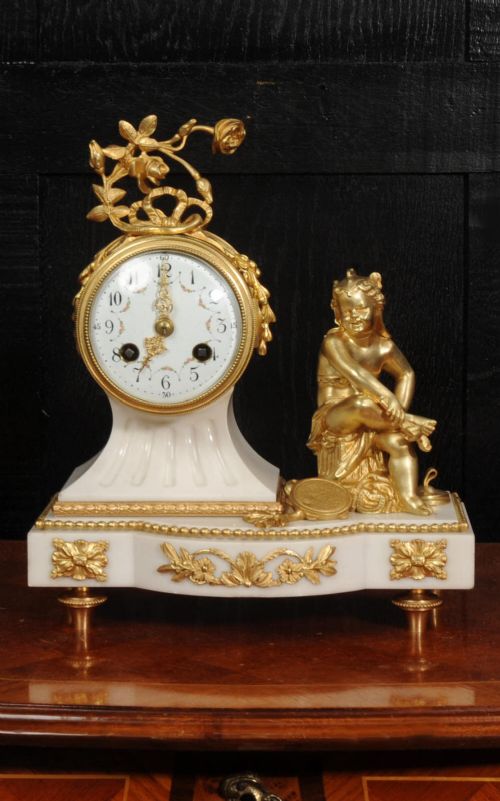
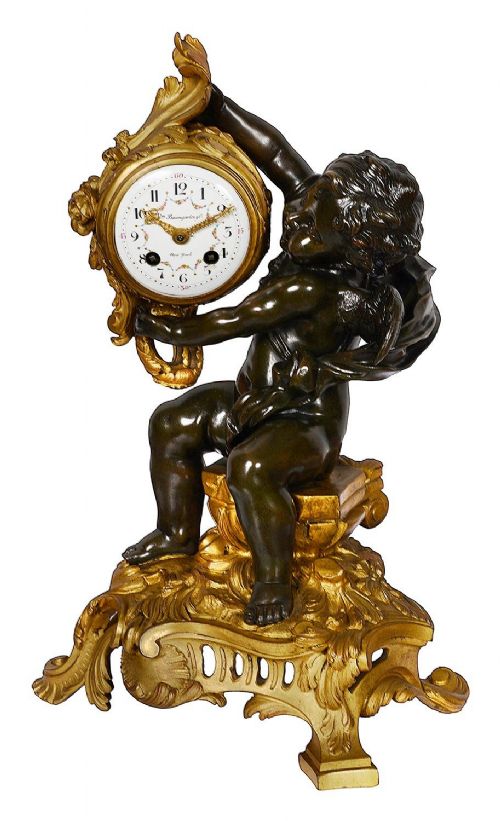
Forms span from traditional mantel clocks and carriage clocks to multi-piece clock garnitures and architectural portico or lyre mystery clocks. Many feature figural elements, including cherubs, animals, and classical motifs cast in bronze or ormolu. These objects were designed for prominent display in domestic interiors, reflecting the shifting tastes of the Georgian, Victorian, and later periods.
Materials and construction
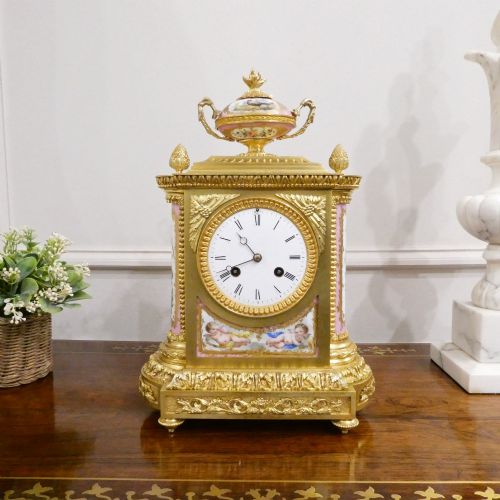
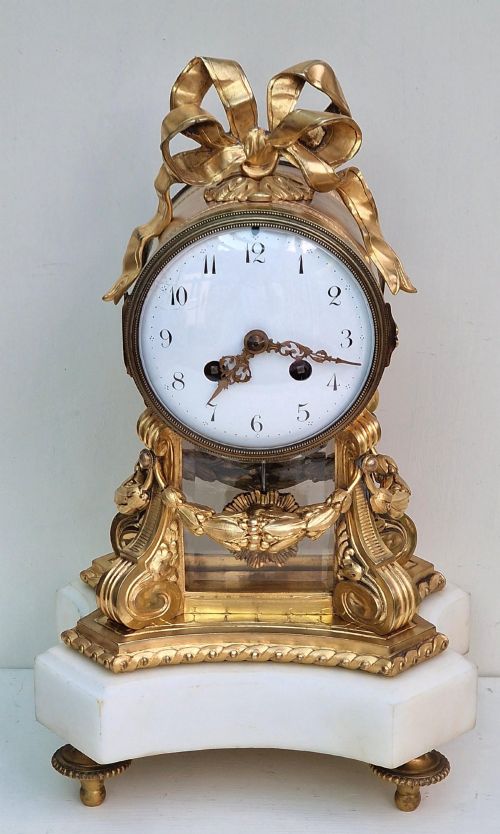
Maker workshops relied on a combination of cast metals, natural stone, and ceramic components to build the housing for each movement. Gilt bronze, ormolu, brass, and gilt metal provide the metallic structure, frequently paired with white marble, coloured marble, or alabaster bases. Porcelain panels and enamel dials add colourful contrast, often decorated with hand-painted scenes or delicate numerals.
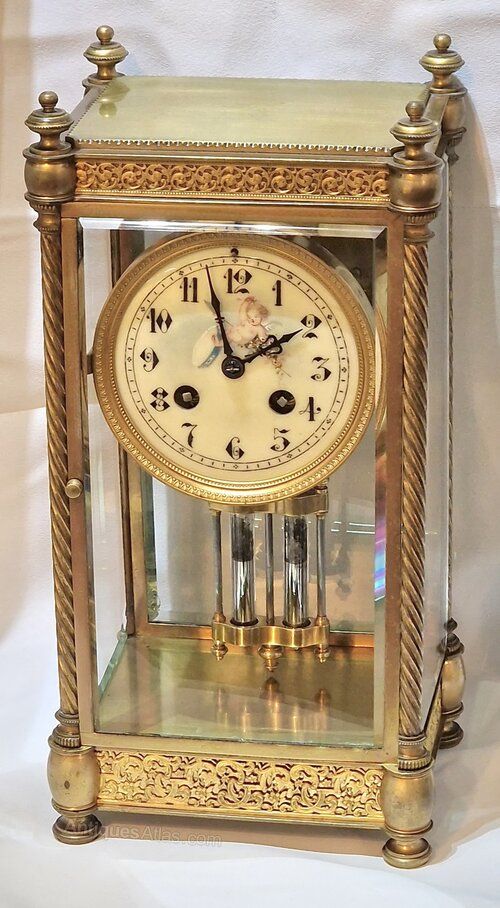
The casing technique involved meticulous metal casting, chiselling, and fire gilding, alongside cabinetmaking for wooden variants in rosewood, oak, or lacquered finishes. Movements housed inside these cases range from standard eight-day striking mechanisms to specialised double fusee or quarter-striking systems. Glass panels are utilised in four-glass designs to expose the internal mechanics and pendulum swing.
Ornamental Clock Retail Price Guide 2026
Typical asking prices for ornamental clock among the pieces listed under this phrase on Sellingantiques today, from the lower quarter to the upper quarter. They describe what is for sale here now, not the wider market.
Several clocks feature tiny sculpted cherubs intently watching the pendulum swing past.
Assessing quality and craftsmanship
The sophistication of the movement and the integration of the dial also dictate the tier of the piece. Fine enamel work, complex striking trains, and signed movements by known makers elevate a clock above standard production models. The harmony between the decorative case and the mechanical housing remains a central indicator of superior workshops.
Jean-Baptiste Delettrez·Japy Freres·Henry Dasson·Ravrio·Lemerle Charpentier·Chater And Son·James Murray·F Marti
The Ornamental Clock Glossary
- Ormolu
- Finely chopped gold leaf amalgamated with mercury and applied to bronze, then heated to drive off the mercury. This historic fire gilding technique produces a durable, rich golden lustre on metal mounts.
- Clock garniture
- A matching set consisting of a central clock flanked by matching decorative objects such as urns or candelabra. These sets were designed to sit symmetrically on a mantelpiece.
- Cartel clock
- A wall-mounted clock housed in an ornate frame made of carved wood, gilt metal, or bronze. They emerged in France during the baroque period.
- Portico clock
- A mantel clock designed with an architectural architectural frame resembling a classical portico, supported by columns. They often incorporate a suspended pendulum visible within the open central structure.
- Double fusee
- A mechanical movement using conical pulleys and chains to equalize the pull of the mainspring as it unwinds. This system helps maintain consistent timekeeping accuracy.
Ornamental Clock: Frequently Asked Questions
How do I maintain an antique ornamental clock?
Regular care involves keeping the clock away from direct heat sources and excessive moisture. Professional oiling and servicing every few years ensures the mechanical movement continues to function reliably.
Wind the clock gently using the correct key, taking care not to over-tighten the mainspring. If the clock stops or runs irregularly, consult a specialist clock restorer rather than attempting internal adjustments.
Where should I place a clock garniture?
A clock garniture is designed for symmetrical placement on a wide mantelpiece, sideboard, or console table. The central clock anchors the display, with the matching side pieces arranged evenly on either side.
Ensure the surface is level and stable to support the considerable weight of marble and bronze components. Adequate clearance allows pendulum movement and striking mechanisms to operate without obstruction.
What is the difference between a carriage clock and a mantel clock?
Carriage clocks were originally built as portable timepieces for travellers, featuring integrated carrying handles and protective leather cases. They are typically smaller, enclosed in brass and glass frames, and designed to sit on desks or bedside tables.
Mantel clocks are larger, heavier stationary objects intended for permanent display on a fireplace mantel or shelf. They rely on diverse materials like marble, porcelain, and heavy bronze rather than portability.
How can I identify the period of a French clock?
Stylistic clues provide the clearest indication of age, such as the classical restraint of Empire models versus the ornate curves of Rococo Revival pieces. Maker signatures stamped on the backplate or movement offer further chronological markers when cross-referenced with working dates.
Materials also help narrow the timeframe, as specific combinations of porcelain panels, gilt bronze, and marble gained popularity during distinct nineteenth-century decades.