
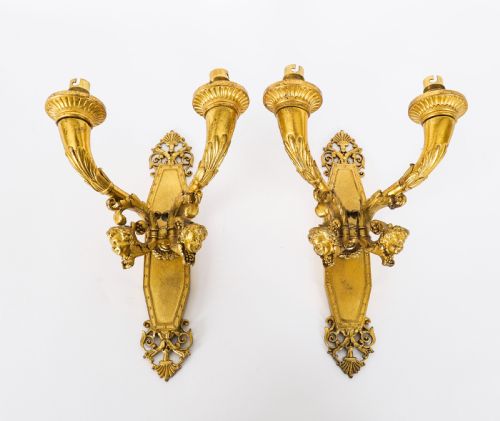
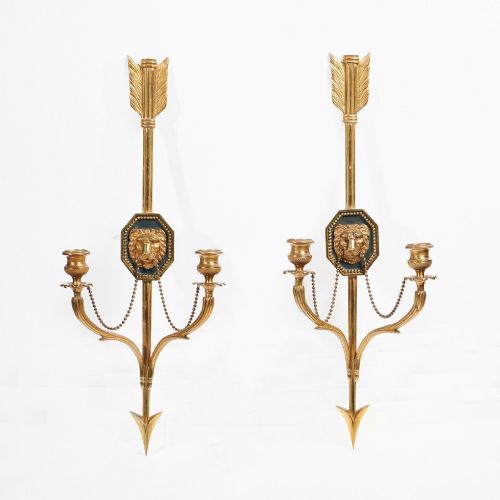
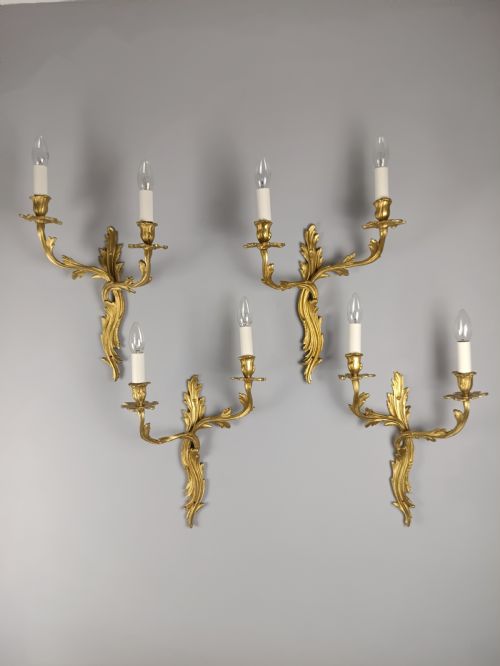
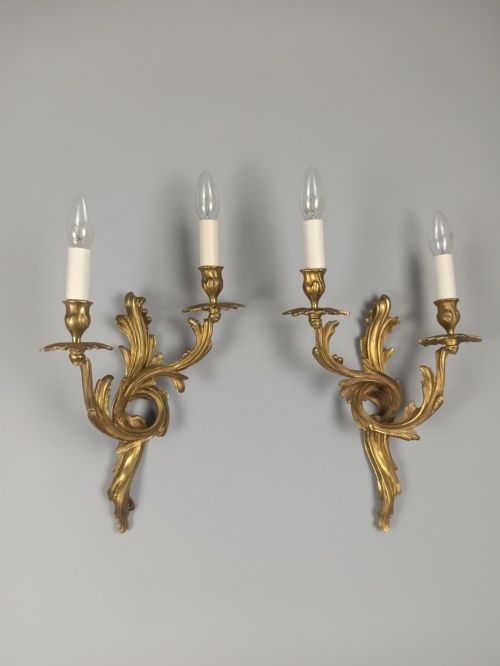
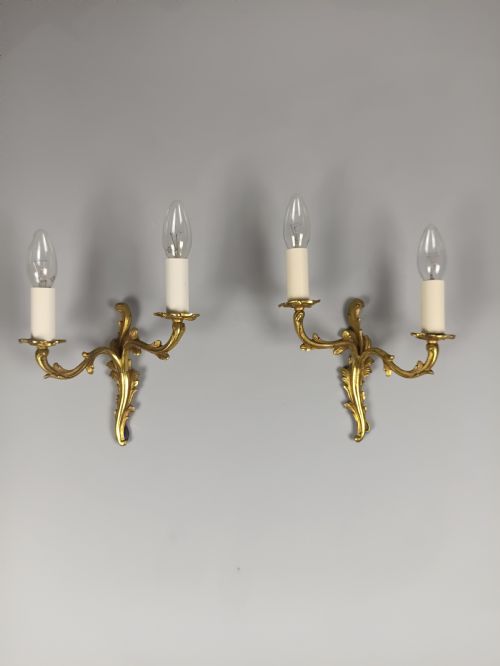
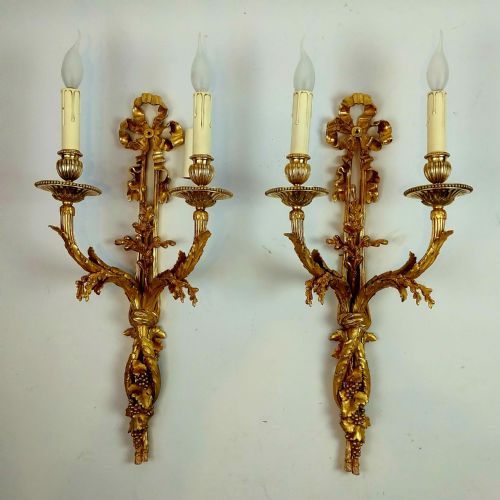
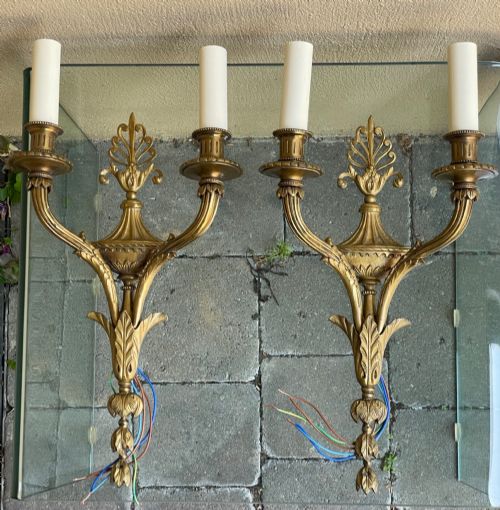
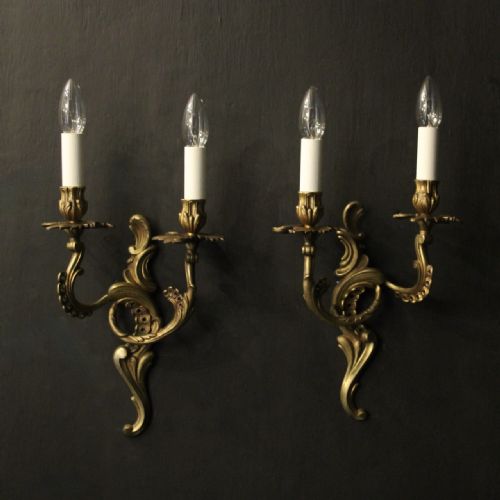
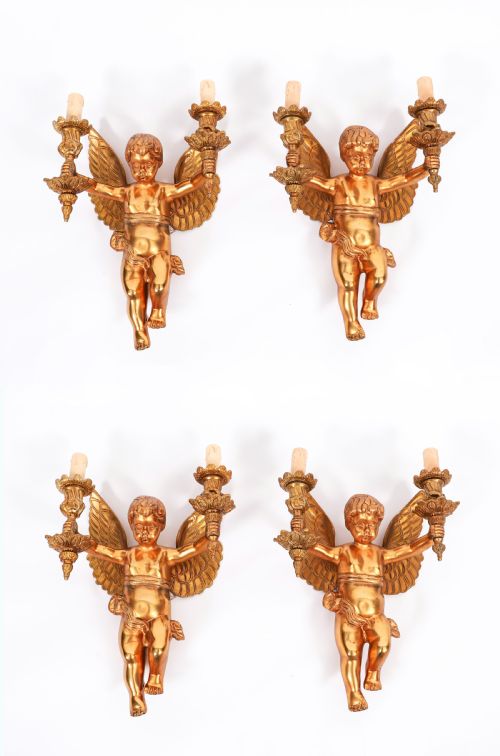


Ormolu Two Light Appliques
These ormolu two light appliques bring warmth and traditional illumination to a room, offering the charm of period French metalwork.
Ormolu Two Light Appliques
When you search for ormolu two light appliques, you encounter wall-mounted light fittings designed to hold two candles or electrical bulbs. The listings show these pieces originating predominantly from France, with examples spanning the nineteenth century and early decades of the twentieth century.
The most common forms are wall lights and wall sconces configured with twin branches or arms. You will frequently meet revivals of historical design periods, including Louis XV, Louis XVI, and French Empire styles.
Many of these wall lights take the form of symmetrical pairs, though sets of three or four also appear. Their primary purpose is decorative accent lighting, mounted directly onto interior walls.
How they were made
The construction of these appliques relies heavily on cast metal, specifically bronze, brass, and gilt metal. Makers applied layers of gold to the bronze or brass base to achieve the characteristic bright ormolu surface finish.
Surface treatments also include patinated metal variants alongside the dominant gilded finishes. Certain pieces incorporate crystal elements to complement the metallic arms and enhance the reflection of light.
Several of these wall lights feature cheeky cast cherubs keeping watch over your hallway branches.
What varies in quality
The crispness of the casting marks the division between standard production and finer execution. Sharper chisel work and deeper relief in scrollwork or figural elements indicate superior craftsmanship during the manufacturing process.
The durability and richness of the gilding further distinguish the tiers of quality. Finer examples retain an even, warm metallic lustre across the intricate contours of the twin branches.
The Ormolu Two Light Appliques Glossary
- Ormolu
- Gilded bronze, produced by applying a mercury and gold amalgam to a bronze base and heating it. This technique creates a durable, rich golden surface typical of fine decorative hardware.
- Applique
- A wall-mounted light fitting designed to hold candles or electric lamps. In historical contexts, the term is frequently used interchangeably with wall sconce.
- Gilt Bronze
- Bronze metal that has been coated with a thin layer of gold. It provides the bright metallic finish seen on many nineteenth-century wall lights.
- Louis XV Revival
- A nineteenth-century design style emulating the asymmetric scrolls, curves, and natural motifs of the mid-eighteenth-century French court. Pieces in this style show lively, organic forms.
- Patinated Metal
- Metal that has undergone a chemical treatment or natural ageing to produce a darkened surface finish. This contrasts with the bright reflective quality of ormolu.
Ormolu Two Light Appliques: Frequently Asked Questions
How do I install antique wall lights safely?
Many period wall lights require professional rewiring to meet modern electrical standards before mounting. Ensure your electrician secures the fixture firmly to a suitable wall block.
Because historical wiring deteriorates, checking the internal components protects both your property and the antique fitting during daily use.
Where should I place appliques in a room?
Wall lights suit flanking positions around fireplaces, mirrors, or large artworks to create balanced illumination. Placing them at eye level provides flattering ambient light.
Keep in mind the two-branch spread when choosing a location, allowing enough clearance from doorframes and surrounding furniture.
How do I clean gilded bronze safely?
Dust the metal gently with a soft, dry brush to remove surface particles without disturbing the finish. Avoid abrasive cloths or chemical cleaners that strip the gold layer.
Using moisture can damage older metallic surfaces, so dry maintenance remains the safest method for preserving ormolu.
How can I tell a revival piece from an earlier one?
Examine the casting quality and the construction of the fixing points on the backplate. Nineteenth-century revival pieces often display the heavier, robust casting techniques characteristic of that era.
Stylistic cues, such as Louis XIV or Empire motifs combined with nineteenth-century fixing screws, usually point to a revival period manufacture.