

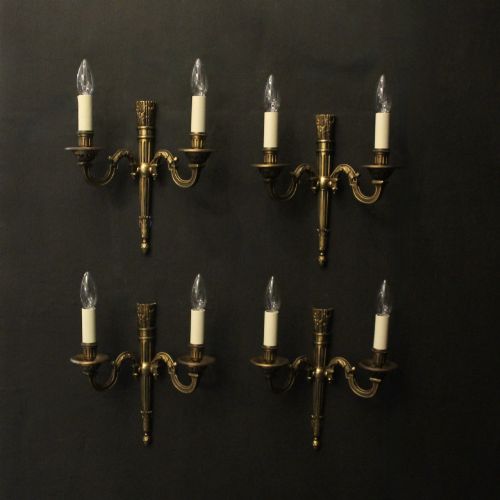
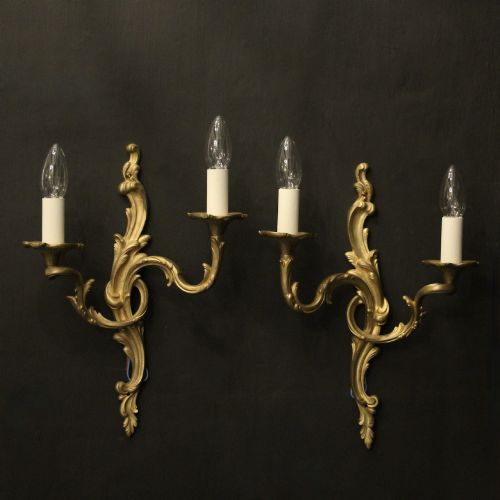
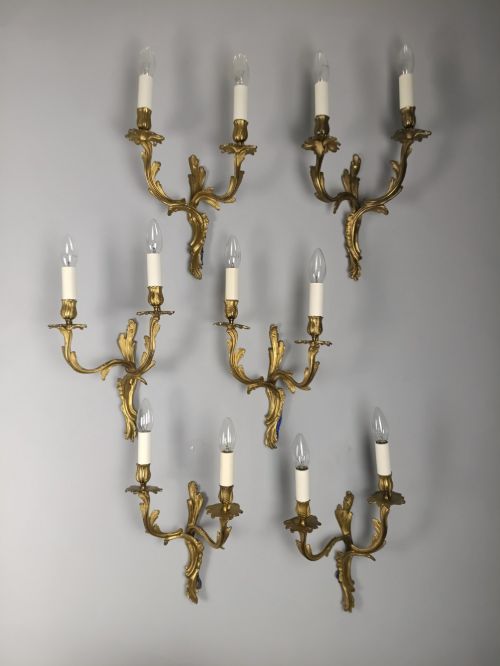
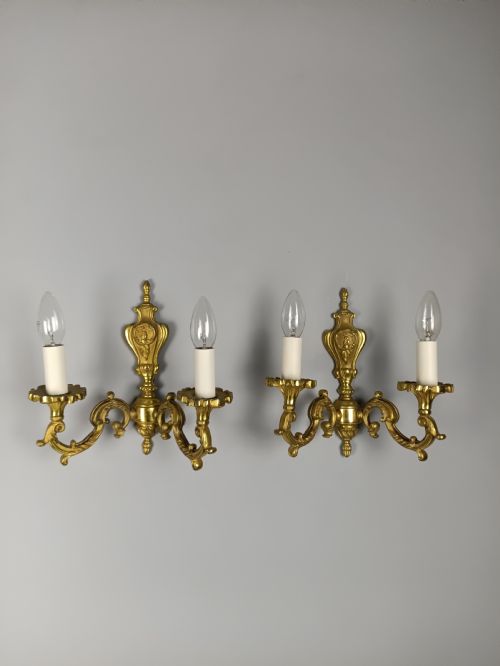
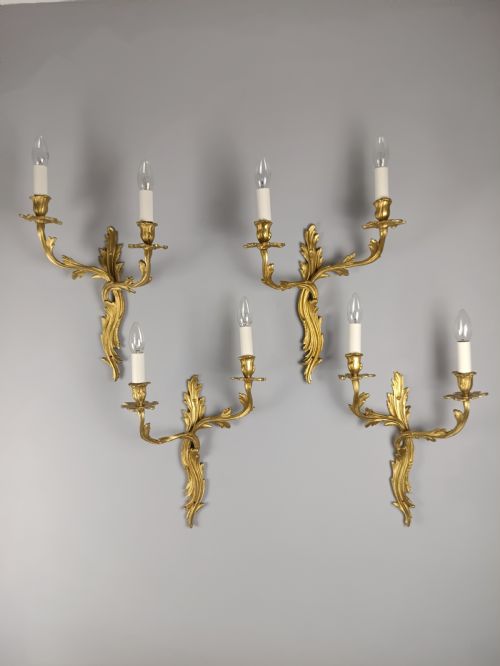
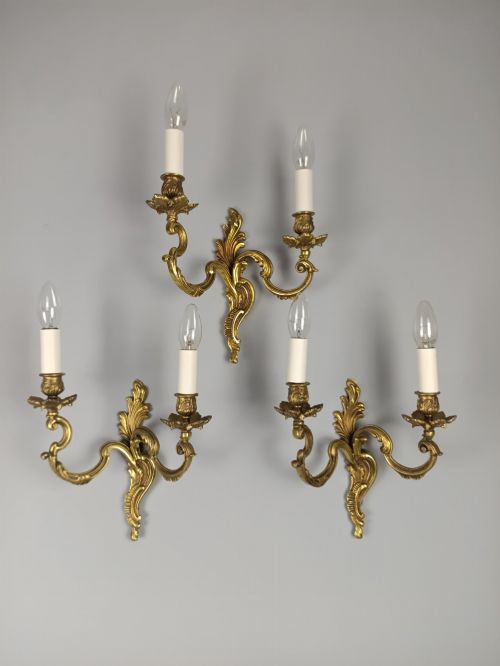
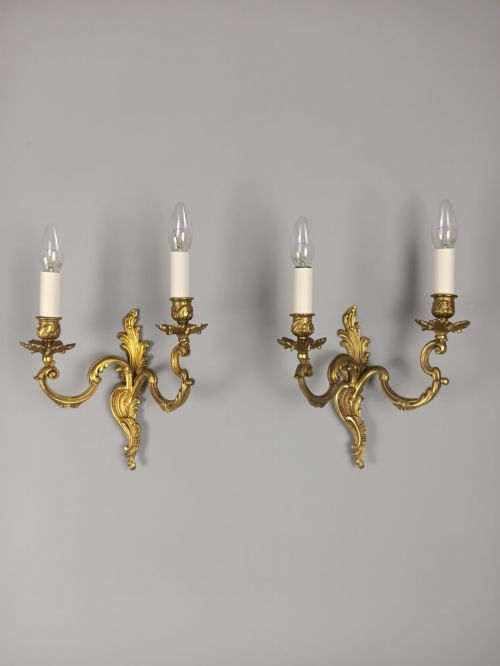
Bronze Twin Wall Applique
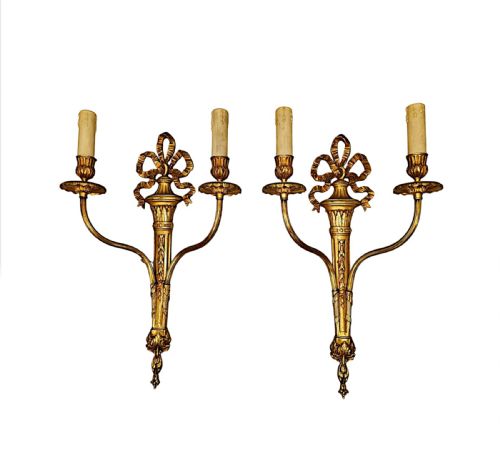
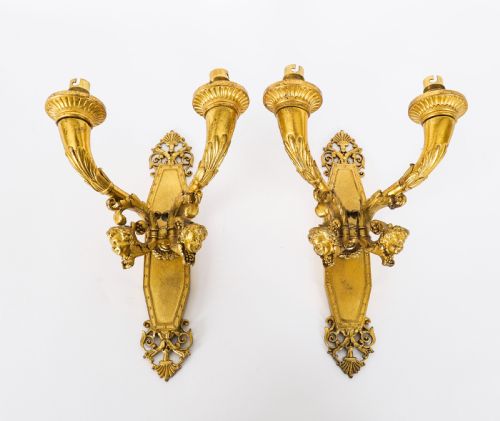
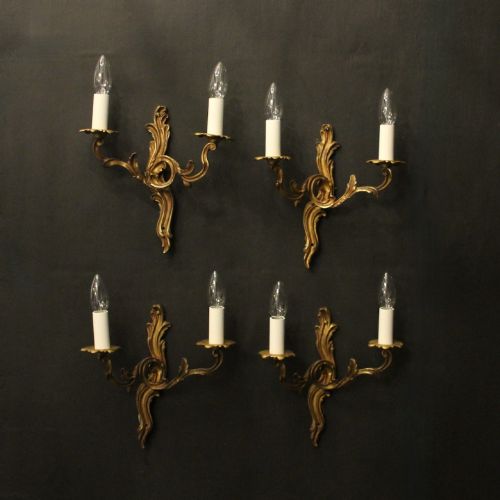
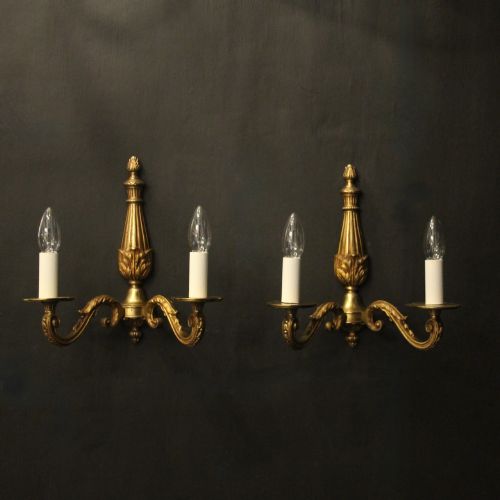
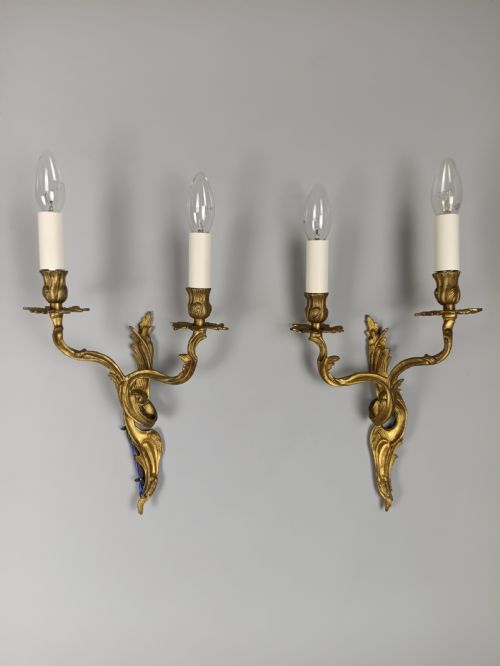
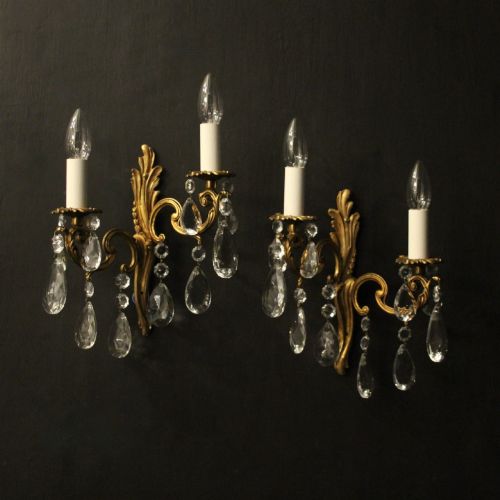
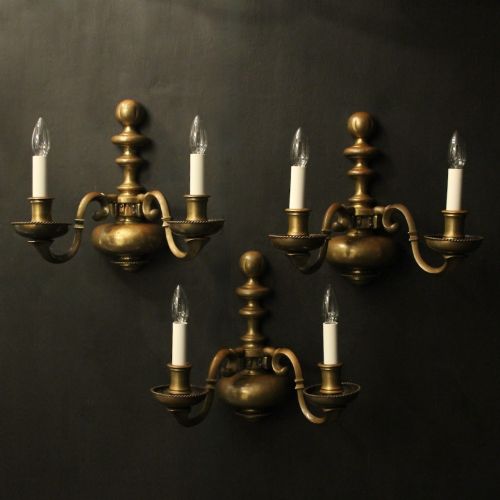
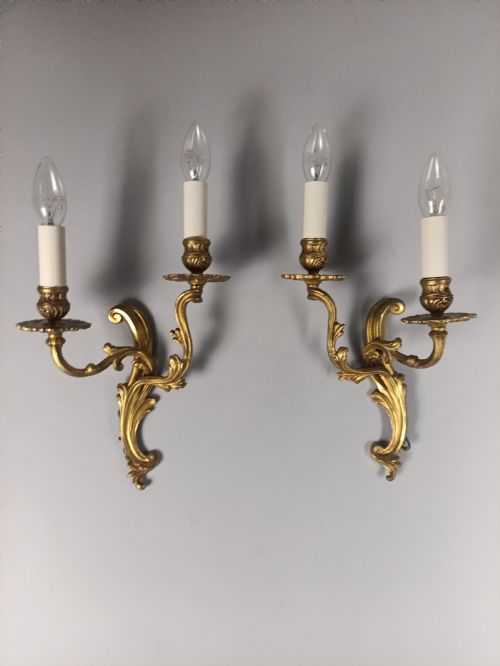
These bronze twin wall applique fixtures are decorative wall lights designed to illuminate rooms with classical elegance.
Bronze Twin Wall Applique
A bronze twin wall applique is a paired wall-mounted lighting fixture designed to hold candles or electric bulbs, taking the form of wall lights and wall sconces. You will most frequently encounter French examples from the early twentieth century alongside nineteenth-century Victorian and Edwardian pieces.
The selection ranges from pairs to sets of four or six, often displaying twin arms or branches. Stylistic influences span from French Rococo and Neoclassical to Empire and Louis XVI, reflecting continental design traditions.
How they were made
These pieces are fashioned from metals such as bronze, brass, and ormolu, frequently treated with gilt or gilded finishes to create a lustrous surface. Selected items incorporate crystal elements or detailed cast figures like cherubs and mermaids.
Makers utilised traditional metal casting and gilding techniques to shape intricate scrolls, ribbons, and classical motifs. The metalwork is structured to support twin arms securely while maintaining ornamental detail.
Mermaids occasionally join the traditional cherubs on these walls, holding candle holders above the drawing-room floor.
What varies in quality
Quality rests upon the crispness of the casting and the depth of the gilding applied to the bronze or brass substrate. Finer examples show sharp relief in rococo scrolls, acanthus leaves, and figural elements without blurring of detail.
The weight and substantial feel of the metal indicate superior construction, distinguishing robust cast bronze fixtures from lighter pressed metal alternatives. Integrity of the arms and the preservation of the original surface finish dictate the standing of each piece.
Maison Baguès
The Bronze Twin Wall Applique Glossary
- Applique
- A wall-mounted lighting fixture or sconce designed to hold candles or lamps. It projects from the wall surface to provide secondary illumination.
- Ormolu
- Finely ground high-carat gold applied to a bronze object using a mercury amalgamation process. This technique produces a rich, durable golden finish on nineteenth-century metalwork.
- Gilt Bronze
- Bronze that has been coated with a thin layer of gold or gold-coloured leaf. It combines the structural strength of bronze with a bright metallic exterior.
- Rococo
- An ornate design style characterised by asymmetrical curves, scrollwork, and naturalistic plant motifs. It appears frequently on eighteenth-century inspired French wall lights.
- Empire
- A Neoclassical design style originating in France during the early nineteenth century. It draws heavily on ancient Roman and Greek military and architectural motifs.
Bronze Twin Wall Applique: Frequently Asked Questions
What is a bronze twin wall applique?
A bronze twin wall applique is a decorative wall-mounted lighting fixture featuring two arms or branches for illumination. These pieces function as wall lights or sconces to brighten interiors.
They are predominantly cast from bronze, brass, or ormolu and reflect historical design periods from the nineteenth and early twentieth centuries.
How were these wall lights used?
Originally manufactured to hold candles, many of these fixtures have been adapted for electricity over time. They were placed in pairs or sets along salon and hallway walls to provide ambient lighting.
Their dual arms distributed light across decorative wall panels and mirrors in traditional domestic interiors.
How do I identify French styles?
French styles like Rococo display asymmetric scrolls, floral motifs, and organic curves. Empire and Neoclassical designs utilise formal symmetry, classical urns, and strict geometric proportions.
Examining the casting detail and the specific ornamental vocabulary helps distinguish between these decorative movements.
Are these wall lights wired for electricity?
Many surviving wall lights are rewired to accommodate modern electrical standards while retaining their historic metal frames. Rewiring preserves the structural integrity of the antique fixture for contemporary use.
Buyers should inspect the internal wiring provisions to ensure compatibility with modern domestic installation requirements.