





Ormolu Mahogany Bureau
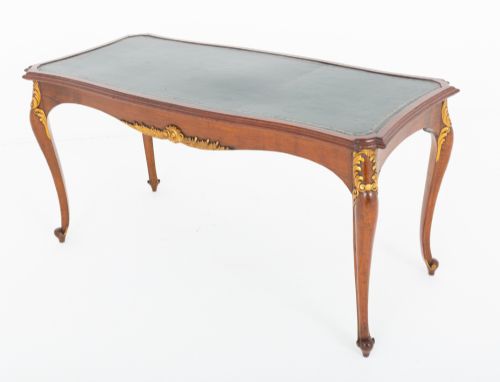
An ormolu mahogany bureau combines rich dark timber with bright cast bronze mounts, offering a grand writing surface rooted in French revival design.
Ormolu Mahogany Bureau
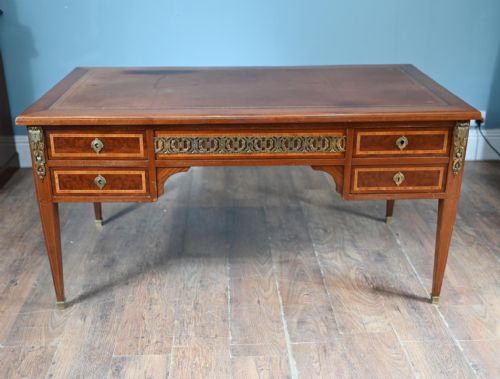
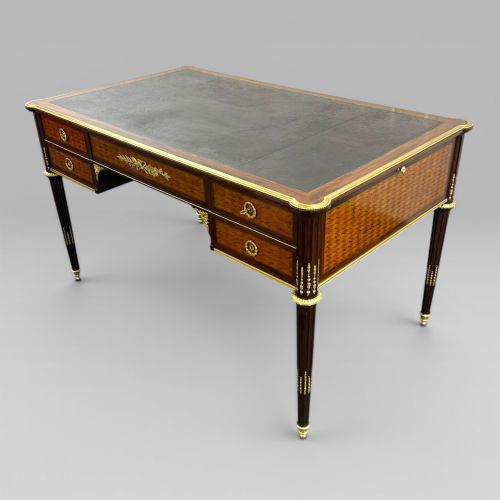
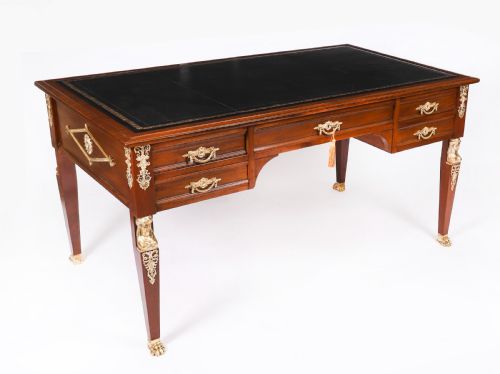
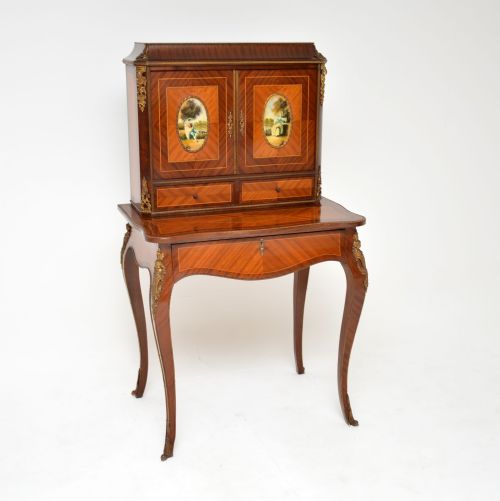
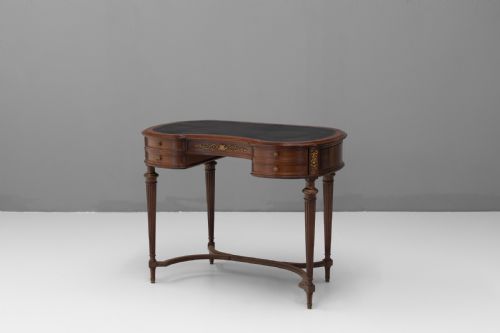
When searching for an ormolu mahogany bureau, a buyer encounters substantial writing furniture originating predominantly from nineteenth century French workshops. The selection centres on freestanding writing tables known as bureaux plats, alongside cylinder desks and drop front escritoires.
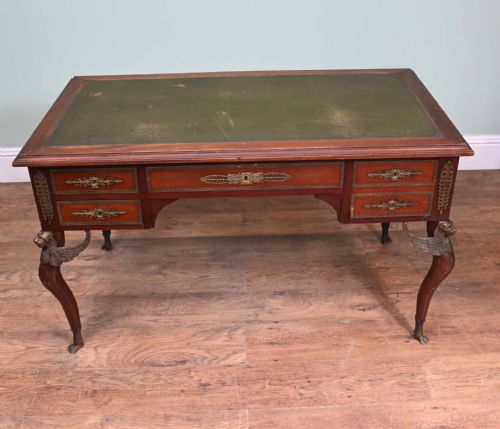
Most examples lean into Louis XVI or French Empire styles, pairing linear mahogany carcases with disciplined gilt bronze ornamentation. These writing pieces function as central room furnishings rather than simple corner desks, finished on all sides for prominent placement.
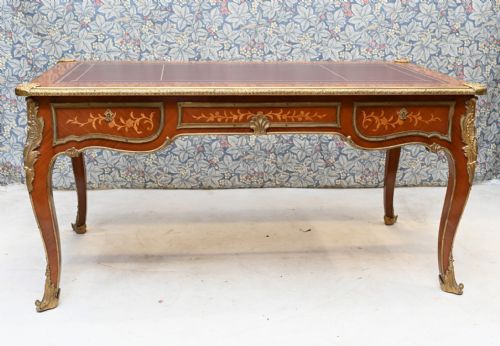
Cabinet makers utilised rich mahogany veneers, occasionally incorporating satinwood or marquetry details beneath protective leather writing inserts. The resulting pieces balance architectural stability with decorative mounts that frame the primary timber surfaces.
How they were made
Workshops constructed the foundational carcase using solid mahogany and supportive secondary timbers, applying finely figured mahogany veneers to external surfaces. Skilled cabinet makers then integrated leather writing panels into the top surfaces, surrounded by banded wood or bronze edging.
The distinct ormolu components, cast in bronze and heavily gilt, were meticulously chased by hand before being secured to the corners, legs, and aprons. Brass and gilt bronze accents often trace the structural outlines and protect the vulnerable edges of each desk.
Ormolu Mahogany Bureau Retail Price Guide 2026
Typical asking prices for ormolu mahogany bureau among the pieces listed under this phrase on Sellingantiques today, from the lower quarter to the upper quarter. They describe what is for sale here now, not the wider market.
Makers and retailers represented across the archive include François Linke, Henry Dasson, Alphonse Tahan, and Edwards and Roberts.
What varies in quality
The distinction between standard production and masterwork pieces rests heavily upon the crispness of the gilt bronze chasing. Fine workshops employed skilled artisans to carve details into the cast ormolu mounts, ensuring sharp relief and deep lustre.
Timber selection and veneer matching dictate the visual depth of the primary surfaces, with superior desks displaying continuous grain patterns across large drawer fronts. The precision of the bronze mount placement and the integration of quality leather writing surfaces further separate exceptional examples from simpler commercial outputs.
François Linke·Edwards and Roberts·Henry Dasson·Alphonse Tahan
The Ormolu Mahogany Bureau Glossary
- Ormolu
- Gilded bronze mounts applied to furniture, cast and chased to decorative effect. This process requires mercury gilding or modern electroplating methods to achieve a brilliant gold finish.
- Bureau plat
- A freestanding writing table fitted with one or more rows of drawers beneath the top. These desks were traditionally designed to sit in the centre of a room.
- Escritoire
- A writing cabinet featuring a vertical drop front or fall front writing surface. This form conceals internal pigeonholes and small compartments.
- Parquetry
- Geometric patterns formed by fitted wood veneers arranged on a surface. Makers utilised contrasting timbers to create crisp diagonal or checkerboard visual effects.
- Chasing
- The manual refinement of cast metal details using small hammers and punches. This technique sharpens the texture and definition of ormolu mounts after casting.
Ormolu Mahogany Bureau: Frequently Asked Questions
Where should I place a bureau plat?
A bureau plat is designed to be viewed from all sides, making it ideal for the centre of a study or library rather than pushed against a wall.
Position it where light falls across the leather writing surface from the side to preserve the timber and aid writing tasks.
How do I care for the leather top?
The leather writing surface benefits from occasional cleaning with a slightly damp cloth followed by a suitable neutral leather cream. Avoid harsh modern chemical cleaners that might strip the gold tooling around the edges.
Keep direct sunlight away from the leather insert to prevent fading and cracking over time.
Can I use these desks for daily work?
These historical writing desks accommodate modern laptop use and paperwork comfortably, provided you protect the antique leather and polished surfaces. The generous proportions of nineteenth century bureaux offer ample workspace.
Ensure that the drawers are opened evenly and avoid overloading internal compartments to protect the antique runners.