
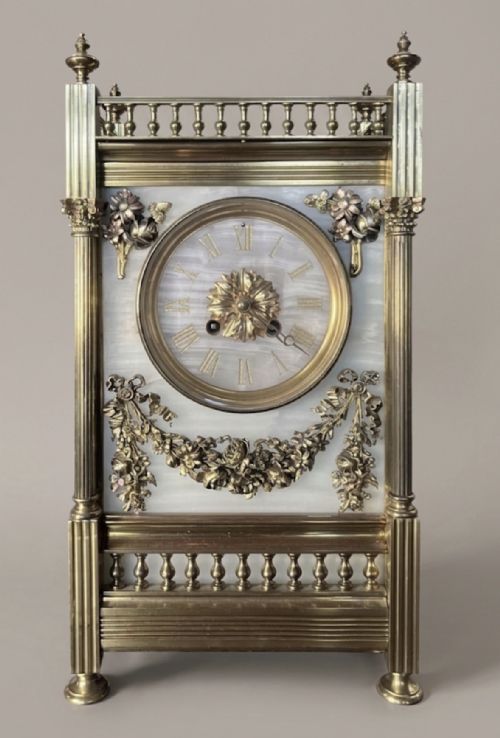
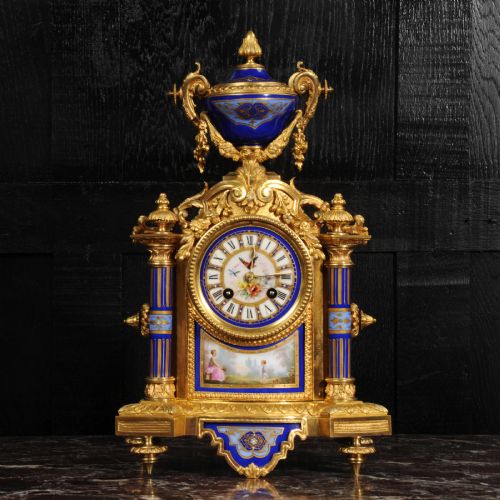
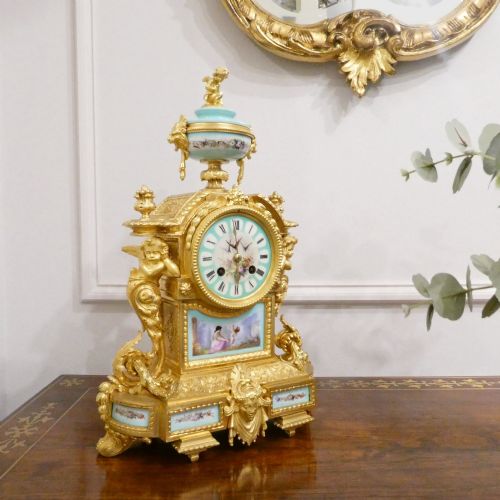
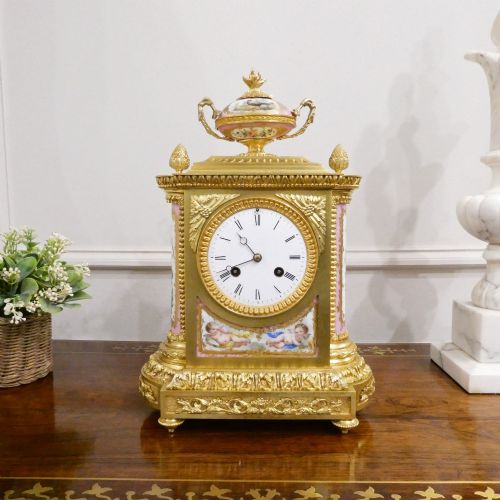
Ormolu Gilt Mantel Clock
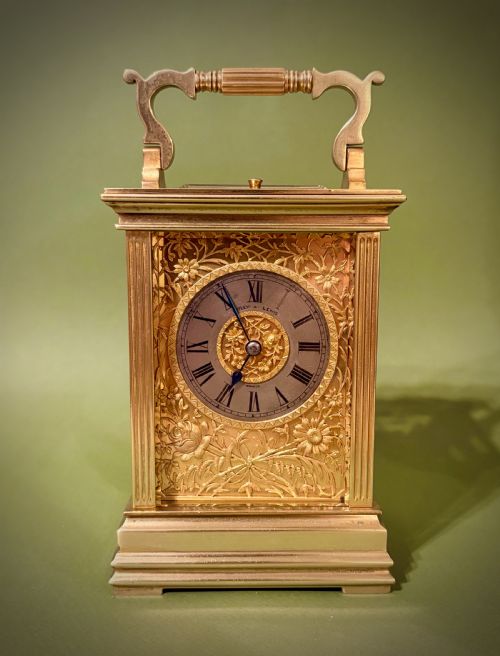
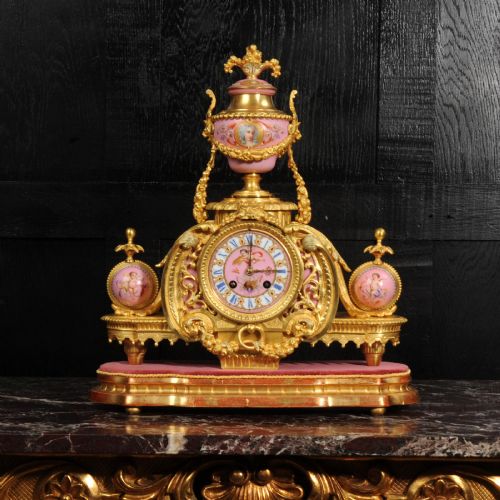
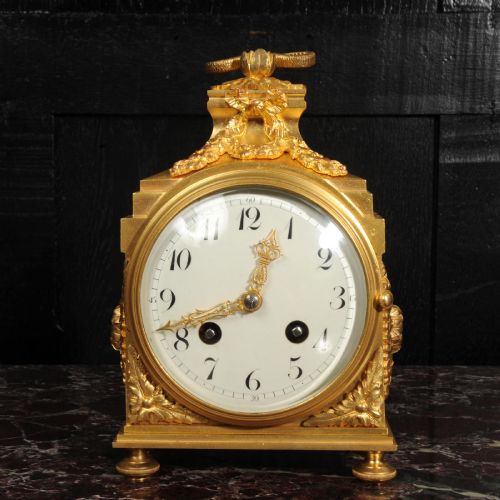
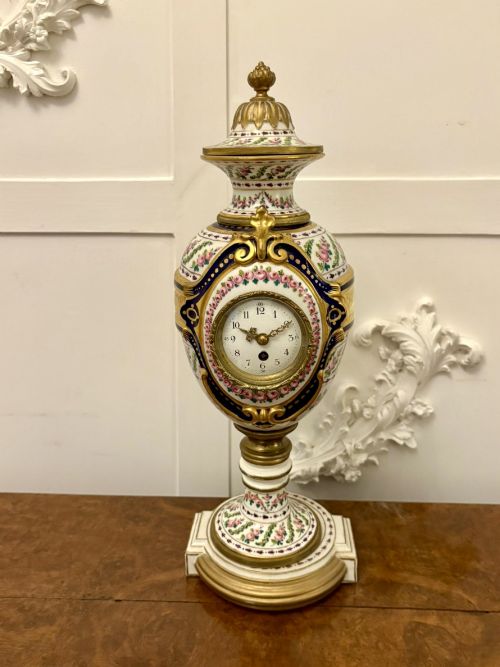
When searching for an ormolu gilt mantel clock, collectors discover heavy cast bronze timepieces finished in brilliant gold leaf and mounted with porcelain or marble.
How They Were Made
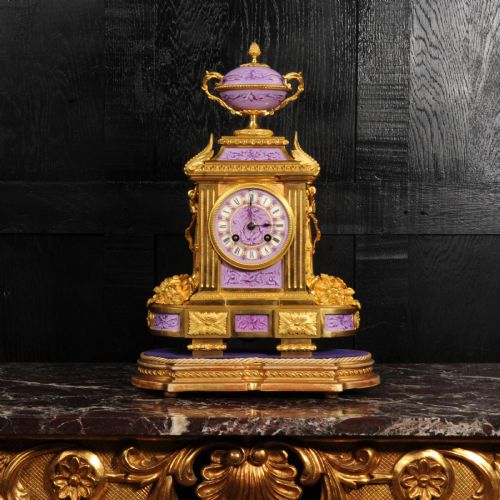
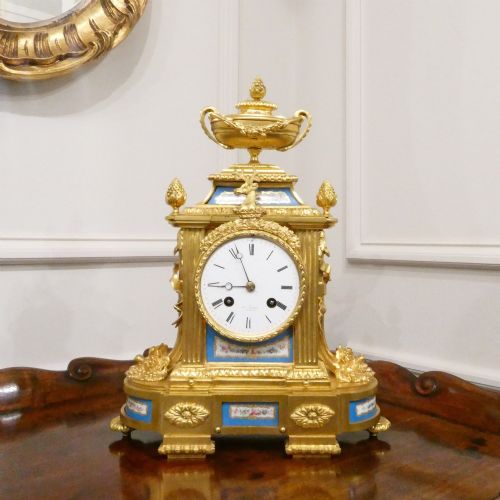
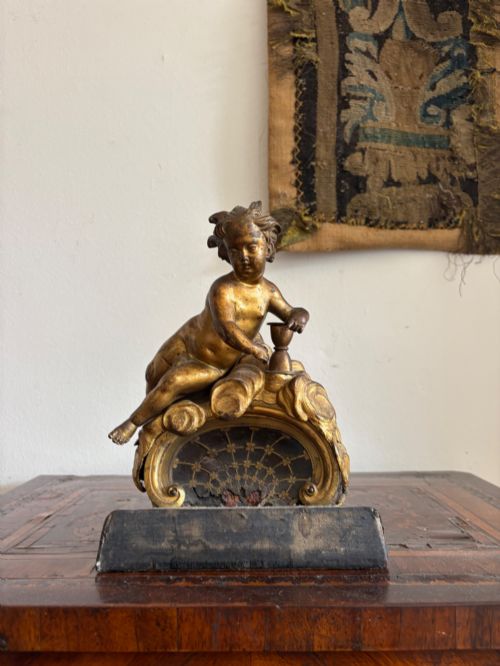
Maker workshops created these cases by casting bronze into detailed moulds, which were subsequently finished by hand using chisels to sharpen foliage, figures, and architectural motifs. The characteristic golden surface was achieved through mercury gilding, a process that bonded powdered gold to the bronze base metal through intense heat.
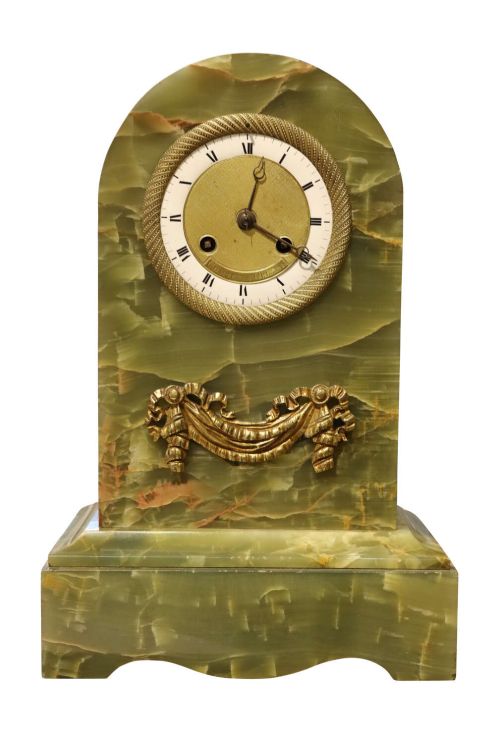
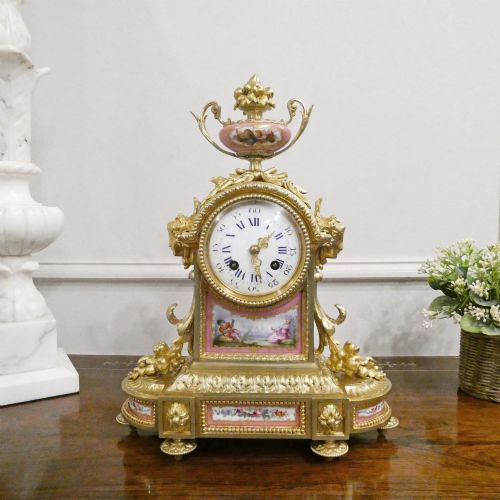
Dial faces were frequently constructed from white enamel with painted numerals, protected behind curved glass bezels and integrated with ceramic elements from factories like Sèvres. Secondary materials including tortoiseshell, champlevé enamel, and green onyx were incorporated into the casework to provide texture and colour contrast.
What Varies in Quality
The distinction between ordinary and superior pieces rests heavily upon the crispness of the bronze casting and the depth of the subsequent mercury gilding. Master bronziers invested significant labour in hand-chiselling cast components after removal from the mould, whereas lesser examples retain soft edges and flat, uniform metallic finishes.
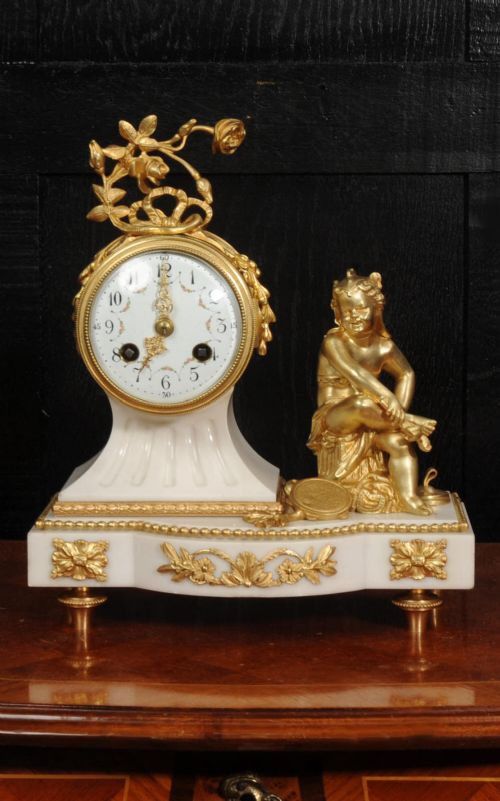
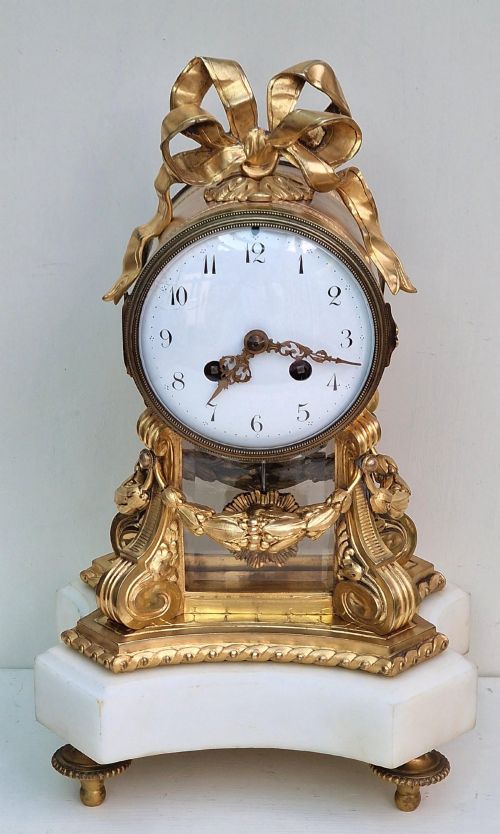
Movement sophistication also separates standard productions from exceptional works, with precision escapements by notable horologists commanding greater regard than mass-produced assemblies. The harmonious integration of contrasting media, such as finely painted porcelain panels or unblemished white marble bases, further elevates the stature of a clock.
Achille Brocot·Henry Marc·Japy Freres·Charles a Orleans·Vincenti·Siffel and Cartier·Ansonia New York·Reiche·Baetens London·Canaillor of Paris·Granges London·Dellatrez Paris·Henry Dasson
The Ormolu Gilt Mantel Clock Glossary
- Ormolu
- A method of applying finely ground gold amalgam to a bronze object and heating it until the mercury vapours evaporated, leaving a rich golden coating. This technique creates the durable, luminous surface characteristic of fine French decorative objects.
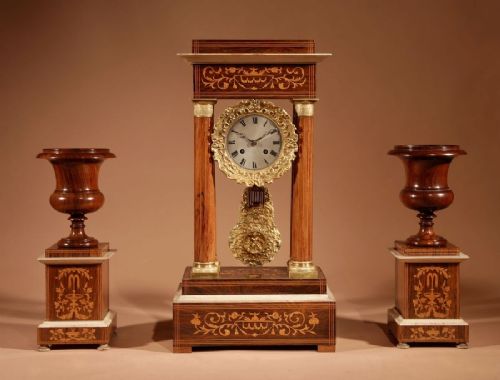
- Clock Garniture
- A matching set consisting of a central mantel clock accompanied by side ornaments such as urns, candelabra, or figures designed to display on a mantelpiece together. These ensembles were produced in significant numbers during the nineteenth century.
- Portico Clock
- An architectural clock style featuring a flat top supported by four vertical columns, often enclosing a suspended pendulum swinging within the open central space. Examples from the Charles X and Louis Philippe periods frequently utilise this balanced geometry.
- Brocot Escapement
- A visible deadbeat escapement regulated by pallets set with jewelled pins, developed by the French clockmaking family of the same name. This mechanism allowed for easy regulation of the pendulum without removing the dial.
- Champlevé Enamel
- A technique where troughs or cells are hollowed out of the metal surface and filled with coloured glass paste before being fired and polished flat. This colourful decoration frequently appears on late nineteenth-century clock garnitures.
Ormolu Gilt Mantel Clock: Frequently Asked Questions
How do I wind my mantel clock?
Most mechanical models utilise a key inserted into winding holes on the enamel dial to tension internal springs or lift suspended weights. Care must be taken not to over-wind the mechanism.
After winding, setting the time requires moving the minute hand gently in a clockwise direction while avoiding rapid adjustments that might damage the delicate escapement inside.
What is the difference between ormolu and brass?
Ormolu refers specifically to gilded bronze where a layer of gold amalgam has been bonded to a bronze substrate through heat treatment. This imparts a deep, warm metallic lustre distinct from standard yellow brass.
Brass is a solid alloy of copper and zinc used for internal clock movements and structural plates, whereas ormolu serves as an external decorative surface finish.
How do I identify a clock garniture?
A clock garniture consists of a main mantel clock accompanied by two matching side pieces, such as decorative urns, candelabra, or sculptural figures. These matched sets share identical materials, styles, and casting motifs.
Individual mantel clocks were sold independently, while garniture sets were designed to create a balanced decorative display across a fireplace mantel.
Can these antique clocks be restored to working order?
Many nineteenth-century timepieces feature robust brass movements that can be cleaned, rebushed, and adjusted by a qualified horologist to keep accurate time. Fully restored examples frequently include servicing notes from specialists.
Maintaining a working antique clock requires regular professional cleaning and occasional lubrication of the gear trains to prevent excessive wear on the brass components.