



Ormolu Figural Candlesticks
Ormolu figural candlesticks bring classical figures, cherubs, and exotic subjects into your room through heavy cast metalwork.
Ormolu Figural Candlesticks
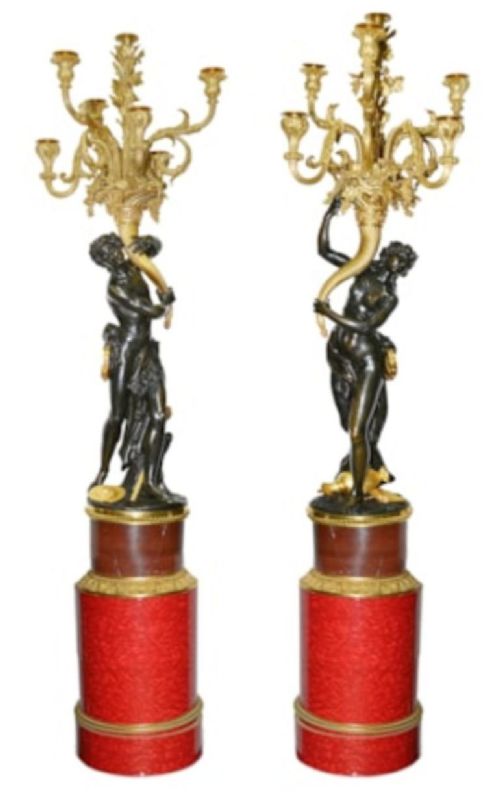
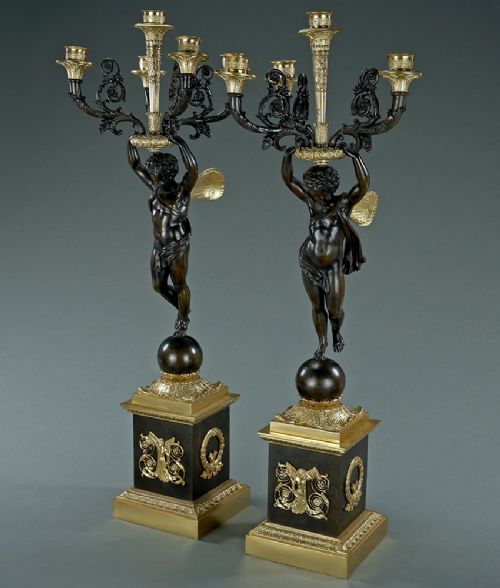
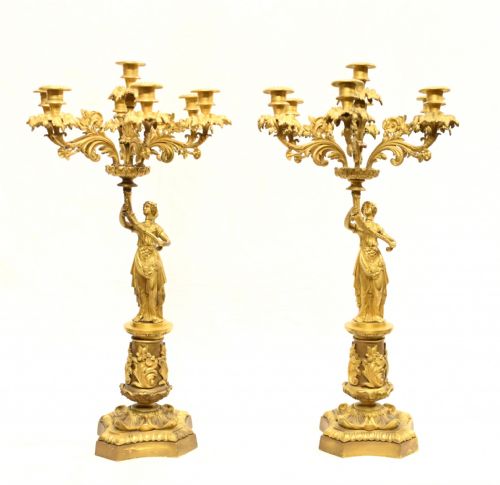
When you search for ormolu figural candlesticks, you are looking at sculptural lighting that combines human, animal, or mythological figures with functional candle sockets. These pieces emerge primarily from the nineteenth century, taking forms such as cherubs, maidens, storks, and figures styled in the French Empire, Louis XVI, Regency, and Rococo revivals.
The versions you are most likely to meet on this page include matched pairs of candelabras and single candlesticks originating from French workshops. They incorporate classical motifs, Grand Tour Egyptian figurines, and medievalist designs that reflect nineteenth-century historicism.
How they were made
These pieces are constructed from cast bronze, gilt metal, and patinated bronze, combined with elements of cut crystal and marble bases. The metal components are shaped through detailed casting before receiving their distinct surface treatments.
The manufacturing process relies on mercury gilding or modern electroplating to achieve the characteristic bright gold finish of ormolu, contrasted against dark patinated bronze bodies. Artisans assembled the figural shafts, drip pans, and sconces using threaded bolts and pins to secure the heavy metal parts together.
Ormolu Figural Candlesticks Retail Price Guide 2026
Typical asking prices for ormolu figural candlesticks among the pieces listed under this phrase on Sellingantiques today, from the lower quarter to the upper quarter. They describe what is for sale here now, not the wider market.
Storks and cherubs appear among the figures, holding up candle sockets with determined expressions.
What varies in quality
Lower grades of manufacture show softer, rounded details where the chasing tools were barely used, alongside uneven application of the gold surface layer. The weight of the bronze and the stability of the marble or metal bases also separate mass-produced commercial items from superior workshop productions.
The Ormolu Figural Candlesticks Glossary
- Ormolu
- Gilt bronze produced by applying a fine layer of gold amalgam to a bronze base. This technique creates the bright, durable metallic finish seen on nineteenth-century French lighting.
- Patinated bronze
- Bronze treated with chemical solutions to produce a dark, weathered surface colour. This dark tone provides visual contrast against the bright gold sections of ormolu.
- Candelabra
- A branched candlestick designed to hold multiple candles at once. These pieces often feature removable central finials and tiered arm arrangements.
- Grand Tour
- The nineteenth-century practice of wealthy travellers collecting souvenirs across Europe. Figures from these travels frequently inspired the Egyptian and classical motifs on these pieces.
- Rococo Revival
- A nineteenth-century design movement mimicking the asymmetrical scrolls and naturalistic motifs of the mid-eighteenth century. This style appears frequently on nineteenth-century lustre candlesticks.
Ormolu Figural Candlesticks: Frequently Asked Questions
Were these used for daily lighting?
These decorative objects served as formal lighting in nineteenth-century salons, dining rooms, and parlours where wealthy households entertained guests. Their elaborate figural designs meant they acted as status symbols and ornamental sculpture even when unlit.
As wax candles were expensive and dripped readily, their use was reserved for evening gatherings and formal occasions. Many surviving examples retain untouched wax residues in the drip pans from their period of active use.
How do I tell an 1880 piece from Regency?
Regency pieces, dating from the early nineteenth century, tend to show clean classical proportions inspired by ancient Rome and Greece. Pieces from 1880 often belong to revival movements like the French Empire Revival or Renaissance Revival, which feature heavier ornamentation and more eclectic styling.
Examining the casting methods, the composition of the bronze, and the assembly screws underneath can also help narrow down the period of manufacture. Stylistic markers alone provide the clearest indicator of whether a piece is an early nineteenth-century original or a later revival.
What is the difference between ormolu and gilt bronze?
Ormolu is simply the historical term used in English-speaking markets for French gilt bronze. Both terms describe the exact same material technique of applying gold to a bronze substrate.
While 'gilt bronze' is a literal description of the materials, 'ormolu' derives from the French phrase for ground gold. Nineteenth-century makers used both terms interchangeably in their trade catalogues and records.