

Ormolu Candlestick Holders
Ormolu candlestick holders bring heavy, fire-gilded warmth and architectural presence to a room, offering the classic brilliance of nineteenth-century French and English metalwork.
Ormolu Candlestick Holders
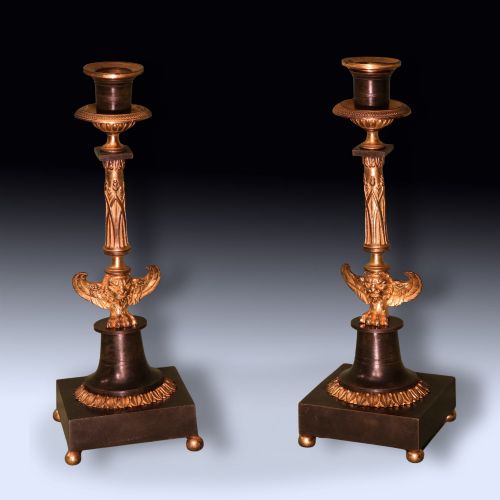
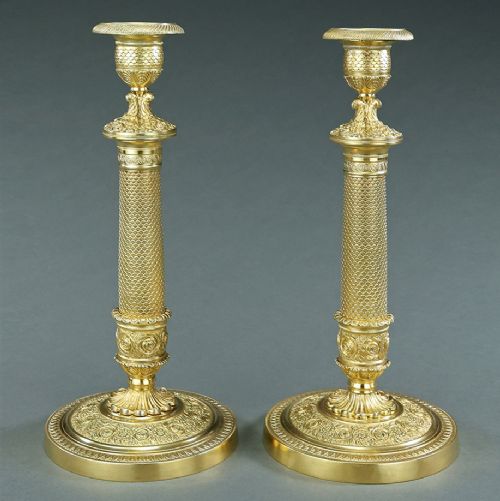
When searching for ormolu candlestick holders, a buyer encounters a specialised selection of heavy metal lighting fixtures designed to hold taper candles. These objects emerge predominantly from nineteenth-century workshops, drawing on French Empire, Louis XVI, and Regency design vocabularies.
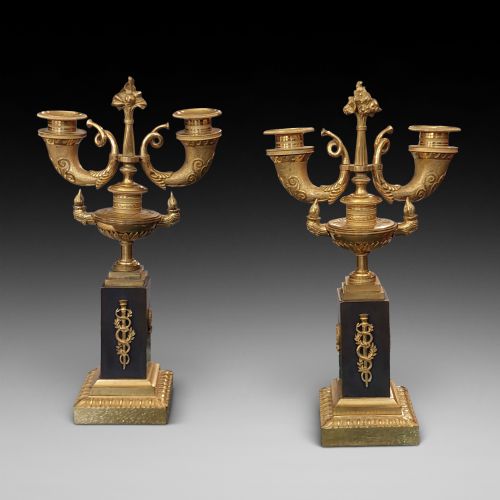
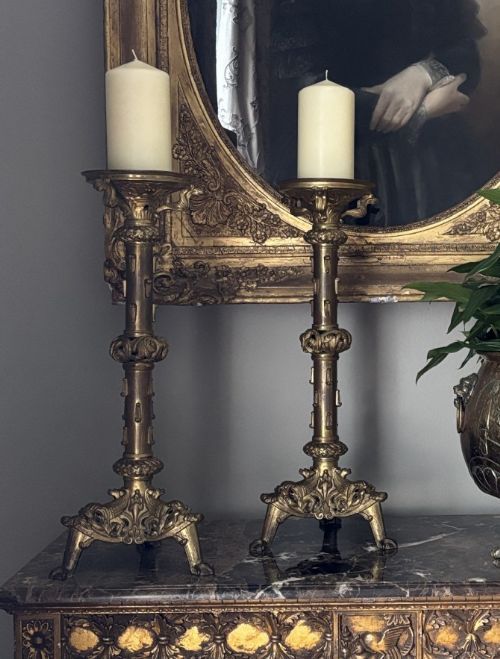
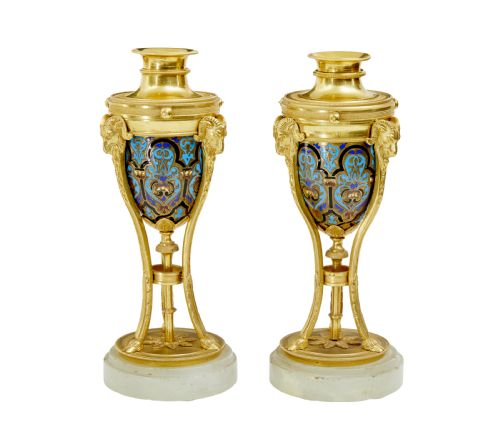
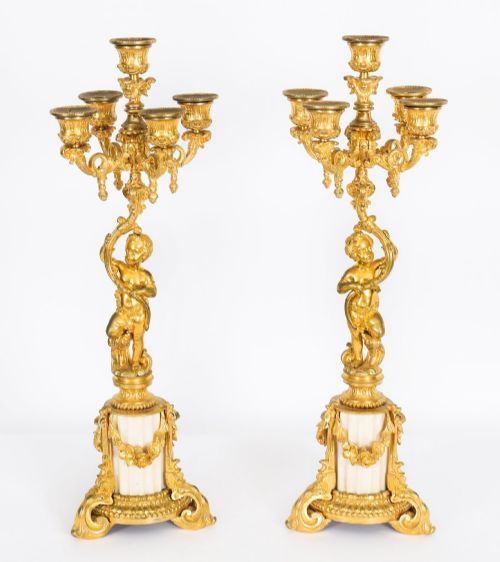
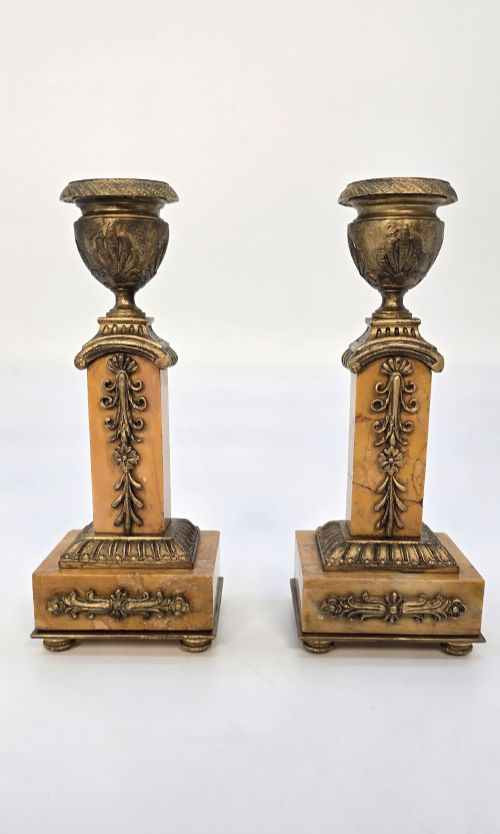
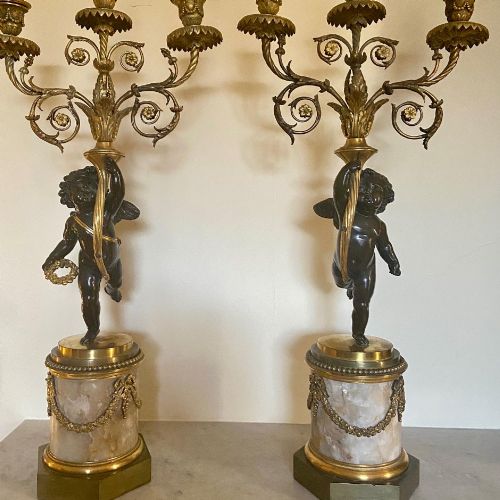
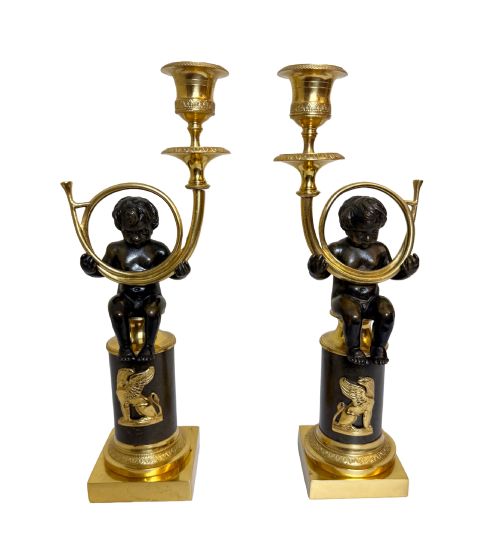
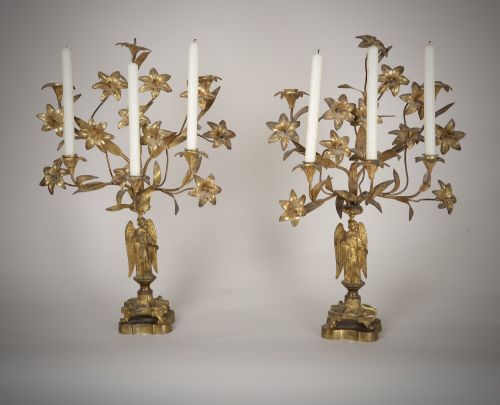
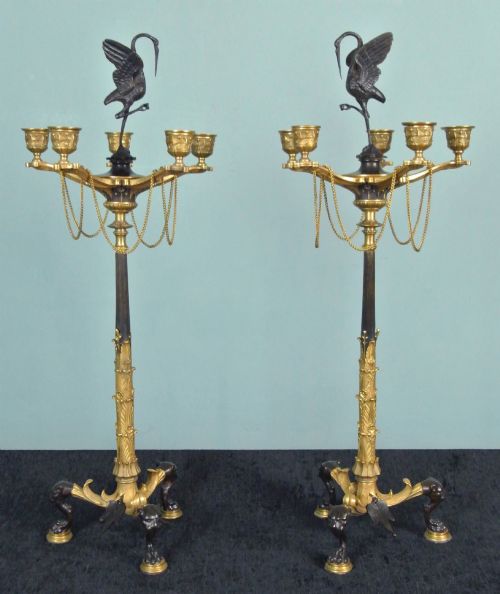
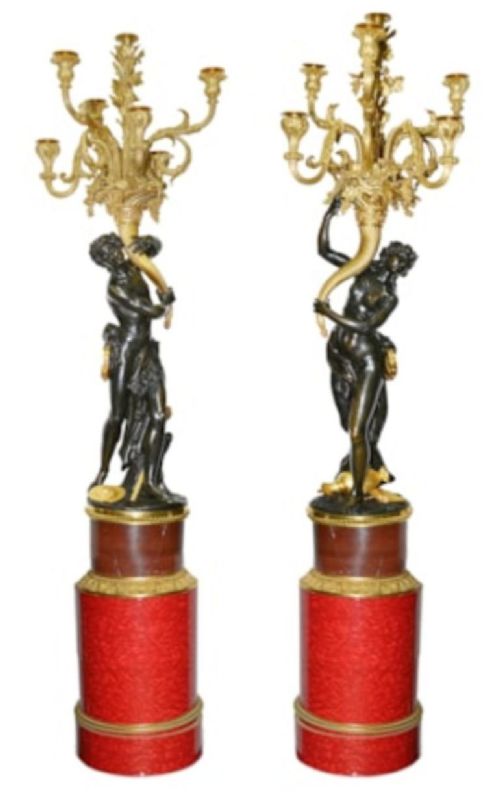
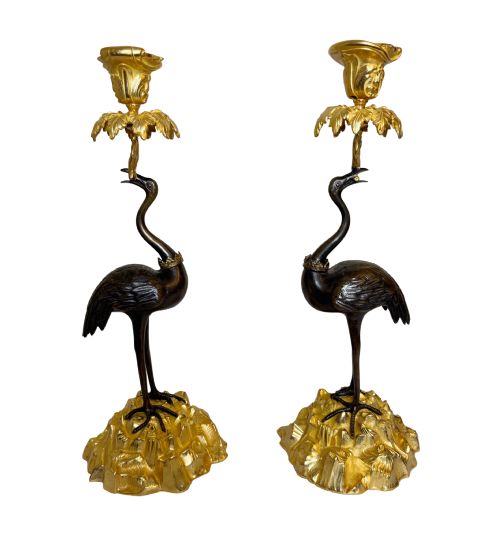
The pieces on this page appear most frequently as matched pairs, taking the form of single-stem candlesticks or multi-armed candelabra. Many incorporate contrasting materials such as white marble, onyx, and cut glass alongside the main metal body.
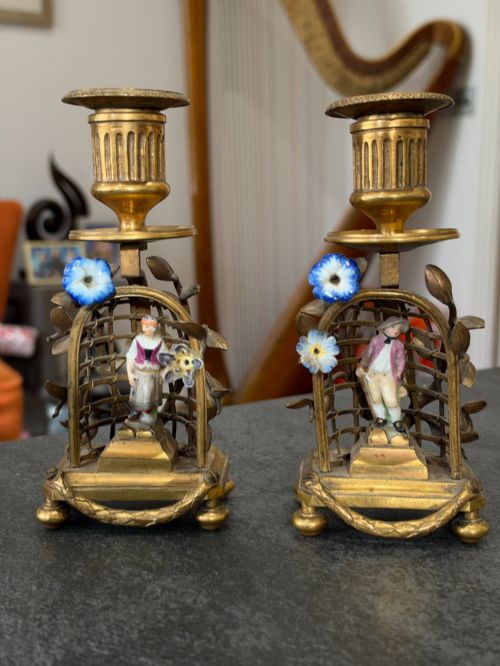
Makers utilised figural motifs, including putti, stags, flamingos, and classical maidens, integrating sculptural elements directly into the functional support. The scale ranges from compact desk accessories to large, imposing table centrepieces.
How they were made
The primary technique relies on casting bronze or brass into detailed moulds, which are then chased and finished by hand to sharpen the decorative relief. Artisans applied a mercury gilding process to impart the distinctive golden ormolu surface, creating a durable metallic layer that reflects candlelight.
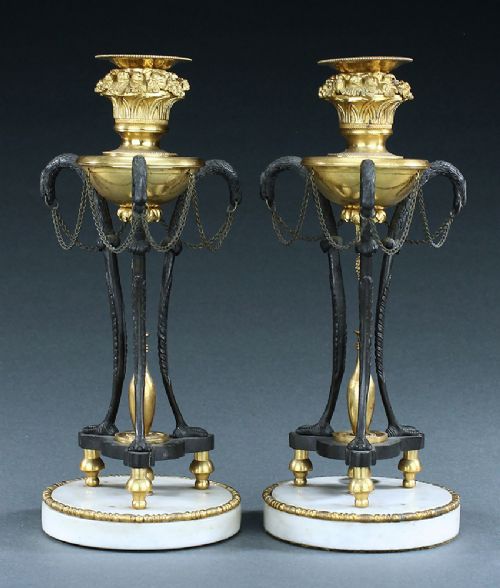
Combination pieces married this fire-gilded metal with turned marble bases, carved onyx columns, or patinated dark bronze figures. These mixed-media assemblies required precise pinning and fitting to secure the heavy components together safely.
Ormolu Candlestick Holders Retail Price Guide 2026
Typical asking prices for ormolu candlestick holders among the pieces listed under this phrase on Sellingantiques today, from the lower quarter to the upper quarter. They describe what is for sale here now, not the wider market.
Listings feature eighteenth-century and nineteenth-century periods, including the Regency, French Empire, and Victorian eras.
What varies in quality
Subtlety of assembly and the integration of moving or adjustable arms distinguish standard foundry output from masterwork items. Pieces that incorporate complex figural casting with clean junctions demonstrate a higher degree of nineteenth-century craftsmanship.
Francois Redmond·Thomas Hope·Galle
The Ormolu Candlestick Holders Glossary
- Ormolu
- A term denoting finely cast and chased bronze that has been coated with a layer of gold amalgam. This historical technique yields a warm, matte golden lustre quite distinct from modern electroplating.
- Patinated bronze
- Bronze that has been chemically treated to produce a dark, uniform surface finish. It provides a stark tonal contrast against bright ormolu mountings in Empire and Regency designs.
- Candelabra
- A branched lighting fixture designed to hold multiple candles simultaneously. They often feature removable branches to allow conversion into simple single candlesticks.
- Champleve
- An enamelling technique where troughs are dug into a metal surface and filled with vitreous paste before firing. In nineteenth-century pieces, this adds vibrant bands of coloured pattern around the stem or base.
- Lustre
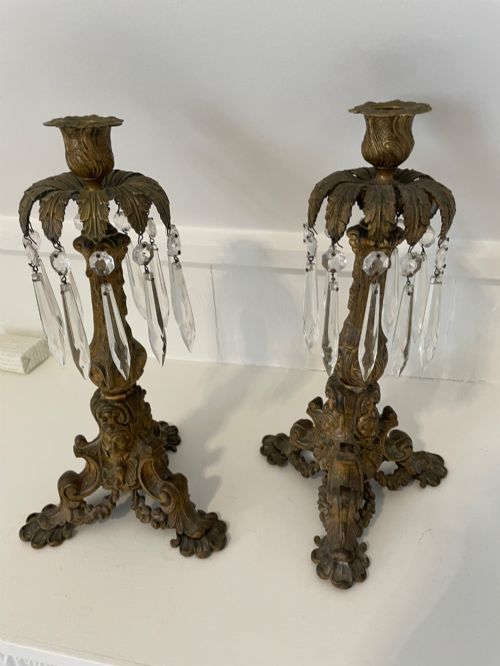
- A candlestick or candelabrum hung with cut glass prisms or pendant drops. These glass elements refract the candlelight to increase the overall brilliance of the piece.
Ormolu Candlestick Holders: Frequently Asked Questions
What is ormolu?
Ormolu refers to gilded bronze, created by applying a mixture of mercury and gold to a cast bronze base and heating it until the mercury vaporised. This left a permanent, rich gold coating across the metal.
In antique lighting, this technique produced a durable surface that resists tarnishing and maintains its soft, luminous quality over centuries of use.
How do I clean ormolu candlestick holders?
These pieces require gentle dusting with a soft, dry cloth to prevent the accumulation of dirt in the chased recesses. Water, abrasive cleaners, and metal polishes must be avoided entirely, as they strip the historic fire-gilding.
For stubborn grime, professional conservation advice should be sought to protect the delicate gold layer and any underlying bronze patination.
Were these made for everyday use?
Nineteenth-century ormolu holders served as formal dining table centrepieces, mantelpiece ornaments, and functional lighting in wealthy drawing rooms. They were status symbols designed to catch the flickering light of oil lamps and evening candles.
Today, they function well as decorative interior accents on sideboards, desks, and console tables, continuing their role as focal points of a room.
How do I tell Empire style from Regency style?
French Empire pieces lean heavily into classical Roman and Egyptian motifs, featuring strict symmetry, laurel wreaths, and patinated figures. Regency English works share a similar neoclassical inspiration but often incorporate lighter, more inventive flourishes.
Both styles utilise the striking combination of dark patinated bronze and bright ormolu, making close inspection of the cast details essential for correct attribution.