







Ormolu Bureau Cabinet
An ormolu bureau cabinet is a fitted writing desk adorned with gilded bronze mounts, combining elaborate French styling with functional storage for letters and papers.
Ormolu Bureau Cabinet
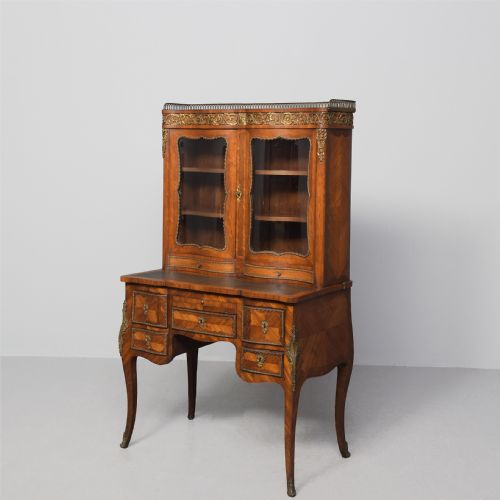
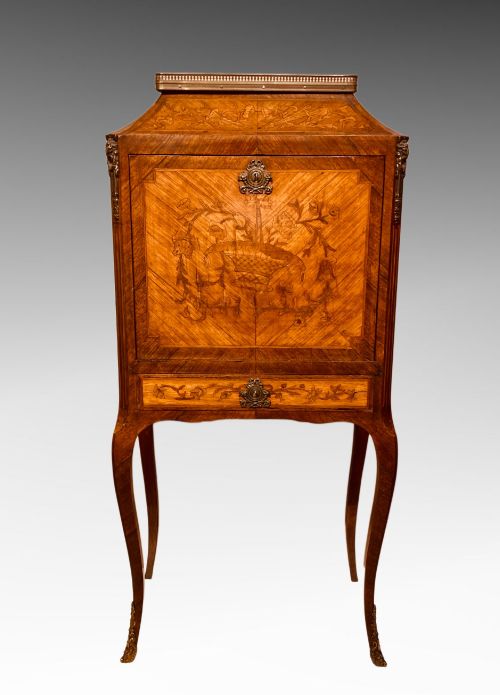
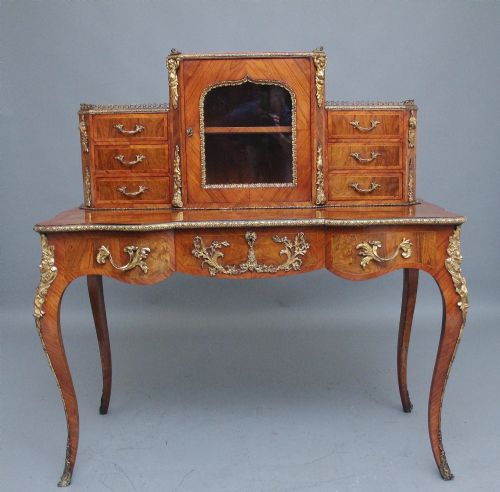
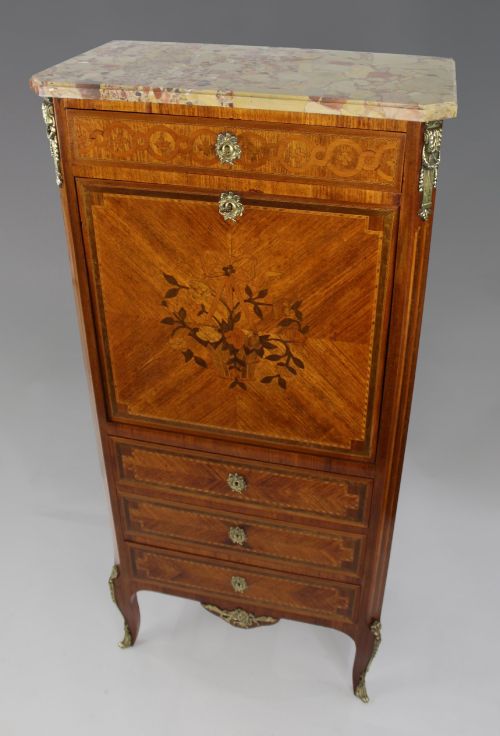
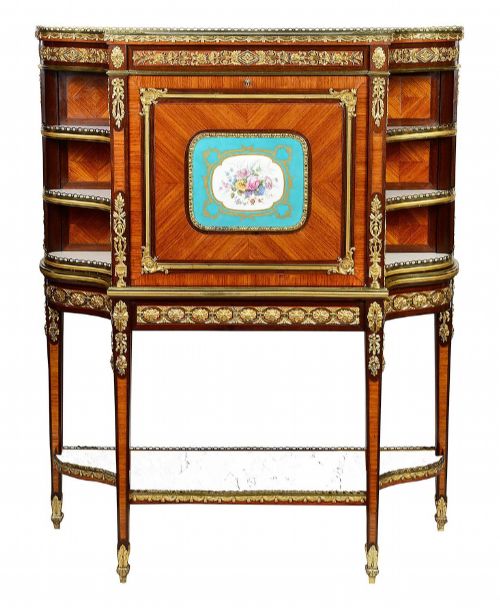
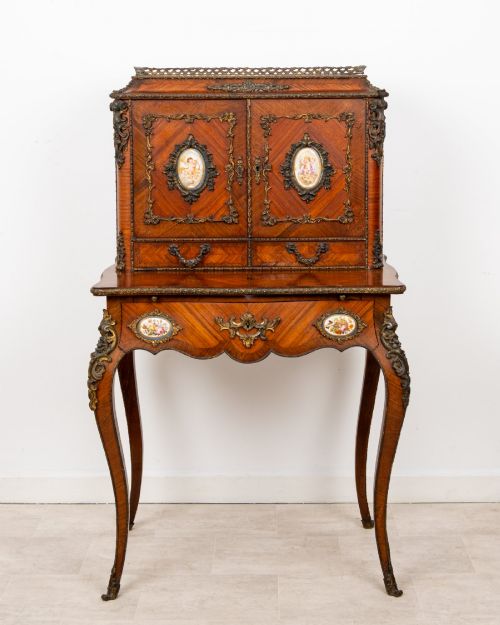
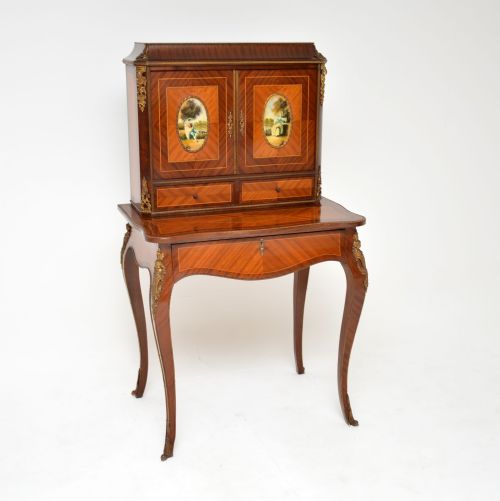
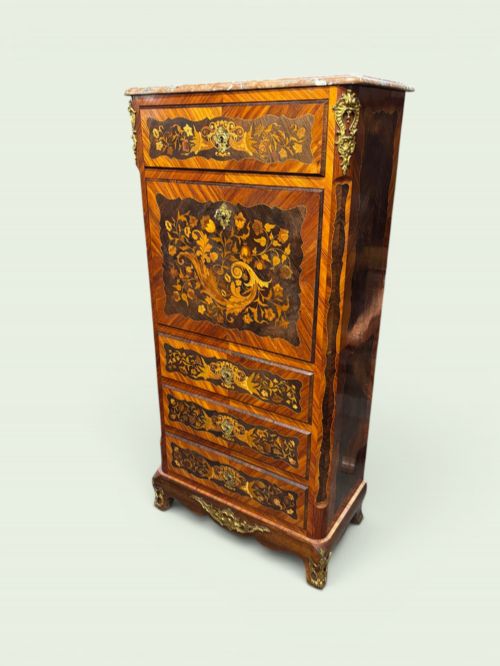
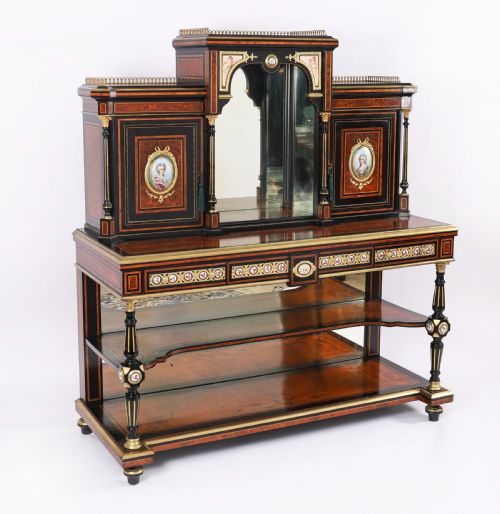
The ormolu bureau cabinet brings together refined writing desks, writing cabinets and drop-front secretaires designed for domestic correspondence. These pieces include compact bonheur du jours, tall escritoires and upright secretaire abattants.
Most examples found here date from the nineteenth century, spanning Victorian decades up to the early twentieth century. Makers drew heavily upon French Louis XV, Louis XVI and Empire styles to shape these sophisticated writing desks.
Pieces frequently feature a fitted interior behind a folding or dropping writing flap, often paired with an upper cabinet section. Walnut, kingwood and mahogany form the structural foundation for these elaborate forms.
Materials and construction
Cabinet makers built carcases from timbers such as walnut, mahogany and kingwood, frequently applying intricate marquetry or parquetry veneers across the exterior surfaces. Exotic woods like amboyna, rosewood and satinwood introduced contrasting grain patterns.
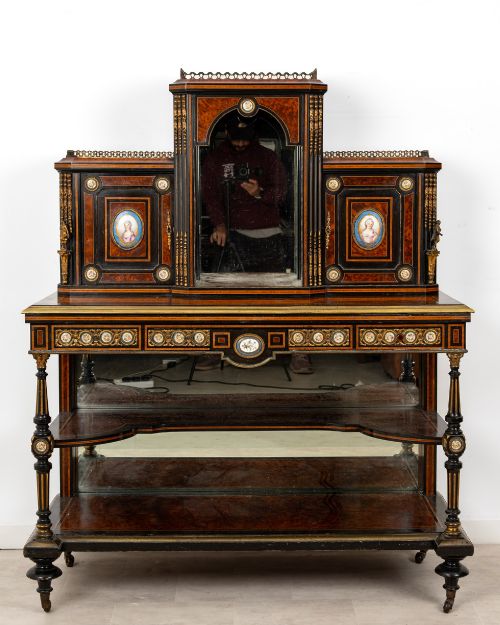
Cast and chased ormolu mounts, or gilt bronze and gilt metal, frame corners, drawers and panels to highlight the architectural lines of each cabinet. Inset porcelain plaques, marble tops, pietre dure panels and vernis martin varnish occasionally supplement the metalwork.
Ormolu Bureau Cabinet Retail Price Guide 2026
Typical asking prices for ormolu bureau cabinet among the pieces listed under this phrase on Sellingantiques today, from the lower quarter to the upper quarter. They describe what is for sale here now, not the wider market.
Listings feature nineteenth-century walnut, kingwood and mahogany writing desks embellished with ormolu mounts, porcelain plaques and marble tops.
Judging quality and craftsmanship
Quality rests upon the precision of the cabinet work and the sharpness of the ormolu casting. Finer pieces display crisp hand-chiselling on the bronze mounts and flawless timber matching within the veneered surfaces.
The integration of materials determines the distinction between standard production and exceptional examples. Superior writing desks combine well-chosen marble tops, painted porcelain plaques and secure interior locking mechanisms with harmonious proportions.
Gillows·Blake·Jean Werner·Linke
The Ormolu Bureau Cabinet Glossary
- Ormolu
- Gilded bronze applied as decorative mounts to furniture. This technique provides metallic contrast against dark or veneered wood surfaces.
- Secrétaire abattant
- An upright writing cabinet featuring a drop-front panel that opens to reveal a fitted interior. It conceals pigeonholes and small drawers behind a vertical facade.
- Bonheur du jour
- A light ladies writing desk featuring a small cabinet or set of shelves upon the upper surface. This form emerged during the eighteenth century and remained popular through revival periods.
- Marquetry
- Decorative patterns formed by fitting together contrasting pieces of wood veneer onto a carcase. Craftsmen utilise this method to create floral or geometric imagery.
- Escritoire
- A writing desk or cabinet designed specifically for correspondence. It typically includes a sloping or drop writing surface.
Ormolu Bureau Cabinet: Frequently Asked Questions
What is an ormolu bureau cabinet?
An ormolu bureau cabinet is a decorative nineteenth-century writing desk featuring cast gilt bronze mounts. These pieces combine practical writing surfaces with enclosed compartments and display shelving.
They encompass formats such as the drop-front secretaire, the compact bonheur du jour and the tall escritoire. Each piece reflects historic French design revivals executed in walnut, kingwood and mahogany.
How were these cabinets used originally?
Owners utilised these refined cabinets for private correspondence, reading and storing writing accessories. The enclosed compartments kept stationery, inkwells and important documents secure.
Upper tiers and shelves on bonheur du jour models provided display space for small decorative objects or porcelain items. The drop-front flap offered a sturdy surface for writing letters before folding away neatly.
Where should I place one at home?
These cabinets suit drawing rooms, studies or bedrooms where their decorative woodwork and gilt mounts can be appreciated. Their upright profiles make them practical for rooms with limited floor space.
Positioning them away from direct sunlight and heat sources protects delicate veneers and prevents timber movement. Pairing them with traditional seating creates a dedicated writing corner.