

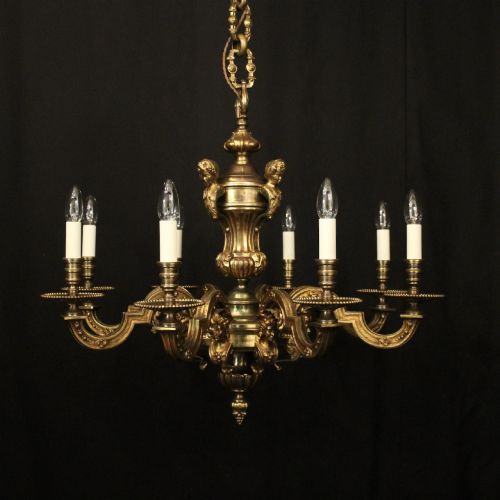
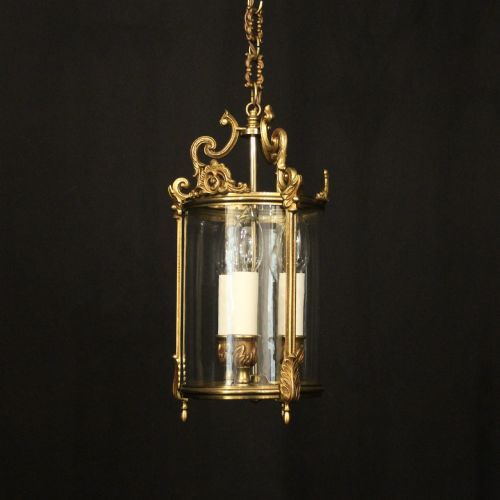
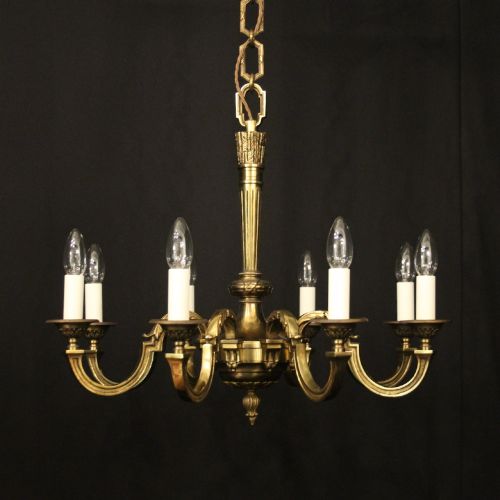
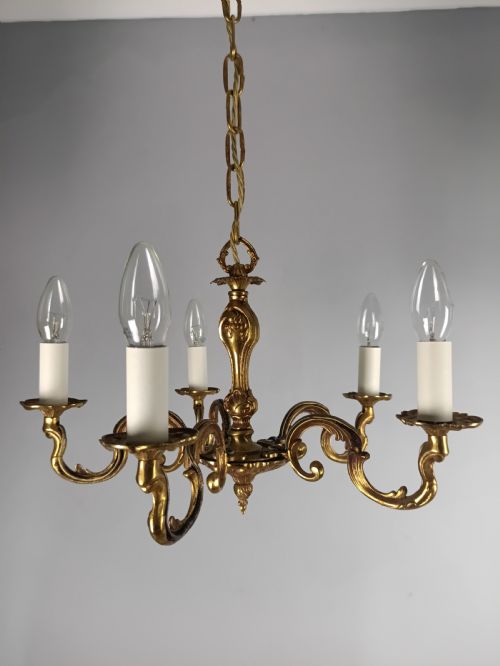
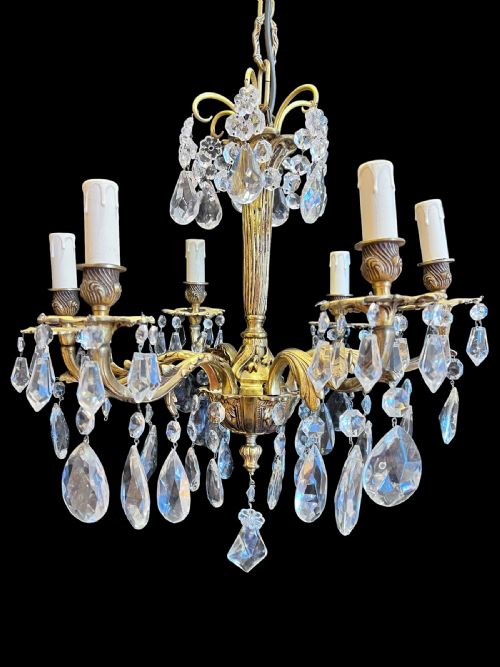
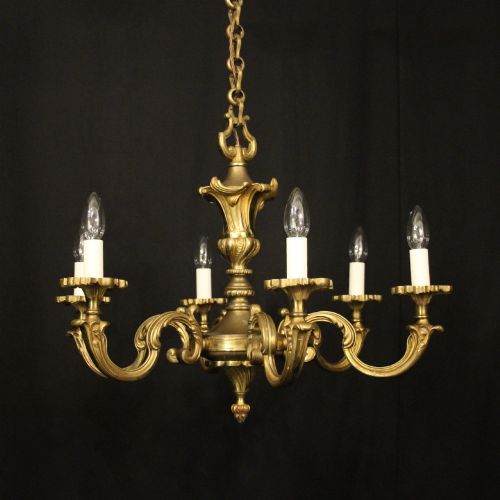
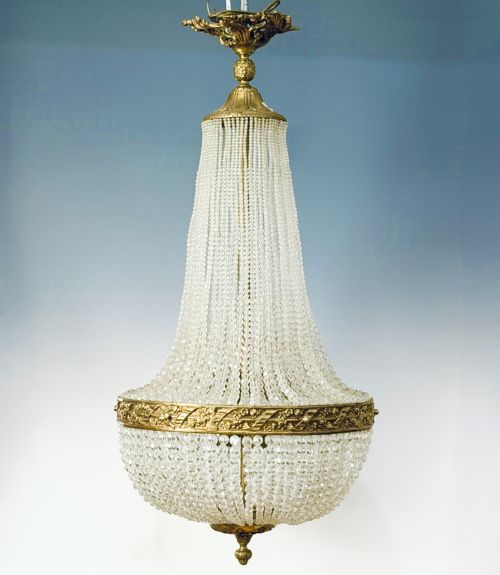
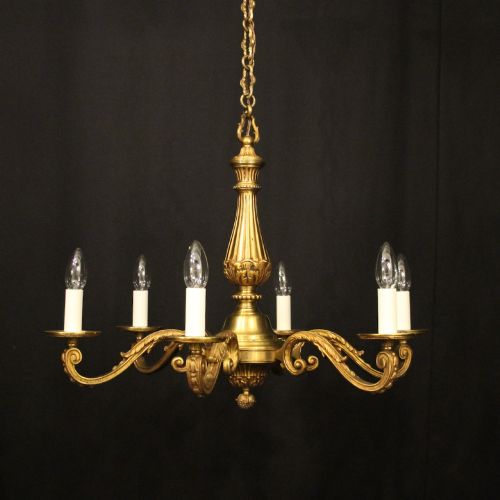

Ormolu Bronze Chandelier
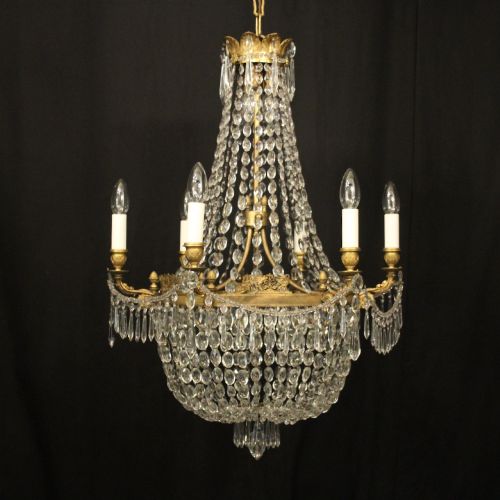
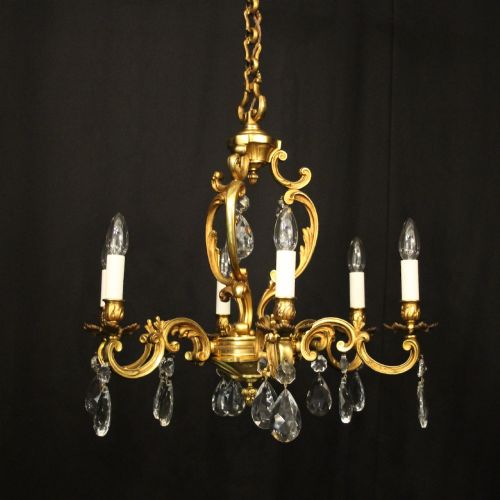
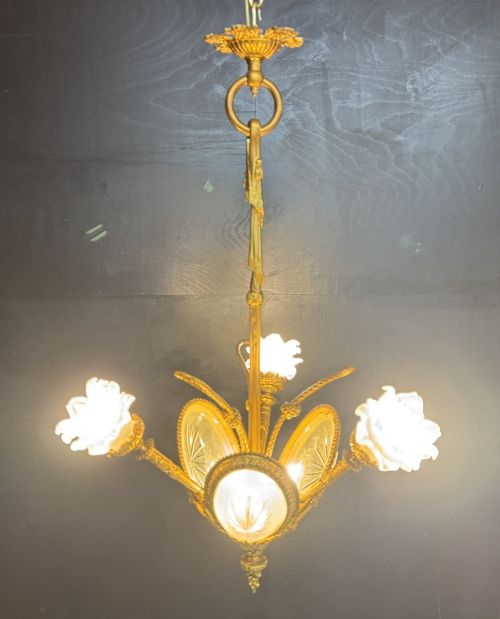
An ormolu bronze chandelier brings weight and presence to a room, casting a warm light through glass, crystal and gilded metal.
Ormolu Bronze Chandelier
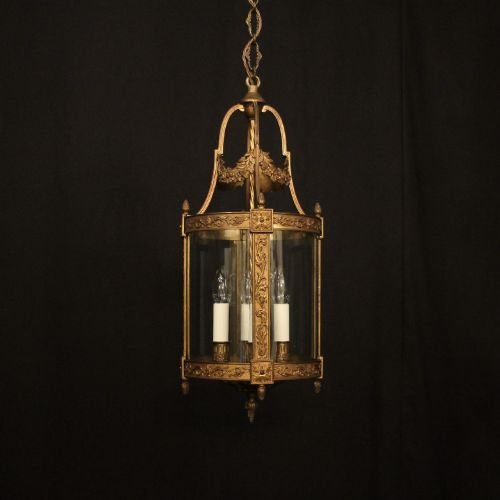
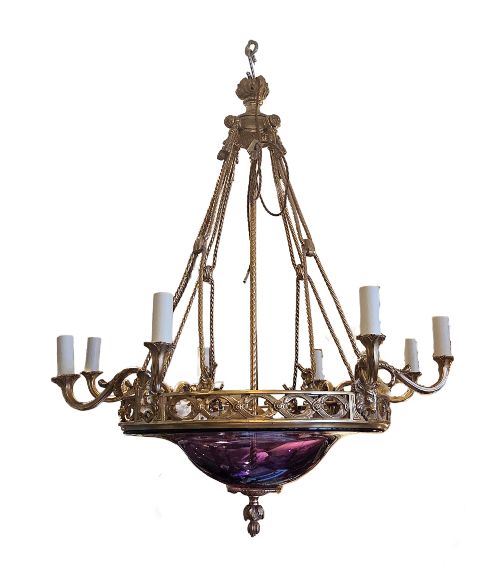
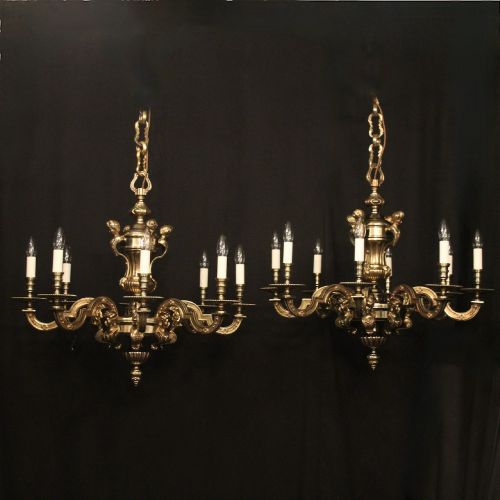
When you search for an ormolu bronze chandelier, you encounter French lighting spanning the nineteenth and early twentieth centuries, from the 1880s through to the 1930s. The selection on this page consists principally of multi-light chandeliers, hall lanterns and wall lights drawing on French Rococo, Neoclassical and Empire designs.
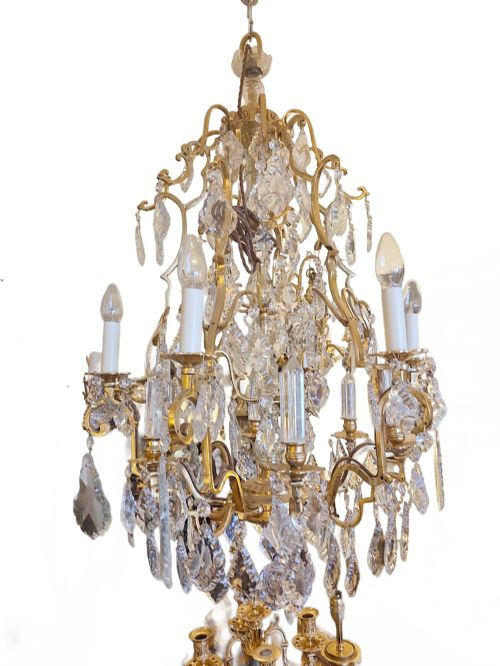
The most common formats on this page are multi-light chandeliers and convex hall lanterns, often housing between three and twenty-five lights. These pieces frequently incorporate crystal drops, tent and waterfall arrangements, or birdcage frames constructed in France.
How they were made
The makers of these fixtures worked primarily with bronze, brass and gilt metals, applying fire gilding or chemical gilding to achieve the characteristic ormolu finish. Cast bronze components provide the structural framework, shaping the arms, scrollwork and decorative mounts.
Cut crystal and glass elements are integrated into many pieces, suspended to refract the light from multiple bulbs or candles. Frames are assembled with pins and screws, holding lanterns, birdcage structures and tiered chandelier bodies together securely.
Ormolu Bronze Chandelier Retail Price Guide 2026
Typical asking prices for ormolu bronze chandelier among the pieces listed under this phrase on Sellingantiques today, from the lower quarter to the upper quarter. They describe what is for sale here now, not the wider market.
Materials recorded across the inventory include gilt bronze, ormolu, brass, cut crystal, and glass configured into chandeliers, wall lights and lanterns.
What varies in quality
The definition of the cast metalwork separates standard production from superior examples, with finer pieces displaying crisp chasing and detailed relief on the ormolu mounts. The weight of the bronze and the complexity of the design, such as double-tiered frames or elaborate tent and waterfall crystal configurations, also dictate the caliber of a fixture.
The integration of glass and cut crystal further distinguishes the range, where hand-cut drops and polished prisms produce superior light refraction compared to simpler pressed glass. The consistency of the gilding across hidden junctions and prominent surfaces indicates the level of craftsmanship applied during production.
The Ormolu Bronze Chandelier Glossary
- Ormolu
- Gilded bronze produced by applying a mercury and gold amalgam to a bronze base and heating it. This technique creates a durable, golden surface finish characteristic of fine French decorative objects.
- Tent and waterfall
- A chandelier configuration where strings of crystal beads form an upper tent shape above a wider cascading waterfall of droplets. This arrangement maximises light dispersion.
- Hall lantern
- An enclosed ceiling-hung light fixture designed for entranceways and corridors, often featuring glazed panels set within a bronze or brass frame. These units can be convex or hexagonal in profile.
- Neoclassical
- A stylistic period drawing inspiration from classical antiquity, favouring symmetry, restraint and geometric motifs. In lighting, this appears in forms such as lyre shapes and urn details.
- Birdcage chandelier
- A lighting form structured around curved metal ribs resembling an aviary frame, typically hung with crystal drops and central candle arms. The open metalwork creates a distinct volumetric profile.
Ormolu Bronze Chandelier: Frequently Asked Questions
How do I hang a heavy bronze chandelier?
These fixtures require direct attachment to ceiling joists using a steel mounting hook capable of supporting substantial weight. Professional installation is essential due to the combined mass of cast bronze and crystal components.
Electrical wiring must be routed securely through the internal channels or suspension chains. An electrician should check the internal lampholders and wiring to ensure safety standards are met.
What rooms suit a hall lantern?
Hall lanterns provide focused, enclosed illumination suited to entrance halls, stairwells and high-ceilinged corridors. Their compact footprint allows them to occupy narrow spaces without obstructing movement.
Selecting a lantern size proportional to the ceiling height and floor area prevents the piece from dominating the space. Placing the fixture so the bottom sits well above head height ensures safe clearance.
How do I clean crystal drops?
Crystal elements should be washed in warm water with a mild detergent, supporting each drop by hand to prevent strain on the connecting wires. Individual drying with a lint-free cloth maintains clarity and prevents water spots.
Leaving the crystal attached while cleaning requires careful wiping with a damp cloth followed by immediate drying. Harsh chemical cleaners can damage the surrounding bronze surface or strip the gilding.
How do I identify Empire style lighting?
Empire style pieces incorporate motifs derived from ancient Rome, Greece and Egypt, such as wreaths, palmettes and classical figures. The forms are typically symmetrical and grounded in architectural geometry.
Materials are deployed to project authority and proportion, using heavy gilded bronze paired with clean lines. This aesthetic emerged during the early nineteenth century and influenced later revivals.