

Ormolu and Patinated Bronze
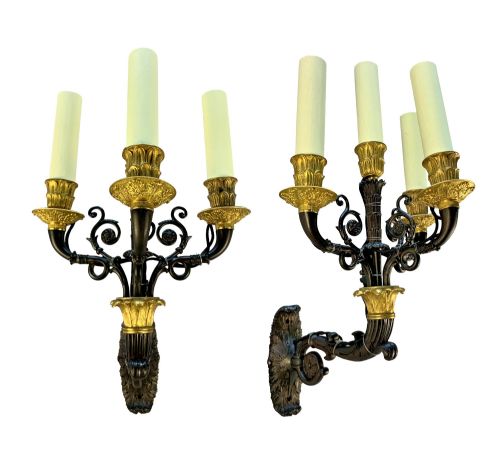
When you encounter ormolu and patinated bronze, you are looking at tactile decorative metalwork that combines deep dark bronze surfaces with brilliant gold-toned highlights.
Ormolu and Patinated Bronze
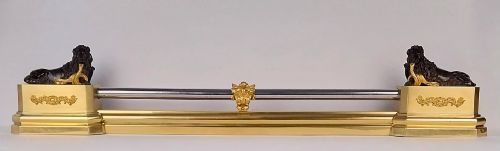
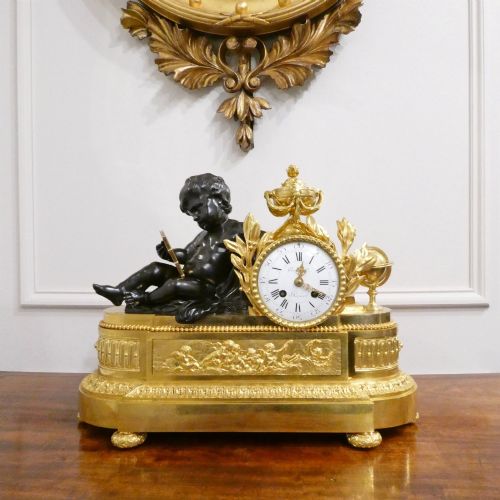
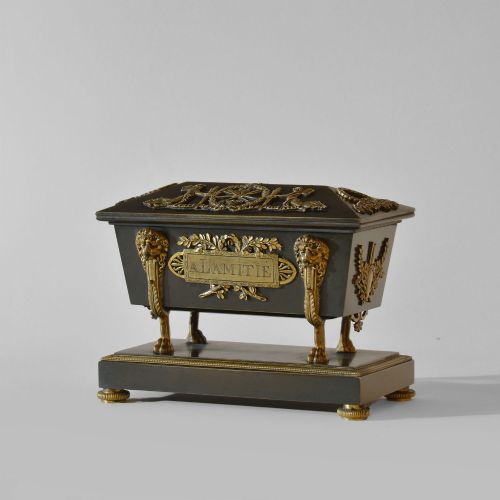
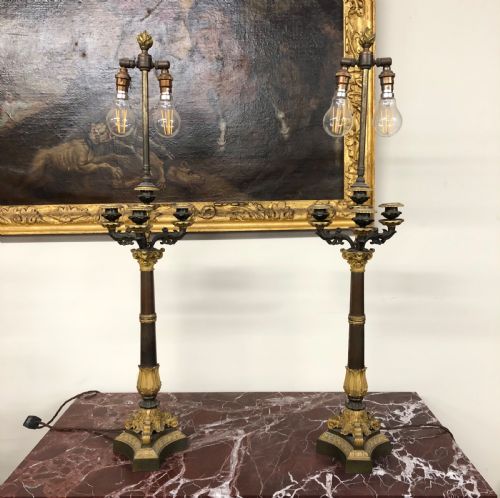
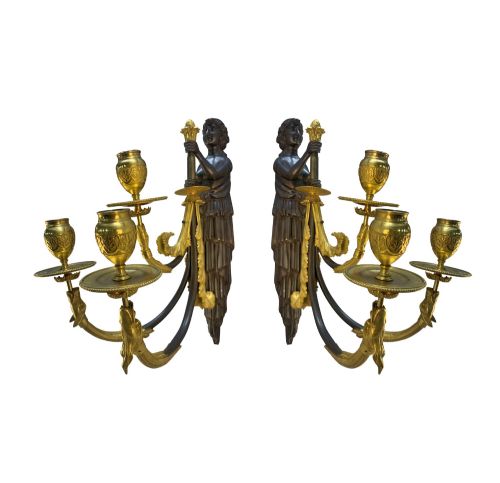
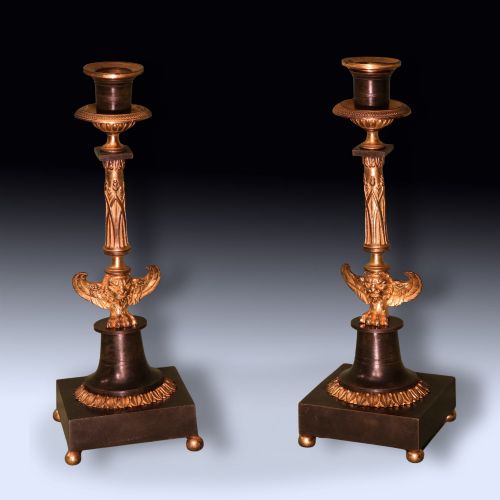
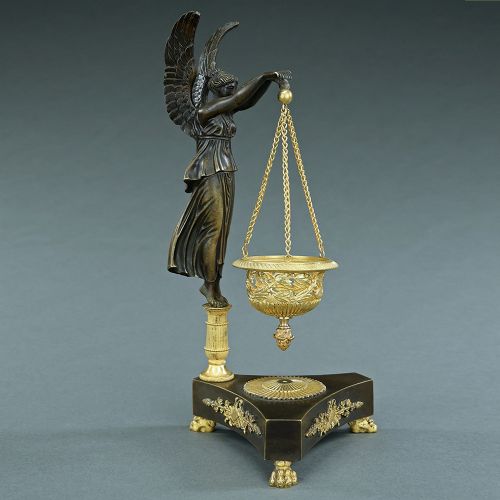
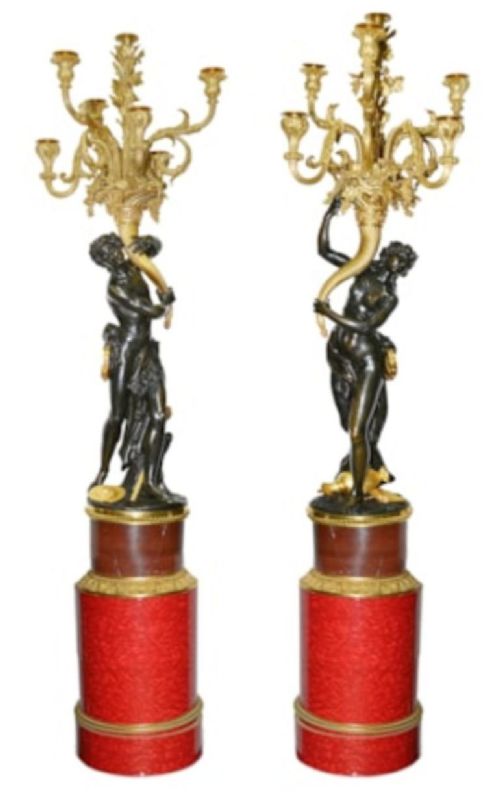
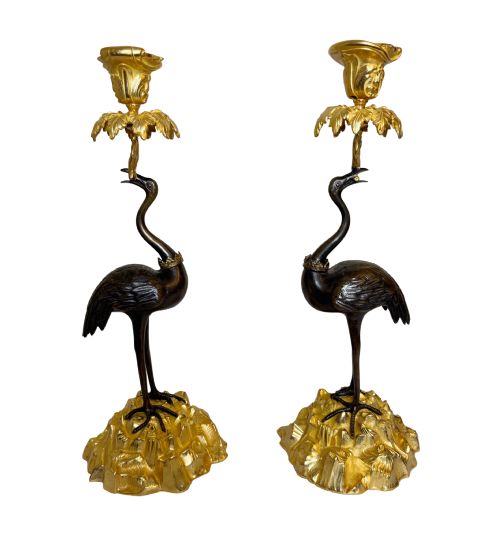
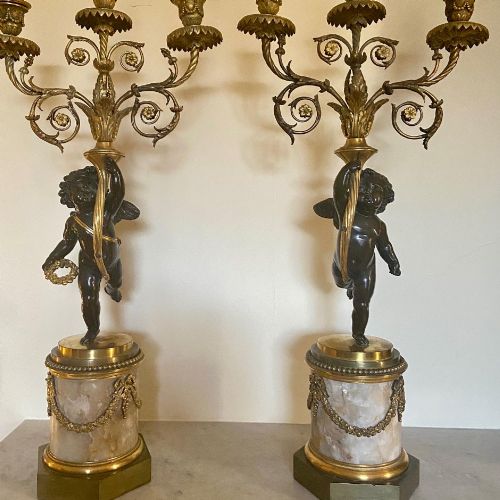
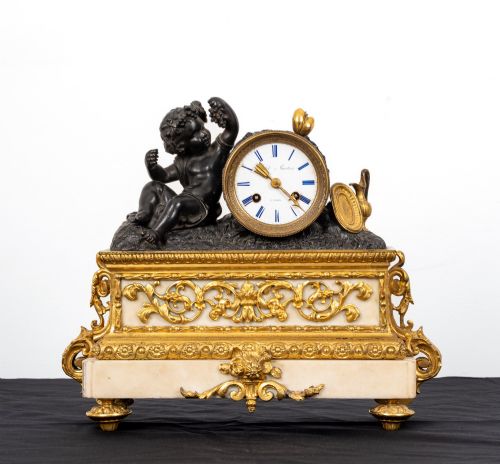
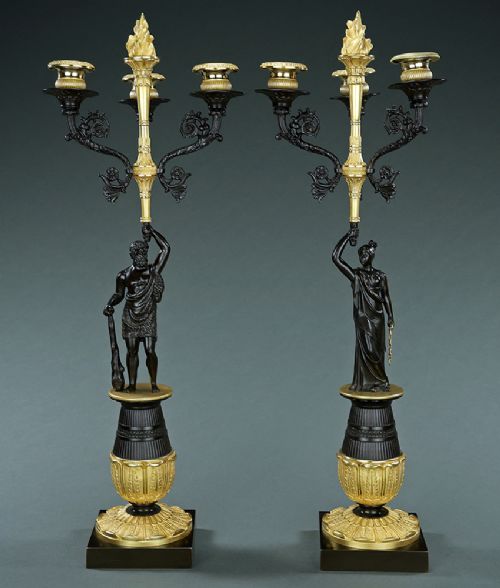
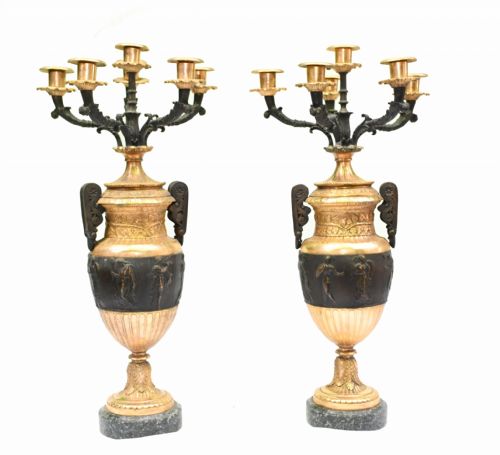
Ormolu and patinated bronze works primarily take the form of mantel clocks, candelabra, candlesticks, chenets, and decorative tazzas or urns. These objects frequently emerge from nineteenth-century French workshops, spanning periods from the Regency and Empire eras through to the late Victorian and Napoleon III styles.
The objects combine cast bronze elements that have received a dark chemical patination with distinct areas of gilt bronze, creating a striking contrast between sombre metal surfaces and bright metallic gold. Buyers encounter items ranging from domestic lighting fixtures and fireplace accessories to elaborate figural clock garnitures.
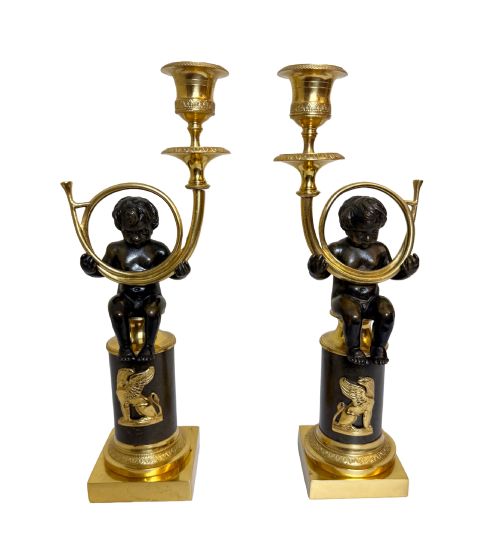
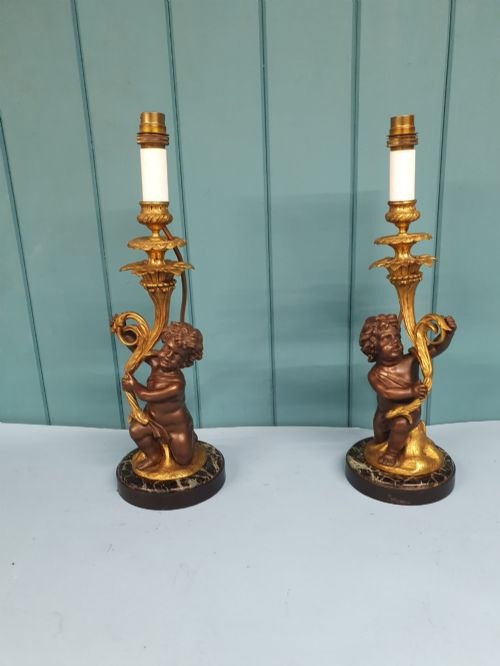
Makers and designers drew upon classical motifs, cherubs, and architectural details to produce items suited to grand nineteenth-century interiors. Surviving examples demonstrate how functional domestic items were elevated into sculptural art through this dual-metal technique.
How they were made
Craftsmen cast the structural forms in bronze before applying chemical treatments to darken specific areas into a rich, patinated finish. Other sections received a layer of finely ground gold amalgamated with mercury and fired, a hazardous process known as mercury gilding that produced the bright ormolu surface.
Makers frequently combined these cast metals with contrasting natural materials such as white marble, fluorspar, enamel, and crystal glass to build complex decorative objects like urns and clock garnitures. Fine chasing tools were used after casting to sharpen details on hair, drapery, and foliage before final assembly.
Ormolu and Patinated Bronze Retail Price Guide 2026
Typical asking prices for ormolu and patinated bronze among the pieces listed under this phrase on Sellingantiques today, from the lower quarter to the upper quarter. They describe what is for sale here now, not the wider market.
Several nineteenth-century models depict cheerful cherubs wrestling with heavy candelabra branches or riding elephants.
What varies in quality
The crispness of the bronze chasing separates standard production from exceptional pieces, as skilled artisans spent hours hand-tooling furrows in hair, feathers, and acanthus leaves after the casting stage. Softer, blurred contours indicate a worn mould or rushed finishing.
The durability and depth of the gilding also define the upper tier of objects, where mercury fire-gilding yields a rich, warm lustre that resists tarnishing compared to later electroplated alternatives. Harmonious integration with high-grade marble bases and careful mechanical components in clocks further distinguishes superior works.
Francois Redmond·Vincenti·Siffel and Cartier·Rabiat
The Ormolu and Patinated Bronze Glossary
- Ormolu
- Gilded bronze, derived from the French term ouiller moulu meaning ground gold. It provides bright golden highlights against dark patinated bronze.
- Patinated bronze
- Bronze treated with chemical solutions to create a dark brown, black, or greenish surface colour. This dark tone grounds the bright flash of adjacent ormolu.
- Chenets
- Decorative metal fire dogs placed at the hearth to support logs. They often feature figural bronze castings and ormolu mounts.
- Tazza
- A shallow saucer-like ornamental vessel elevated on a stem and foot. They appear in bronze and marble combinations during the nineteenth century.
- Garniture
- A set of matching decorative objects, typically a central clock flanked by matching candelabra or vases. They formed symmetrical decorative schemes on nineteenth-century mantelpieces.
Ormolu and Patinated Bronze: Frequently Asked Questions
What is ormolu?
Ormolu is a historical term for gilded bronze metalwork where a gold amalgam is applied to a cast bronze base. It creates a brilliant metallic gold surface that contrasts with dark bronze.
Craftsmen used this technique extensively during the eighteenth and nineteenth centuries to highlight decorative details on clocks, candelabra, and mounts.
How do I clean patinated bronze?
Patinated bronze surfaces require gentle dusting with a soft brush or dry cloth to preserve the historical chemical finish. Avoid using metal polishes or abrasive cleaners, which strip the patination and damage the underlying metal.
Ormolu sections can be wiped with a slightly damp cloth if needed, ensuring no moisture lingers in crevices.
Are these pieces French?
Many surviving examples originate from French workshops, particularly in Paris, where master bronze-makers produced elaborate clocks, candelabra, and decorative objects for the European market. British makers also adopted these styles, particularly during the Regency period.
Stylistic cues and signatures on clock movements often help pinpoint the geographic origin of specific items.
How do I date a bronze clock?
Dating relies on examining the sculptural style, the casting technique, and any maker marks stamped on the internal clock movement. Pieces from the early nineteenth century often reflect Empire or Regency motifs, while later Victorian items show revivalist influences.
Associated materials like marble type and dial construction also provide clues to the period of manufacture.