

Ormolu and Marquetry
These pieces unite cast gilt-bronze mounts with intricate wood veneers, bringing high ornamental display to nineteenth-century domestic interiors.
Ormolu and Marquetry
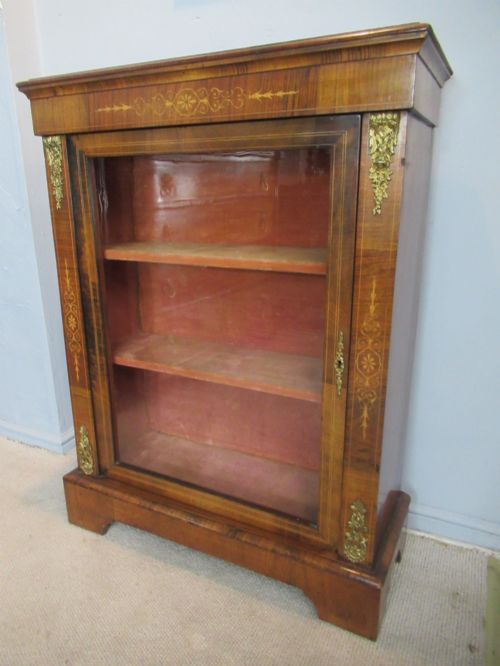
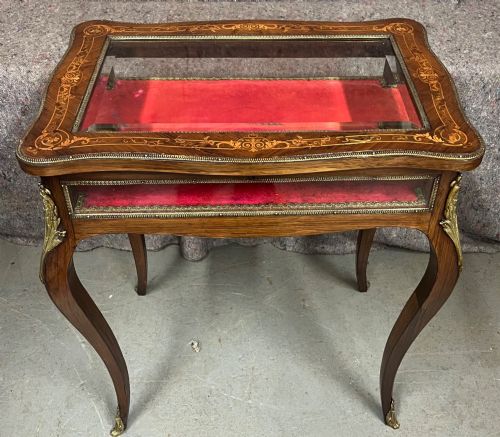
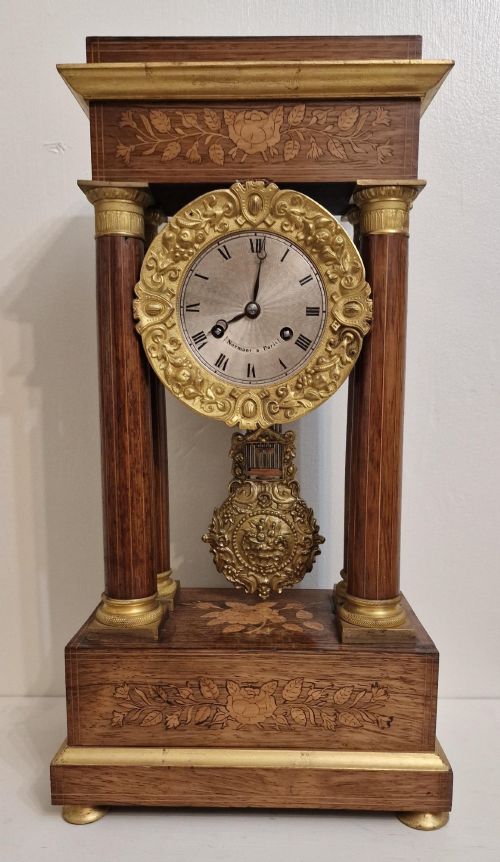
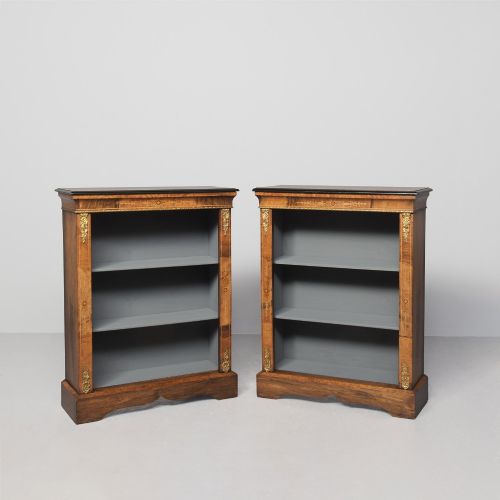
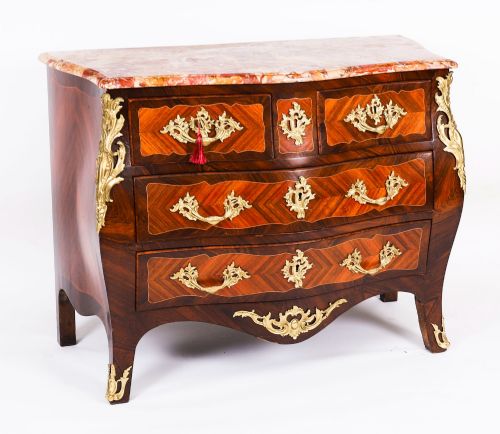
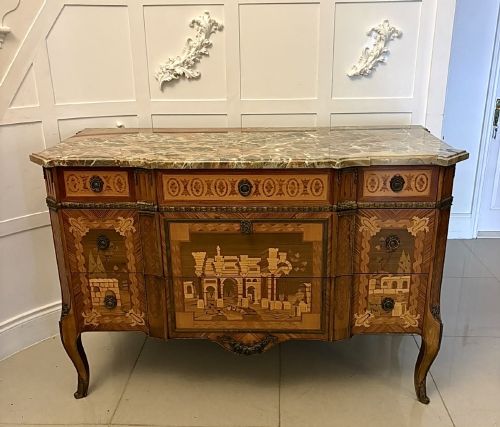
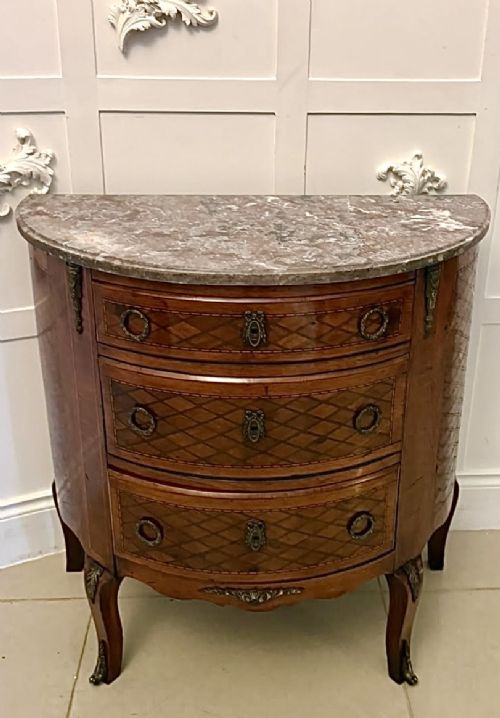
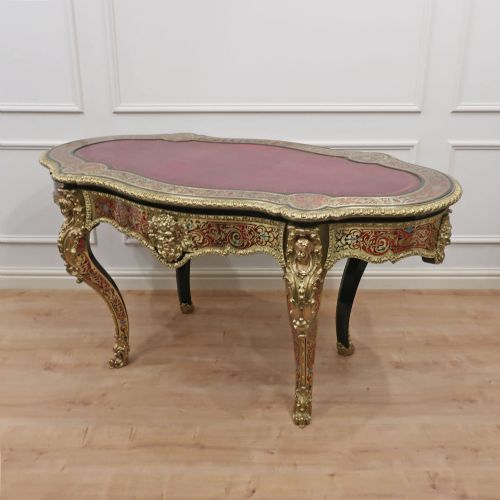
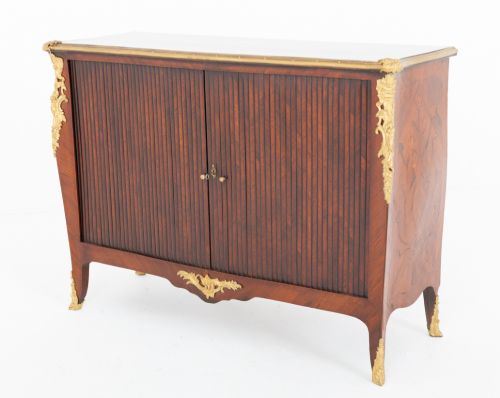
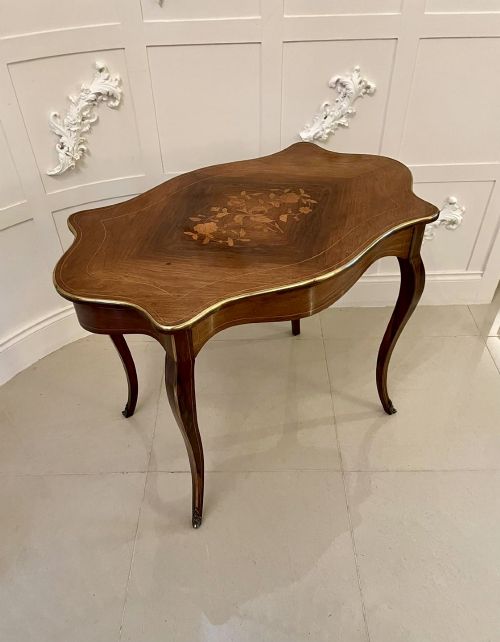
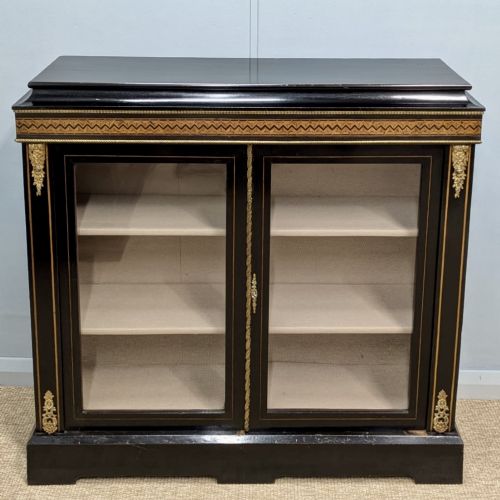
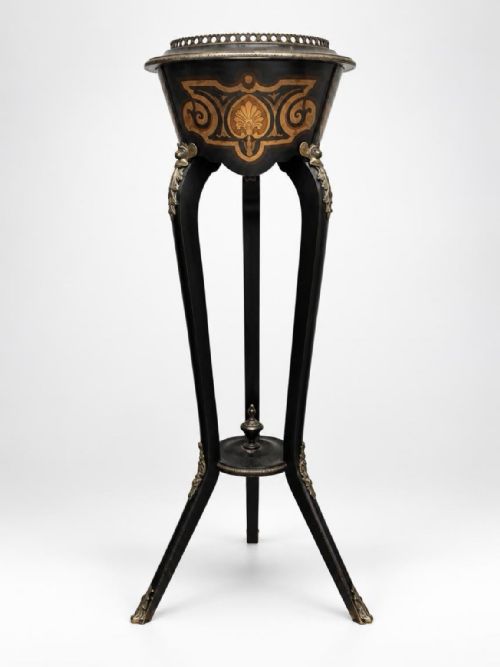
Items matching ormolu and marquetry primarily comprise nineteenth-century French and Victorian case furniture, alongside occasional occasional tables and clocks. Credenzas, writing desks, and commodes dominate the selections, heavily styled in Louis XV Revival and Napoleon III aesthetics.
The aesthetic relies upon combining contrasting wood veneers with cast metal enrichment. Buyers encounter curved serpentine forms, glazed display cabinets, and fitted writing surfaces designed for formal reception rooms.
How they were made
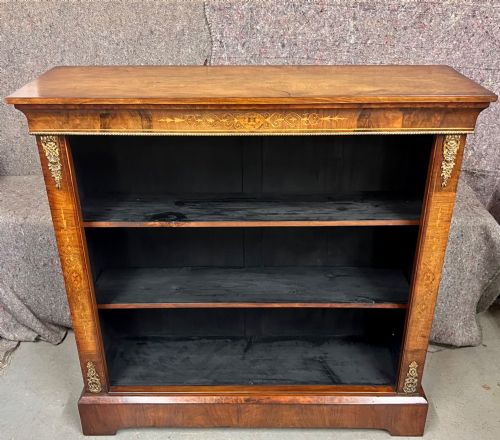
Cabinet makers utilised foundational timbers like walnut, burr walnut, and rosewood, overlaying them with precise geometric or floral wood veneers such as kingwood, tulipwood, and sycamore. Marquetry panels were meticulously hand-cut and fitted into the primary carcase before polishing.
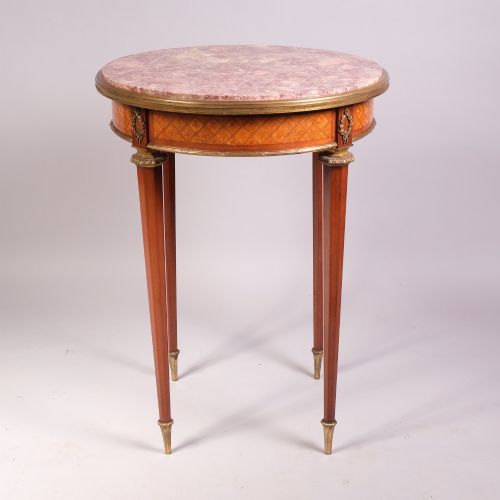
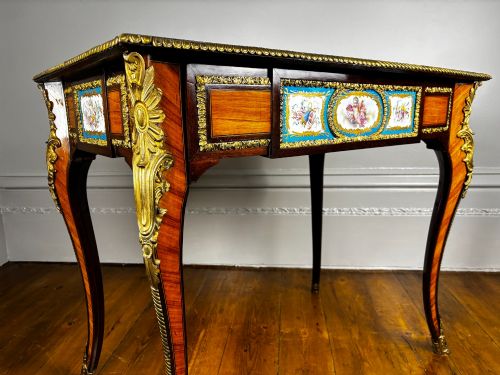
Gilt bronze or ormolu mounts were cast, chased, and applied to corners, feet, and friezes to accentuate the structural lines. Marble slabs frequently topped commodes and console tables, providing a heavy contrasting surface.
Ormolu and Marquetry Retail Price Guide 2026
Typical asking prices for ormolu and marquetry among the pieces listed under this phrase on Sellingantiques today, from the lower quarter to the upper quarter. They describe what is for sale here now, not the wider market.
Listings feature numerous nineteenth-century credenzas, desks, and centre tables constructed from burr walnut, kingwood, and rosewood.
What varies in quality
The precision of the marquetry cutting and the depth of the wood grain selection dictate the baseline standard of the piece. Finer examples display complex tonal variations across multiple contrasting timbers without lifting or shrinkage in the veneers.
Cast metal mounts separate utilitarian production from exhibition quality work. Sharply chased ormolu with defined relief and heavy mercury gilding indicates superior workshop output compared to softer, simplified brass castings.
Maison Millet·François Linke
The Ormolu and Marquetry Glossary
- Ormolu
- Gilt bronze mounts applied to furniture. The technique involves coating cast bronze in gold amalgam and firing to achieve a durable metallic lustre.
- Marquetry
- Inlaid wood veneers assembled to form pictorial or decorative patterns. Artisans cut various coloured timbers together to ensure tight joints.
- Boulle
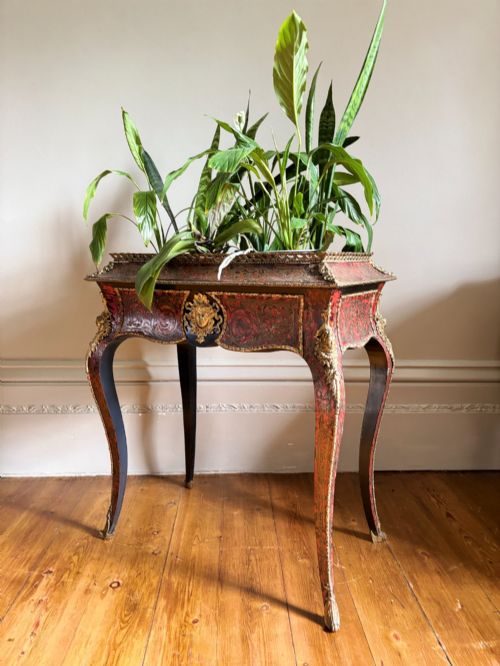
- A form of marquetry developed in France utilising tortoiseshell and brass inlay. It frequently characterises Napoleon III side tables and credenzas.
- Credenza
- A decorative cabinet featuring central doors flanked by curved glass display sections. These pieces often incorporate extensive ormolu mounts and marquetry panels.
- Commode
- A decorative chest of drawers standing on legs. Nineteenth-century versions often feature serpentine fronts and marble tops.
Ormolu and Marquetry: Frequently Asked Questions
What distinguishes ormolu from standard brass?
Ormolu refers specifically to gilt bronze where a gold mixture is applied to the cast metal base. This process creates a richer, deeper metallic finish than plain polished brass.
Makers utilised ormolu to highlight the structural corners and key areas of high-status furniture.
How should I care for marquetry surfaces?
Marquetry requires stable indoor humidity to prevent the delicate wood veneers from drying out and lifting. Regular dusting with a dry cloth preserves the polished surface.
Avoid placing these items near direct heat sources or strong sunlight which can fade exotic timbers like rosewood and kingwood.
Where were these pieces originally used?
Cabinet makers designed these items for formal nineteenth-century drawing rooms and reception spaces. Credenzas and centre tables served both as display surfaces and functional furniture.
Writing desks and credenzas demonstrated the wealth and taste of the household to visiting guests.
How can I identify a Victorian piece from a later revival?
Victorian and nineteenth-century pieces exhibit construction methods consistent with period hand tools, including hand-cut dovetails and traditional timber framing. Secondary woods inside drawers usually match the expected regional timbers of the era.
Revival pieces from subsequent decades often show machine-sawn elements and different adhesive applications inside the carcase.