







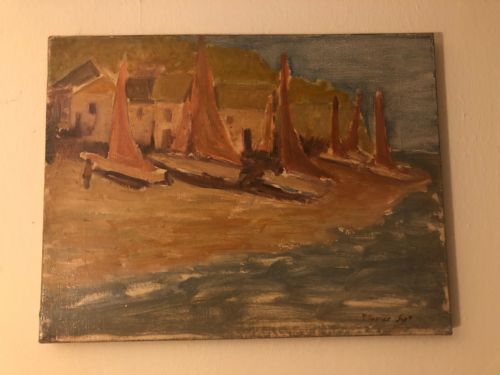

Original Signed Maritime Artwork
Original signed maritime artwork brings coastal history and harbour scenes into a room through authentic brushwork and ink.
Original Signed Maritime Artwork
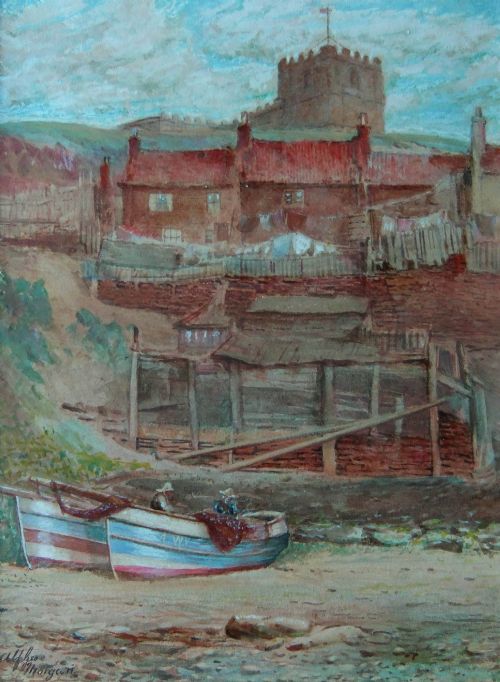
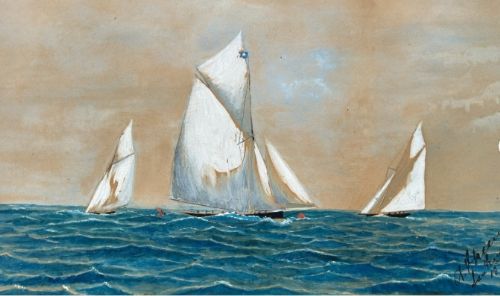
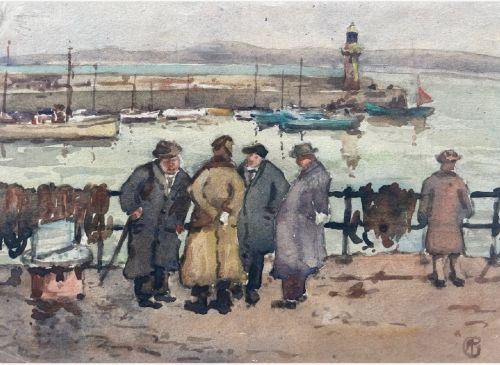
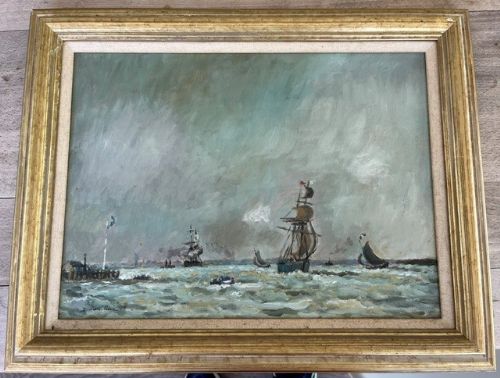
Original signed maritime artwork captures coastal views, harbours, and vessels through direct hand-rendered creation by named artists. When you search for original signed maritime artwork, you encounter pieces that record historical shipping, fishing fleets, and coastal topography from the nineteenth century through the mid-twentieth century.
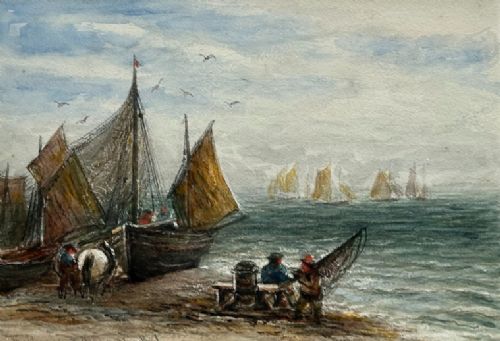
The selections on this page rely heavily on British and European watercolours and oil paintings, alongside pencil etchings. Subjects range from busy Yorkshire harbours and Cornish fishing ports to Venetian canals and racing yachts under sail.
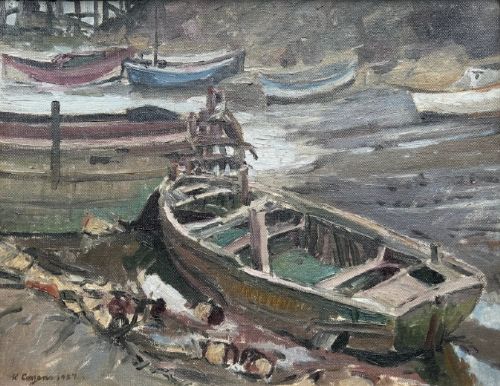
Victorian and Edwardian watercolours dominate the early end of the selection, while mid-century oils on board and canvas represent the later decades. Each piece bears the distinct signature or monogram of the hand that drew or painted it.
Materials and technique
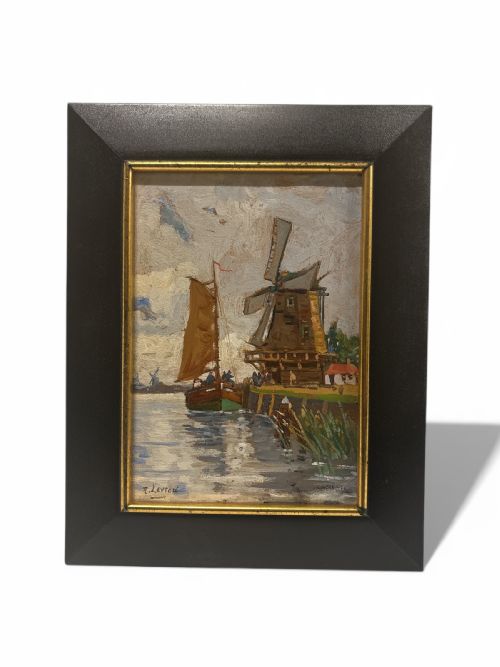
The works utilise traditional media including watercolour pigment on paper, oil paint applied to canvas, wood panels, or boards, and ink or pencil for etchings. Painters layered washes of colour for translucent skies and water, or applied thick impasto paint to capture the turbulent texture of choppy seas.
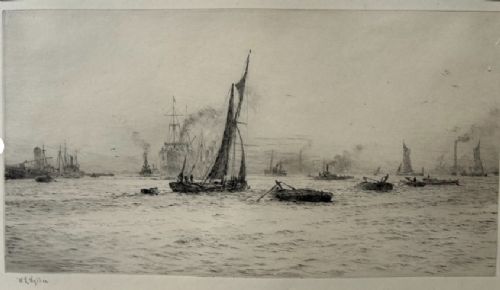
Supports vary according to the period and medium, with nineteenth-century watercolours generally mounted on paper sheets and later twentieth-century compositions frequently executed on prepared boards or canvas stretched over wooden frames. Etchings involve inked metal plates pressed onto paper to produce fine linear details of rigging and architecture.
Original Signed Maritime Artwork Retail Price Guide 2026
Typical asking prices for original signed maritime artwork among the pieces listed under this phrase on Sellingantiques today, from the lower quarter to the upper quarter. They describe what is for sale here now, not the wider market.
Sailors occasionally painted turbulent seas using whatever pigment was to hand while docked.
Distinctions in quality
Quality rests on the confidence of the handling and the precision with which water, light, and rigging are rendered. A strong composition uses the grain of the paper or the texture of the canvas to give depth to sea and sky, rather than relying on flat, uniform fills of colour.
The clarity of the signature and the preservation of the pigment matter greatly. Stronger examples retain vibrant watercolour tones and stable oil surfaces without extensive fading, heavy discolouration, or clumsy later touch-ups to the paint layer.
Kenneth Cozens·James Orrock·R Leyton·William Banks Fortescue·William Lionel Wyllie·Alfred G. Morgan·Fernando Del Basso·William Frederick Settle·William Tuck·Kate E Booth·Sam Bough·Frank Wood·Frank Wasley·William Knox·S. J. Lamorna Birch·Fred Lawson·Norman Janes·Godwin Bennett·Maurice Sijs·Rowland Henry Hill
The Original Signed Maritime Artwork Glossary
- Watercolour
- A paint consisting of colour suspended in a water-soluble binder, applied in translucent washes on paper. It requires a swift and decisive hand since corrections are difficult to make.
- Impasto
- Paint laid on an area of the surface in very thick layers, usually thick enough that the brush or painting-knife strokes are visible. This technique adds tactile three-dimensional quality to crashing waves and rocky coasts.
- Etching
- A printmaking process where lines are incised into a metal plate with acid before being inked and pressed onto paper. It allows for extreme precision in depicting ship masts and harbour buildings.
- Aquatint
- A printmaking technique that produces tonal areas resembling watercolour washes, often used alongside etching to create atmospheric skies and sea shadows.
- Provenance
- The documented history of ownership of a work of art, which helps confirm its authenticity and origin.
Original Signed Maritime Artwork: Frequently Asked Questions
How do I date an unsigned maritime watercolour?
Dating relies on stylistic clues, paper watermarks, and the clothing or vessel types depicted within the scene. Comparing the handling of light and pigment to dated works by similar hands offers further guidance.
Framing materials and backing boards can also provide secondary evidence regarding the age of the piece.
Where should I hang a maritime painting?
These works suit rooms with good indirect natural light, away from direct sun that might fade watercolours or dry out oil pigments. Wall placement should keep the centre of the artwork at eye level.
Pairing frames with neutral wall colours helps the maritime tones of blues, greys, and ochres stand out.
What is the difference between an etching and a painting?
An etching is a printed multiple pulled from an inked metal plate, whereas a painting is a unique, direct application of wet pigment onto a surface. Etchings rely on line and tone, while paintings use colour and brush texture.
Both formats carry artist signatures when issued as original fine art.
How do I care for antique works on paper?
Works on paper require conservation-grade framing with acid-free mounts to prevent yellowing and degradation over time. Keeping them behind glass protects the delicate watercolour pigments from atmospheric pollutants and moisture.
Displaying them out of direct sunlight preserves the integrity of the original inks and paints.