


Original Sailboat Watercolour Painting
These original sailboat watercolour painting works capture maritime life and coastal views on paper.
Original Sailboat Watercolour Painting
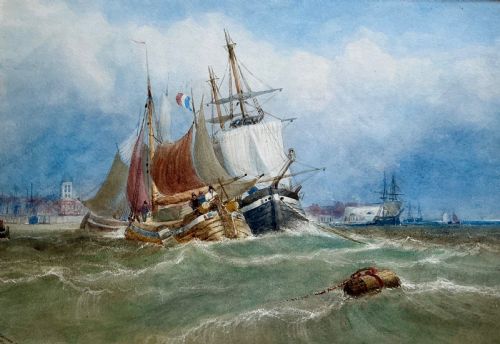
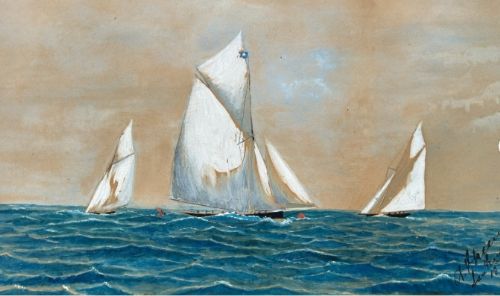
An original sailboat watercolour painting brings historic maritime scenes into focus through works created across the nineteenth and twentieth centuries. These paintings depict coastal harbours, racing yachts, and fishing vessels at sea, reflecting the changing moods of the water.
The pieces on this page span from Victorian marine art to mid-century maritime studies. Buyers encounter both named artists and initialed or attributed works depicting British, American, and European coastal locations.
Framed artwork and wall art dominate the selection, preserving delicate pigment layers behind glass. Each original watercolour painting offers a direct view into maritime history through period techniques.
Distinctions in quality
Quality rests upon the artist's handling of light, movement, and atmospheric conditions on the water. Stronger works demonstrate confident brushwork that defines the rigging of a ship and the chop of a wave with economy.
The preservation of the paper and pigment integrity also separates examples. Works that retain their original colour saturation without excessive fading or foxing represent the upper tier of the selection.
Framing materials recorded across the inventory include standard wood, gilt wood, and protective glass.
Henry Barlow Carter·Richard Harry Carter·William Tuck·Samuel Owen·Charles Harmony Harrison·Stanley Orchart·John McDougal·Frank Wasley·Thomas Bush Hardy·Henry Scott Tuke
The Original Sailboat Watercolour Painting Glossary
- Watercolour pigment
- Finely ground colour particles suspended in a water-soluble binder. This material forms the primary medium for these marine paintings.
- Gilt wood
- Wood framing treated with a thin layer of gold leaf or metallic gilt paint. This finish frequently surrounds Victorian and Edwardian marine watercolours.
- Gouache
- An opaque water-based paint used alongside translucent watercolour. Artists utilised gouache to introduce highlights on sails and cresting waves.
- Attributed to
- A designation used when a work shows the style of a specific artist but lacks a definitive signature. This attribution relies on stylistic comparison with known pieces.
- Foxing
- Brown spots or discoloration that develops on historic paper over time due to chemical reactions. Collectors observe foxing as a common characteristic of nineteenth-century paper goods.
Original Sailboat Watercolour Painting: Frequently Asked Questions
How do I care for an antique watercolour?
Keep the framed artwork away from direct sunlight to prevent the watercolour pigments from fading over time. Maintain stable room temperatures to protect the paper support from humidity changes.
Ensure the glass remains intact to shield the delicate paint surface from dust and atmospheric pollutants. Professional framing using acid-free materials safeguards the piece during long-term display.
What periods do these marine paintings cover?
The listings encompass works from the Victorian era through the Edwardian period and into mid-century maritime art. Nineteenth-century examples form a substantial portion of the available selection.
Later pieces extend into the nineteen-forties and fifties, showing the continued appeal of coastal subjects. Each era brings distinct framing styles and colour palettes to the paper.
Are all the paintings signed by the artist?
Many works bear clear signatures, initials, or attribution to known nineteenth and twentieth-century painters. These signatures help anchor the piece to a specific regional school or maritime tradition.
Other examples remain unsigned or attributed based on stylistic evidence within the brushwork. Unsigned pieces rely on the visual quality of the maritime scene itself.
What subjects appear in these watercolours?
Common subjects include fishing boats off the coast, racing yachts in motion, and tall ships in harbour. Scenes range from British coastal waters to Venetian canals and American seascapes.
Artists focused on working vessels, regattas, and quiet river landscapes across various maritime settings. These depictions document historic watercraft and coastal infrastructure.