

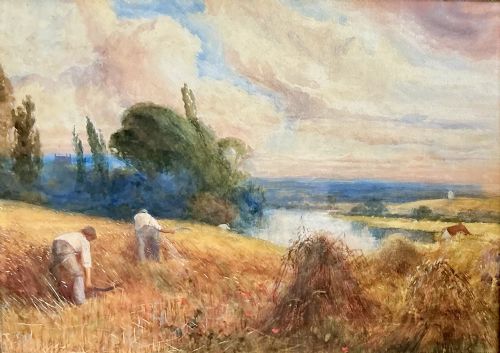


Original River Watercolour Art
Original river watercolour art captures fluid aquatic scenes and rural banks through translucent washes on paper from the nineteenth and twentieth centuries.
Original River Watercolour Art
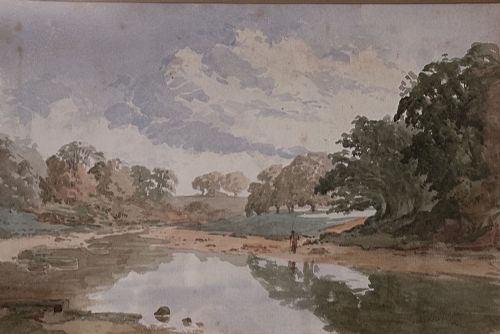
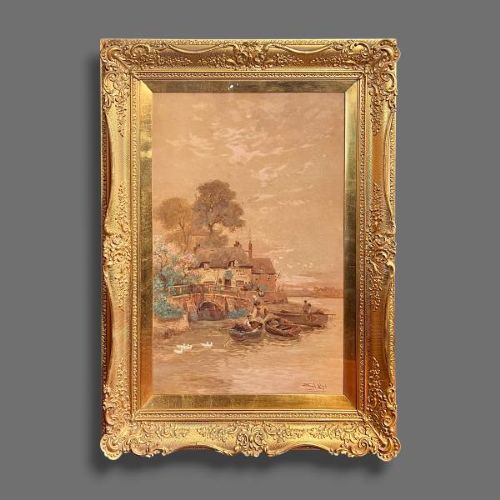
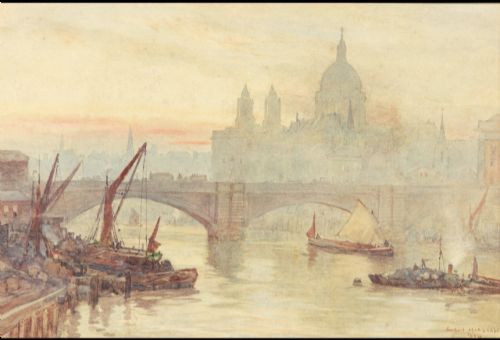
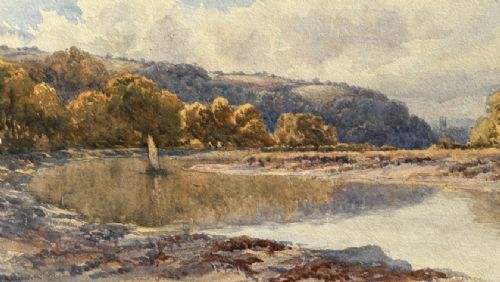
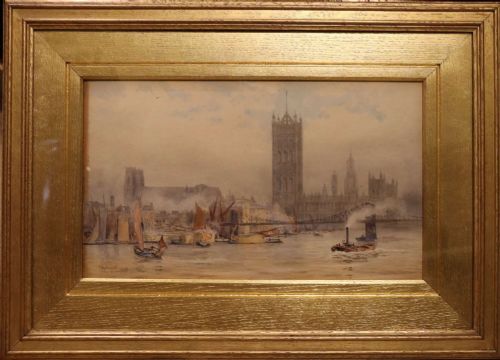
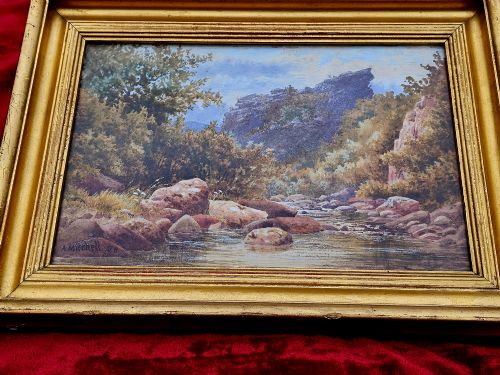
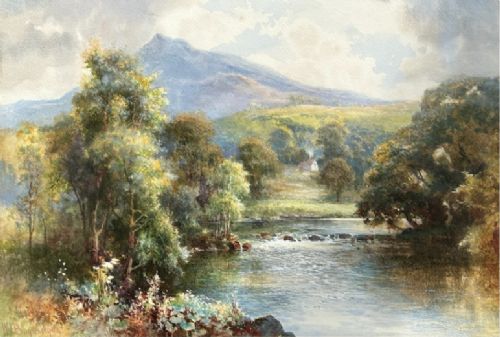
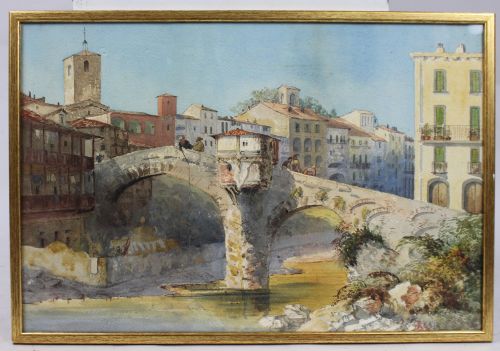
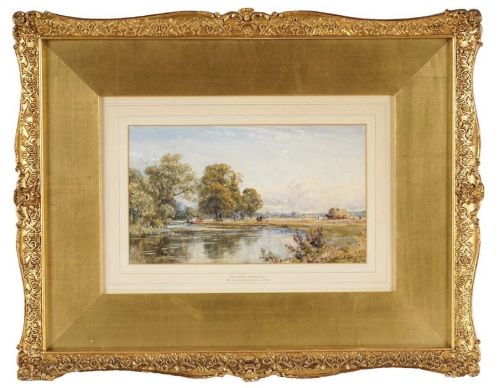
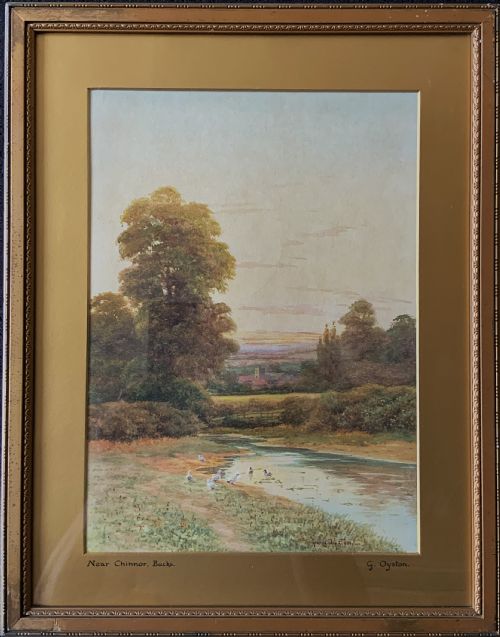
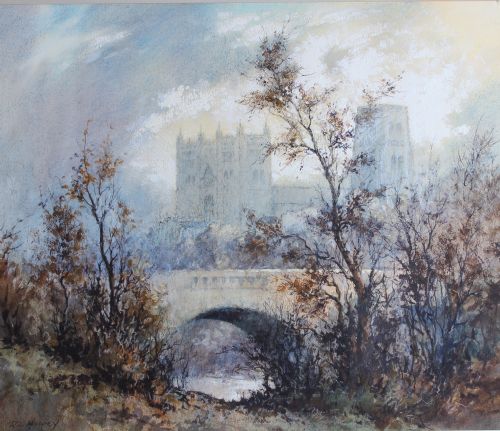
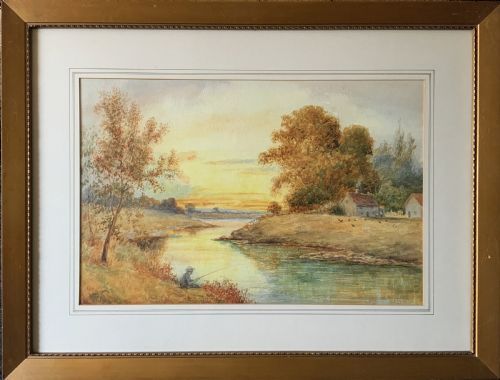
Original river watercolour art comprises framed paintings depicting waterways, bridges, and pastoral shores created during the Victorian, Edwardian, and mid-twentieth-century periods. These works capture specific British and European topographies, ranging from the Thames and Welsh valleys to Norfolk broads and Italian landscapes.
Buyers seeking original river watercolour art will most commonly encounter nineteenth-century British school landscapes executed on paper. These pieces frequently feature signed compositions by listed regional artists, capturing rural riverbanks, fishermen, and historic town views under muted skies.
How these artworks were produced
Artists applied watercolour pigment suspended in water directly onto paper support, allowing the white of the unpainted sheet to illuminate highlights through translucent washes. Many works combine fine pencil underdrawings with fluid brushwork to delineate architectural details, bridges, and river reflections.
Finished watercolours were traditionally mounted behind protective glass within wooden frames, occasionally accented with gilt wood moulding to complement the palette. Pigments were brushed onto absorbent paper surfaces to achieve the atmospheric depth characteristic of period landscape painting.
Listings feature paper supports, watercolour pigment, glass, and gilt wood spanning the Victorian period through the nineteen-fifties.
What distinguishes the quality
Quality rests upon the artist's handling of light, atmospheric perspective, and pigment preservation across the paper surface. Superior works demonstrate confident brushwork and tonal balance that define river reflections and distant topography without heavy overworking.
Condition of the paper and integrity of the original pigment heavily influence the standing of an individual painting. Well-preserved sheets retain their intended hues without excessive fading from light exposure, while retaining crisp signatures and contemporary framing elements.
Stuart Lloyd·Herbert Menzies Marshall·David Law·H Medlycott·Alfred Young Nutt·William Joseph Boyes·Robert Thorne Waite·George Oyston·Robert Leslie Howey·Frederick Hines·Alfred George Morgan·Cornelius Pearson·Arthur Reginald Smith·Henry John Kinnaird·Thomas Hunn·J Laporte·Colin H Greenwood·John Syer·Robert Winchester Fraser·Alfred Grey·George Arthur Fripp·Harold Lawes·Frederick G Coulridge·Leslie Rackham·Charles Harmony Harrison
The Original River Watercolour Art Glossary
- Watercolour pigment
- Finely ground colour particles mixed with a water-soluble binder, applied in translucent layers onto paper.
- Wash
- A thin, fluid layer of diluted watercolour paint spread across the paper to create skies, water surfaces, or background gradients.
- Gilt wood
- Timber framing coated with a thin layer of gold leaf or metallic gilt, commonly used to frame nineteenth-century fine art.
- British Impressionism
- A late nineteenth and early twentieth-century painting style focusing on natural light, outdoor settings, and spontaneous brushwork.
- Provenance
- The documented history of a painting's ownership and exhibition record, helping verify its authenticity and creator.
Original River Watercolour Art: Frequently Asked Questions
How should I display my watercolour?
Hang your painting away from direct sunlight to prevent the watercolour pigments and paper from fading over time.
Keep the piece in a stable environment with moderate humidity to protect both the paper support and the antique frame.
Are these paintings signed?
Many works bear the original signature or monogram of the artist, frequently located in the lower corners of the composition.
Some historical pieces also include contemporary inscriptions on the reverse detailing the specific river, bridge, or landscape depicted.
What periods do these watercolours span?
The selection primarily encompasses nineteenth-century Victorian and Edwardian works, alongside early to mid-twentieth-century examples.
Artists from these distinct eras captured both rural British waterways and continental European scenes using traditional pigment techniques.
How do I care for antique paper art?
Ensure the glazing remains intact and sealed to prevent atmospheric dust and moisture from reaching the delicate painted surface.
Consult a professional paper conservator if the backing board requires replacement or if signs of foxing appear.