
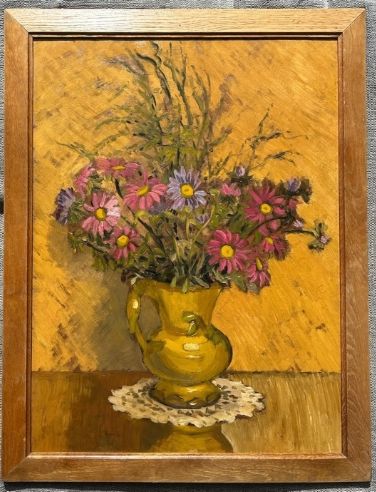

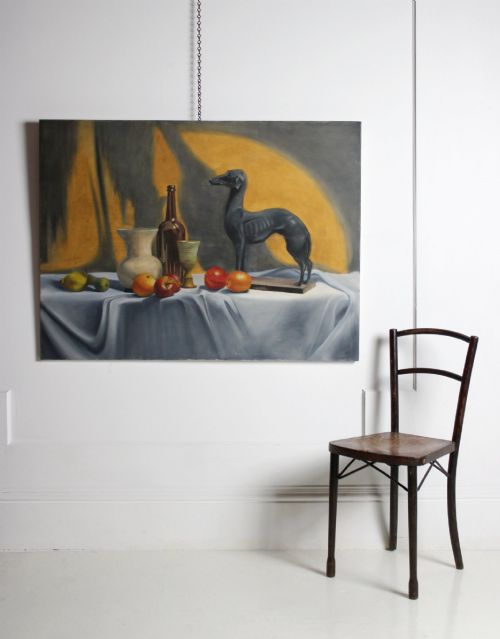
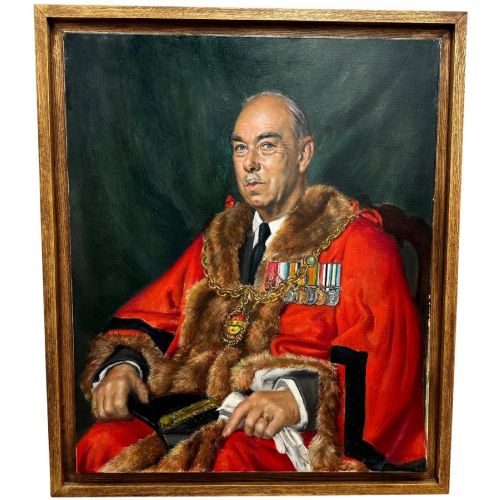
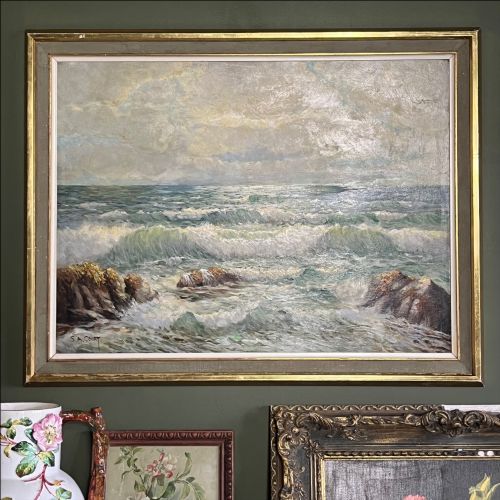
Original Mid Century Oil
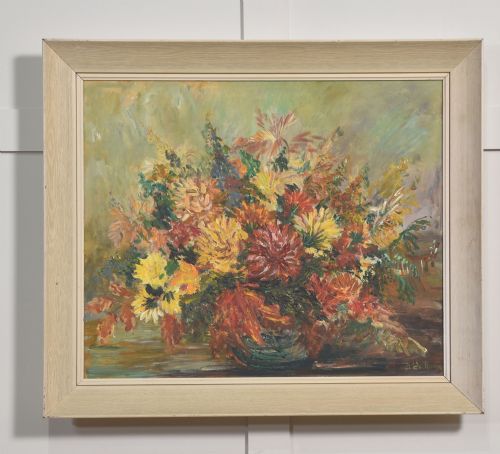
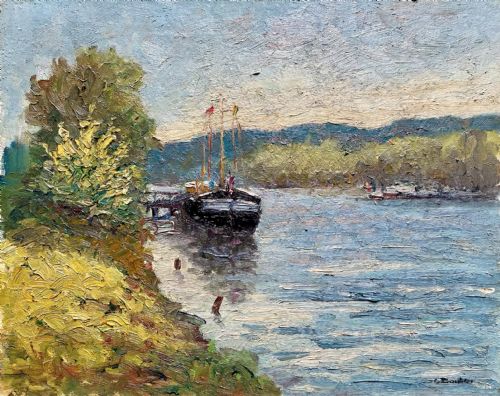
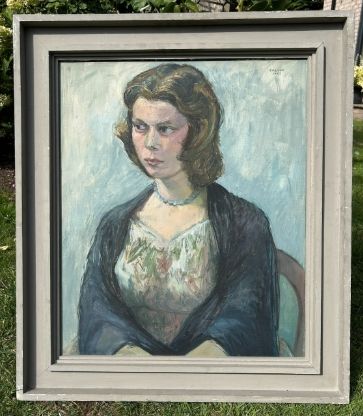
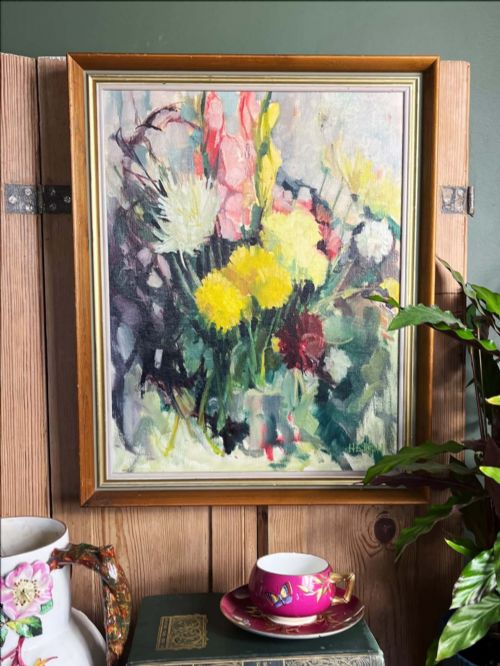
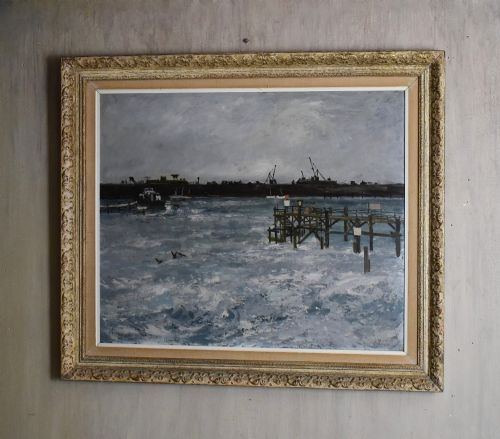
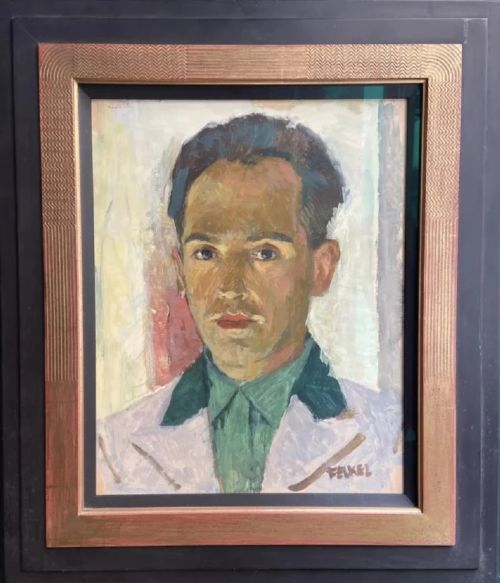
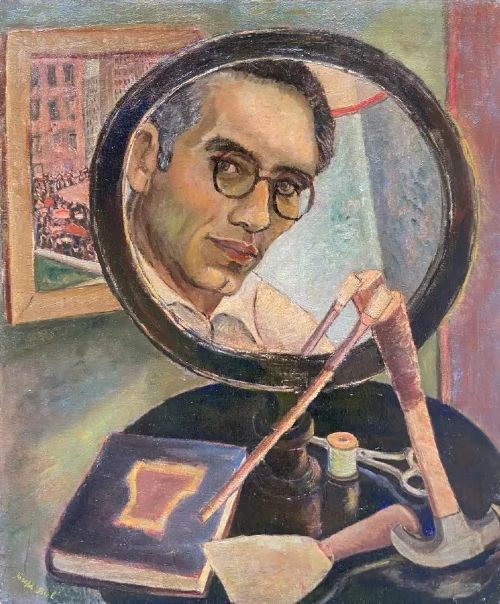
These original mid century oil paintings capture twenty-century subjects from coastal views to quiet interiors, offering collectors authentic period brushwork.
Original Mid Century Oil
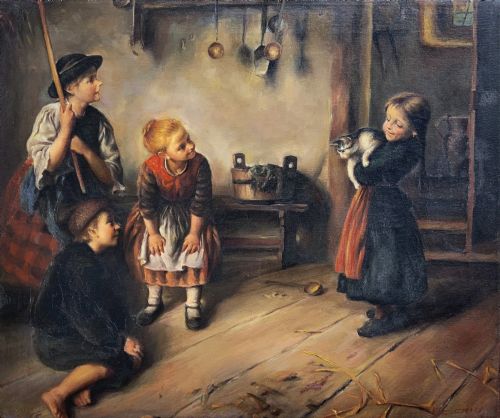
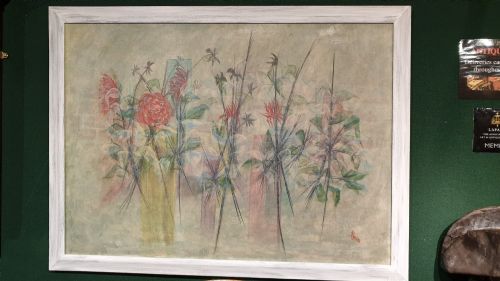
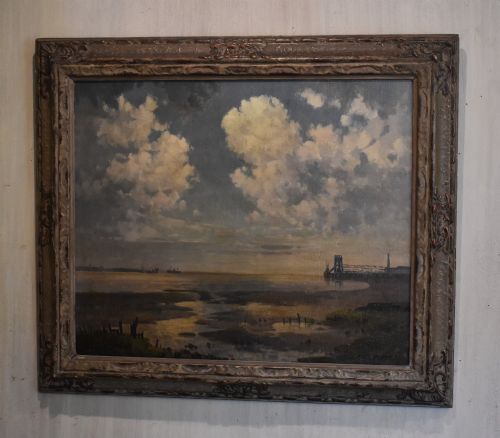
An original mid century oil brings tangible twentieth-century atmosphere into a room through pigment applied directly to rigid supports or woven textiles. Such works range from robust coastal landscapes and quiet rural scenes to striking individual portraits and still life arrangements.
The selections available here reflect decades of domestic and continental artistry, spanning impressionist interpretations and realistic townscapes alike. Buyers will encounter both signed compositions by named painters and evocative pieces by anonymous British and European schools.
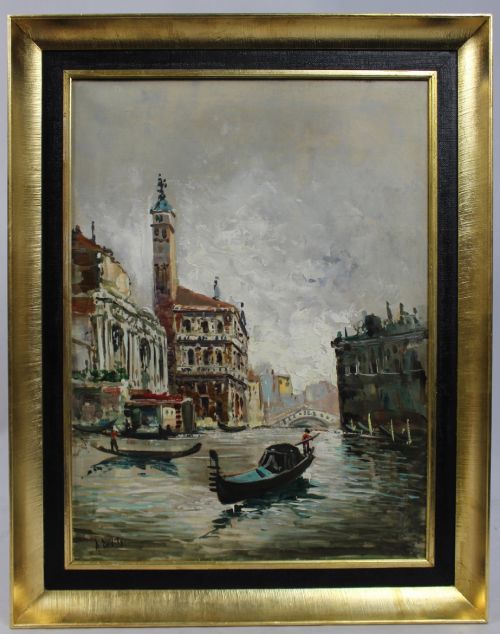
Subjects stretch from the industrial streets of northern England to sunlit French canals, recording everyday life through varied mid-century lenses. These works provide an immediate connection to the aesthetic preoccupations of the 1940s, 1950s, and 1960s.
How They Were Made
Artists applied slow-drying oil paint onto primed canvas, wooden panels, or fibrous boards, building rich textures and subtle tonal shifts over time. Many compositions utilise impasto techniques where thick pigment stands proud of the surface to catch the light.
Support materials varied widely according to studio preference and availability, with smooth hardwood boards and textured canvas offering distinctly different grounds for the brush. Finished works were frequently housed in wooden frames, sometimes accented with carved gilt detailing.
Several canvases capture cows gazing quietly across Yorkshire moors.
What Varies in Quality
The distinction between ordinary and exceptional works rests on the confidence of the mark-making and the internal harmony of composition. A successful painting displays a distinct command of light and atmosphere rather than mere technical neatness.
Condition and originality also shape the standing of a piece, favouring surfaces untouched by heavy restoration or unsympathetic overpainting. The character of the framing often complements the painting's period, completing the visual integrity of the object.
Kenneth Cozens·Bernard Hailstone·Antonio DeVity·Donald McIntyre·William Burns
The Original Mid Century Oil Glossary
- Impasto
- Paint applied thickly to a canvas or board, leaving visible brush or palette knife strokes that stand out in relief. This technique adds tactile depth and dynamic texture to the surface.
- En Plein Air
- The practice of painting outdoors directly from the subject to capture natural light and shifting atmospheric conditions. Artists working this way often produce spontaneous, lively brushwork.
- Board
- A rigid flat support made from wood or compressed fibres used as an alternative to stretched canvas. It provides a firm, stable ground for oil pigments.
- Genre Painting
- Artwork depicting scenes from everyday life, ordinary people, and domestic interiors rather than grand historical or mythological subjects. These pieces offer a fascinating social record of their era.
- Post-Impressionism
- An artistic movement following impressionism that explored emotional and structural responses through bolder colours and simplified forms. Practitioners pushed beyond strict optical realism to emphasise symbolic content.
Original Mid Century Oil: Frequently Asked Questions
Where should I hang these paintings?
Choose an interior wall that avoids direct, blazing sunlight and sudden fluctuations in household temperature and humidity.
Stable conditions protect both the oil pigments and the wooden support structures over decades of display.
Are all these paintings signed?
Many works bear the distinct signature or monogram of the artist, often placed neatly in a lower corner.
Unsigned pieces frequently originate from regional art schools or productive anonymous studios of the period.
Can I reframe a mid century canvas?
Original frames often contribute historical context and aesthetic balance to twentieth-century artworks.
If framing must be updated, consult a professional conservator to ensure the piece receives adequate structural support.