




Original Harvest Watercolour Painting
An original harvest watercolour painting captures rural labour and countryside fields, offering a direct view into historical agricultural life.
Original Harvest Watercolour Painting
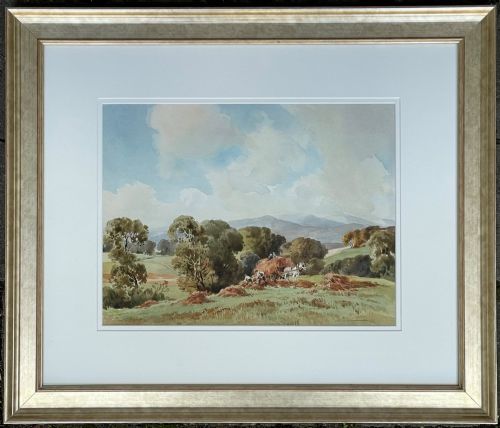
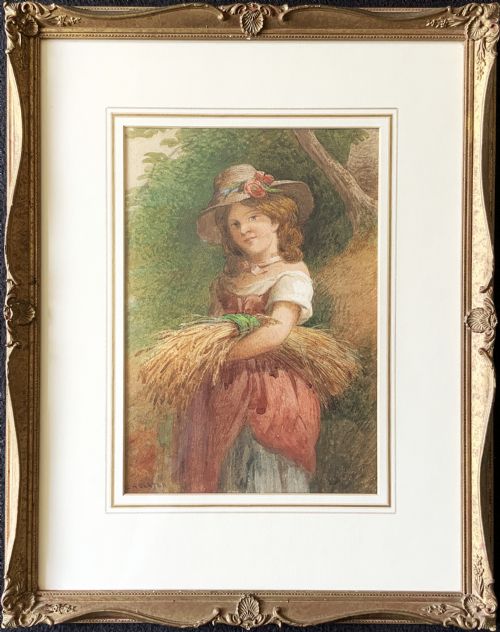
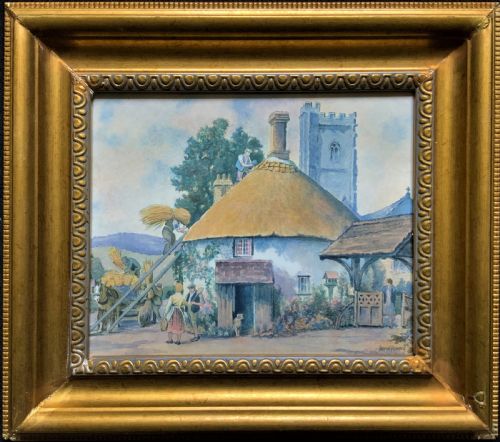
An original harvest watercolour painting depicts rural scenes of haymaking, farming and pastoral landscapes across the nineteenth and early twentieth centuries. These works record agricultural traditions through the distinct lens of Victorian and Edwardian artists who favoured naturalistic depictions of the countryside.
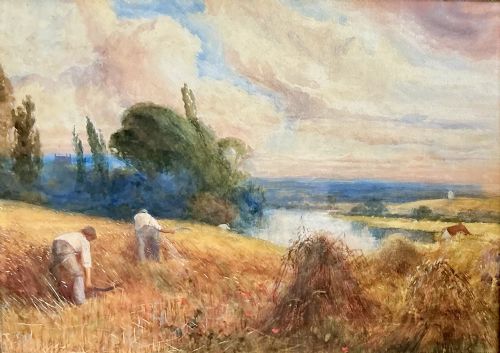
The selections available here span from the 1880s through to the 1930s, encompassing traditional British styles and British Impressionism. Buyers will find framed paintings featuring farmers loading horse and cart, riverbank harvesting and quiet hay meadows under evening light.
Materials and Technique
These works rely on watercolour pigment and paint applied to paper, occasionally accompanied by ink, capturing light and atmosphere with transparent washes. Artists of the period built their compositions through careful layering of colour on paper supports.
Framing typically involves wood and gilt wood surrounds paired with glass to protect the delicate pigment from environmental damage.
The listings span from the 1880s to the 1930s, using paper, watercolour pigment, glass, wood and gilt wood across traditional British and Impressionist styles.
Evaluating Quality
Quality rests upon the artist's ability to command the watercolour medium, where successful application demands precision since alterations remain difficult. Stronger examples display confident brushwork and a balanced composition that brings depth to the harvest landscape.
The condition of the paper and the retention of pigment vibrancy distinguish superior pieces, alongside the quality and period appropriateness of the timber or gilt wood frame.
Percy Lancaster·Charles Henry Slater·Frederick Hines·John Atkinson·Rowland Henry Hill·Walter Duncan·George Hamilton Constantine·David Heward·William Kay Blacklock·Wilmot Pilsbury·George Graham·Robert Thorne Waite·JE Hood·George Anderson Short·Julius Godet·Henry H Parker·Claude Muncaster·Claude Hayes
The Original Harvest Watercolour Painting Glossary
- Watercolour
- A paint consisting of pigment suspended in a water-based solution, applied to paper to create luminous transparent washes.
- Gilt Wood
- Timber framing finished with a thin layer of gold leaf or metallic gilt, commonly used on nineteenth and early twentieth-century fine art.
- Pastoral
- A genre of art depicting rural life and idealized country landscapes, frequently focusing on agricultural labour such as haymaking.
- British Impressionism
- An artistic movement focusing on light, atmosphere and everyday subjects, visible in many landscape watercolours of the period.
Original Harvest Watercolour Painting: Frequently Asked Questions
What subjects do harvest paintings show?
Harvest watercolours typically depict rural activities such as hay cutting, harvesting by the river, and farmers loading horse and cart. These scenes record traditional agricultural methods across English countryside landscapes.
Artists focused on the seasonal rhythm of the land, capturing quiet meadows, hay stacks, and agricultural workers during the nineteenth and early twentieth centuries.
How should I display a watercolour?
Watercolours require careful placement away from direct sunlight to prevent the pigments from fading over time. Glazing with glass protects the paper surface from dust and moisture.
Maintaining stable indoor humidity levels ensures that both the paper and the wooden or gilt frame remain preserved for years to come.
How do I date a harvest painting?
Dating relies on stylistic evidence, artist signatures, period clothing depicted in the scene, and framing materials. Works from the 1880s often reflect Victorian sensibilities, while pieces from the 1900s to 1930s lean towards Edwardian realism and British Impressionism.
Exponents of the medium frequently signed and dated their work directly on the paper surface or recorded details on the reverse.
What is the difference between Victorian and Edwardian watercolours?
Victorian watercolours often emphasise detailed realism and narrative depth within pastoral settings. Edwardian and later works frequently incorporate broader brushwork influenced by British Impressionism.
Both periods share a deep fascination with rural labour and the changing agricultural landscape of the British countryside.