

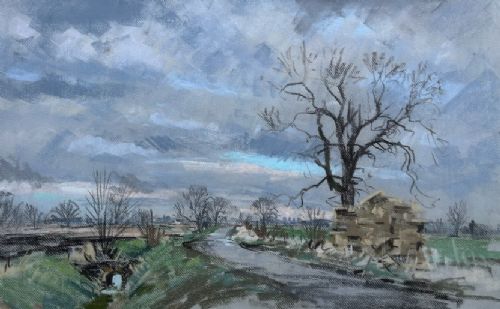
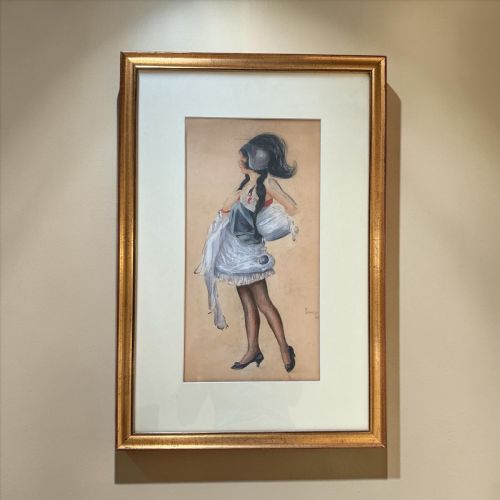
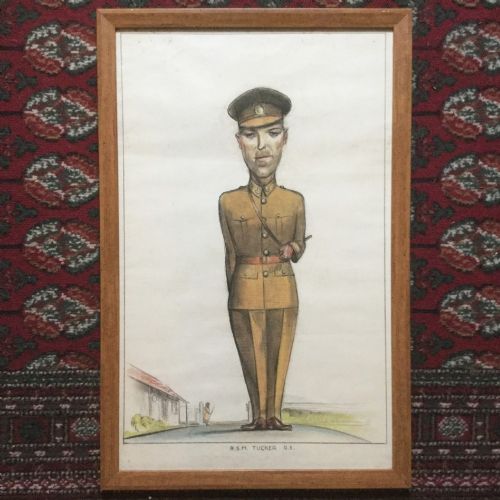


Original Framed Pastel Sketch
An original framed pastel sketch brings immediate colour and texture to a room through the soft, chalky pigment of the medium.
Original Framed Pastel Sketch
When you search for an original framed pastel sketch, you encounter works spanning the nineteenth century through the mid-twentieth century, including Edwardian pieces, wartime illustrations, and mid-century British school examples. These works take various forms, from wall art and fine art drawings to portrait paintings and cityscapes.
The subjects on this page range widely, featuring portraits of young ladies, military officers, cats, circus ballerinas, and horse racing scenes. Artists capture subjects using pastel on paper, coloured paper, and occasionally mixed media such as gouache, charcoal, and chalk.
You are most likely to meet mid-century examples alongside works from the nineteen-tens and nineteen-forties. These pieces arrive ready to hang in wooden, gilt wood, and glass frames that protect the delicate pigment beneath.
How they were made
Makers build these images using pastel, chalk, and charcoal sticks applied directly to paper or coloured paper surfaces. Some works incorporate gouache or oil pastels to build up denser areas of colour and tone.
Artists often combine pastel with underlying pencil sketches or lithographic bases, as seen in works that layer chalk over printed lines. Once finished, the fragile pigment is secured behind glass within wooden or gilt wood frames to prevent smudging.
Original Framed Pastel Sketch Retail Price Guide 2026
Typical asking prices for original framed pastel sketch among the pieces listed under this phrase on Sellingantiques today, from the lower quarter to the upper quarter. They describe what is for sale here now, not the wider market.
A stylish cat makes an appearance among the formal portraits, captured in oil pastels during the nineteen-thirties.
What varies in quality
The strength of the draughtsmanship separates routine student exercises from accomplished works by recognised artists. Confident handling of the medium allows pastel to define form and expression with immediacy.
Condition and preservation heavily influence the standing of a piece, particularly the stability of the pigment against the glass and the integrity of the original frame. Works that retain their fresh surface texture without excessive dusting show superior preservation.
Samuel Rabin·John Rattenbury Skeaping·Cecil Charles Windsor Aldin·Arthur Todd·Denis William Reed·Aubrey Sykes·John Macallan Swan·Frank Dobson·Sonia Lawson
The Original Framed Pastel Sketch Glossary
- Pastel
- A dry painting medium consisting of powdered pigment combined with a binder. It produces a velvety, matte surface that requires glass protection.
- Gouache
- An opaque water-based paint often used alongside pastel to add solid highlights and opaque colour blocks.
- Lithograph
- A print created from a stone or metal plate, sometimes used as a base layer beneath hand-drawn pastel work.
- Chalk
- A dry drawing material derived from mineral stone, used alone or with pastel to establish firm linear structures.
- Gilt wood
- Wood framing finished with a thin layer of gold leaf or metallic gilt paint, common in traditional presentation.
Original Framed Pastel Sketch: Frequently Asked Questions
Where should I hang a pastel sketch at home?
Hang your pastel sketch on an interior wall away from direct sunlight and damp environments. Direct light causes delicate pigments to fade over time, while humidity can warp the paper support.
Choose a room with stable temperature control to protect both the paper and the wooden frame. Position the artwork at eye level to appreciate the fine texture of the chalk and pastel strokes.
How can I tell the period of a pastel drawing?
Examine the framing materials, paper type, and subject matter for clues to the era of creation. Edwardian and early twentieth-century pieces often feature distinct portrait styles and traditional wooden mouldings.
Signatures, dates written on the reverse, or artist biographies provide definitive chronological markers. Mid-century works frequently display characteristic modernist or wartime illustration styles distinct from nineteenth-century academic studies.
Why are pastels framed under glass?
Pastel pigment sits loosely on the paper surface without a liquid binder to permanently glue it down. Glass acts as a physical barrier preventing the chalky particles from smudging or dusting off.
Framing under glass also protects the paper from airborne dust, grease, and moisture in the room. A mount or spacer is typically used to keep the glass from touching the delicate surface of the drawing.