







Original Forest Oil Painting
An original forest oil painting captures the quiet depth of woodland scenery through layered pigments, offering a timeless window into nature.
Original Forest Oil Painting
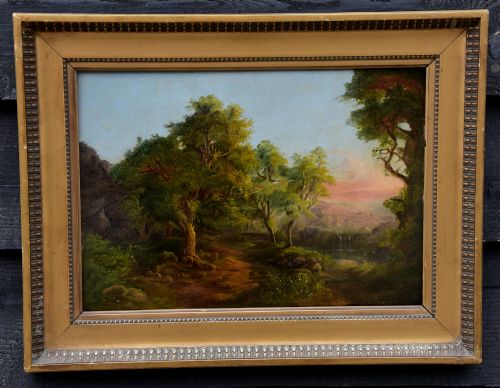
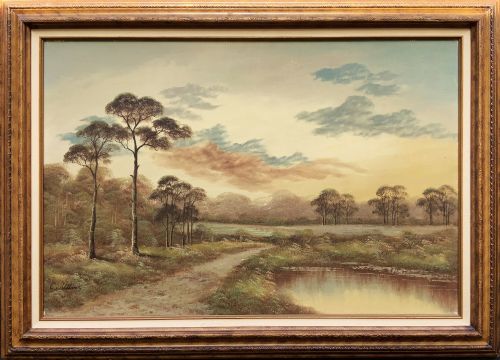
An original forest oil painting brings the moody atmosphere of ancient trees and secluded glades straight into a room. These works range widely across the nineteenth and twentieth centuries, spanning Victorian views, impressionist treatments and romantic forest scenes.
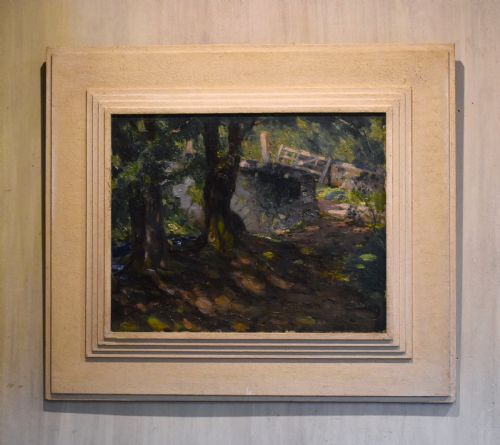
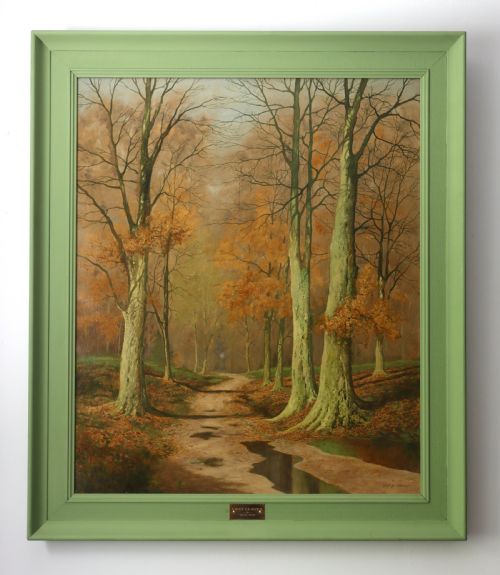
Most examples found here employ traditional oil pigments applied to canvas, wooden panels or thick boards. Subjects frequently combine dense woodland canopies, wandering footpaths and river glens under shifting natural light.
The style shifts perceptibly from the detailed realism of the Victorian era towards looser, more expressive brushwork in later twentieth-century pieces. Collectors encounter both signed works by named British and continental artists and evocative studies by regional schools.
Materials and construction
Artists built these scenes using oil paint spread across stretched canvas, solid wood panels or prepared boards. The slow-drying nature of oil allowed painters to blend rich tones and build up textured layers of foliage and bark.
Supports often include mahogany wood panels or woven canvas mounted on wooden stretchers. Frames frequently consist of period moulded wood, complementing the depth of the painted woodland palette.
Original Forest Oil Painting Retail Price Guide 2026
Typical asking prices for original forest oil painting among the pieces listed under this phrase on Sellingantiques today, from the lower quarter to the upper quarter. They describe what is for sale here now, not the wider market.
Several woodland scenes capture fleeting moments under stormy moons, sunset glows and leafy summer afternoons.
Judging quality in woodland works
Superior quality rests in the handling of light and shadow, where the artist creates genuine depth within a thick canopy of trees. Stronger paintings reveal confident, purposeful brushstrokes rather than flat or hesitant applications of pigment.
The resonance of the palette and the preservation of the original surface further separate finer examples from simpler decorative studies. Greater works capture a distinct atmosphere, whether through the warm glow of a sunset or the stark chill of a winter wood.
William H Myers·Thomas W Lascelles·James Proudfoot·Ernest Higgins Rigg·Augustus William Enness·Hans Kappel Øvre·Albert de Belleroche·William Mellor·Sam Bough·Henri Harpignies
The Original Forest Oil Painting Glossary
- Oil paint
- A slow-drying medium made by mixing pigments with oils such as linseed. This allowed artists to achieve rich colour saturation and subtle tonal gradations.
- Canvas
- A heavy woven fabric stretched across a wooden frame to serve as a painting surface. It remains one of the most common supports for historical works.
- Wood panel
- A rigid wooden board, sometimes mahogany, used as a sturdy alternative to canvas. Panels provide a completely stable surface for detailed brushwork.
- Impressionism
- A style focusing on accurate depiction of light and its shifting qualities. Artists often used rapid, visible brushstrokes to capture transient effects.
- Barbizon School
- A mid-nineteenth-century French art movement dedicated to tonal realism and direct observation of nature. Painters favoured moody forest interiors and pastoral landscapes.
Original Forest Oil Painting: Frequently Asked Questions
How do I date an old forest painting?
Dating relies heavily on the style of the brushwork, the framing materials and any signatures or inscriptions found on the reverse.
Victorian pieces often show tighter realism, while twentieth-century works lean towards impressionist or expressive techniques.
What surfaces were used for these paintings?
Painters utilised woven canvas, prepared wooden boards and solid wood panels such as mahogany.
The choice of support frequently reflects the period and the artist's personal preference for texture.
Where should I hang a woodland painting?
These works suit rooms with steady ambient light, away from direct sunlight that could damage the oil pigments over time.
A neutral wall allows the deep greens, browns and sunset hues of the forest scene to stand out.
How do I care for an antique oil painting?
Keep the piece away from extreme temperature fluctuations and high humidity to protect both the wooden support and the paint layer.
Dust the surface gently with a soft, dry brush without applying moisture or cleaning solutions.