

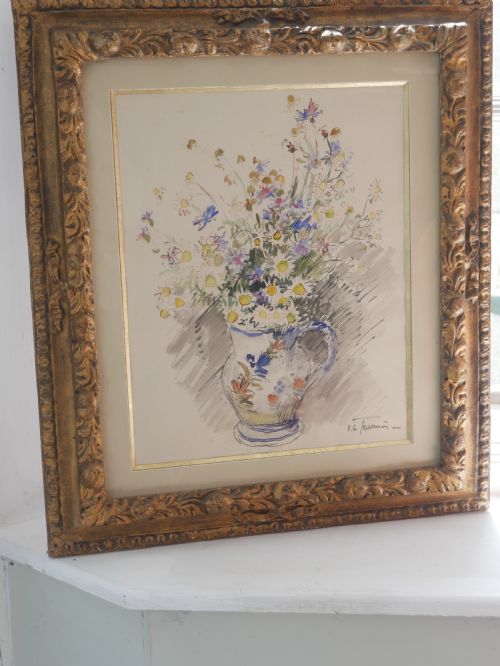


Original Floral Watercolour
Original floral watercolour works bring delicate botanical studies and vibrant garden scenes onto paper through traditional pigment techniques.
Original Floral Watercolour
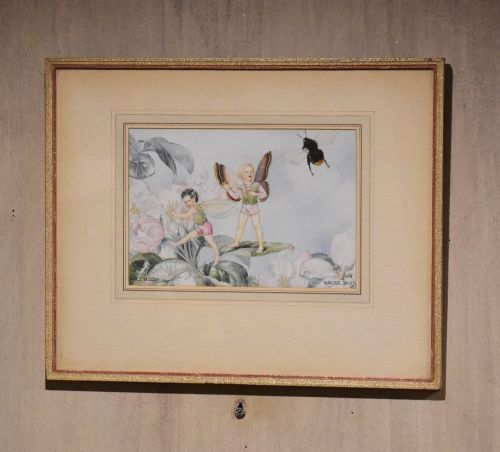
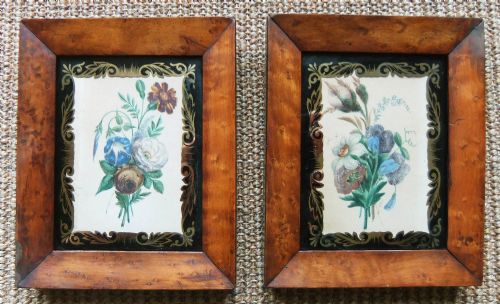
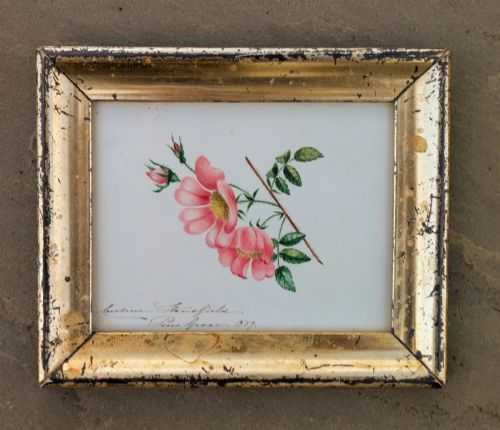
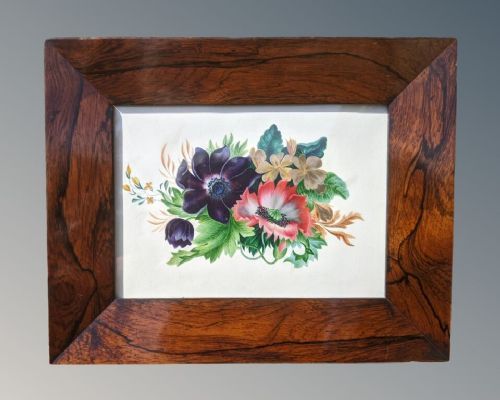
Original floral watercolour pieces capture botanical subjects, garden views, and still life arrangements rendered directly onto paper support. These works range from precise 19th-century studies to expressive mid-century compositions depicting roses, jugs of summer flowers, and cottage gardens.
Buyers encountering this selection will find examples spanning the Victorian and Edwardian eras into the mid-20th century, often preserved behind glass within wooden or gilt frames. Many pieces showcase specific blooms such as camellias, gladioli, and azaleas, reflecting both scientific interest and domestic decorative tastes.
How original floral watercolour pieces were made
Artists applied water-soluble pigment onto paper support, sometimes utilising gouache or ink to build opacity and definition within the floral subjects. The technique relies on translucent washes of watercolour paint to capture the luminosity of petals and leaves.
Framed presentation typically involves glass protection alongside wood or gilt wood surrounds, safeguarding the delicate paper surface from atmospheric moisture and handling over decades.
Original Floral Watercolour Retail Price Guide 2026
Typical asking prices for original floral watercolour among the pieces listed under this phrase on Sellingantiques today, from the lower quarter to the upper quarter. They describe what is for sale here now, not the wider market.
Garden paths, domestic cats, and knitting villagers occasionally share the paper with stubborn blooms.
What varies in quality in original floral watercolour items
The degree of tonal control and brushwork dexterity distinguishes accomplished watercolours from simpler decorative sketches. Masterful handling of pigment allows for subtle transitions in colour across complex forms like roses and foliage.
Compositional balance and the accurate rendering of botanical structures elevate certain works, while the survival of the paper support in clean condition without excessive fading influences desirability.
James Tower·Harry Wanless·Henrietta Creswell·Arthur Hopkins·William Edward Fox·Theresa Stannard·Lester Sutcliffe·Lilian Stannard·Edith Barrow·Rowland Henry Hill·Grace Hastie·Margaret Laing·Phyllis I Hibbert·Marian Chase·Alfred W Parsons·Owen Bowen·Charlotte Isa James·David Woodlock·Alice Macallan Swan·Marion Broom·Annie Mary Youngman·Edith Alice Andrews·Jane Utley·Beatrice Parsons·George Frederick Nicholls
The Original Floral Watercolour Glossary
- Watercolour pigment
- The finely ground colour matter mixed with a binder, applied with water to paper to create translucent painted passages.
- Gouache
- An opaque water-based paint variant sometimes utilised alongside watercolour pigment to add solid highlights and dense colour.
- Botanical study
- A detailed visual recording of plant specimens, often created for scientific accuracy as well as aesthetic appreciation.
- Still life
- An artwork depicting inanimate subject matter, frequently featuring cut flowers arranged in jugs, vases, or baskets.
- Aesthetic movement
- A late 19th-century style emphasising visual beauty and decorative qualities over narrative content.
Original Floral Watercolour: Frequently Asked Questions
How should I hang an original floral watercolour?
Keep watercolours away from direct sunlight to prevent the pigments and paper support from fading over time. Ensure the room has stable humidity levels to protect both the paper and the wooden or gilt frame.
Position the artwork at eye level where the delicate details of the botanical study or garden scene can be appreciated up close.
What subjects appear in these floral watercolours?
The works depict a wide variety of botanical themes, ranging from single stem studies of camellias and roses to abundant arrangements in jugs.
Other common subjects include walled garden views, cottage garden corners, and seasonal blooms such as pansies, cosmos, and azaleas.
How do I identify a Victorian watercolour?
Victorian examples often display meticulous attention to botanical accuracy, characteristic of 19th-century interest in natural history and garden cultivation.
Signatures, framing styles, and the specific paper stock can also offer clues to the period of creation.
Are these watercolours always framed?
Many pieces come preserved behind glass within original wood or gilt wood frames that complement the era of the painting.
Framing helps protect the delicate paper surface from dust and environmental damage while enhancing the overall display.