
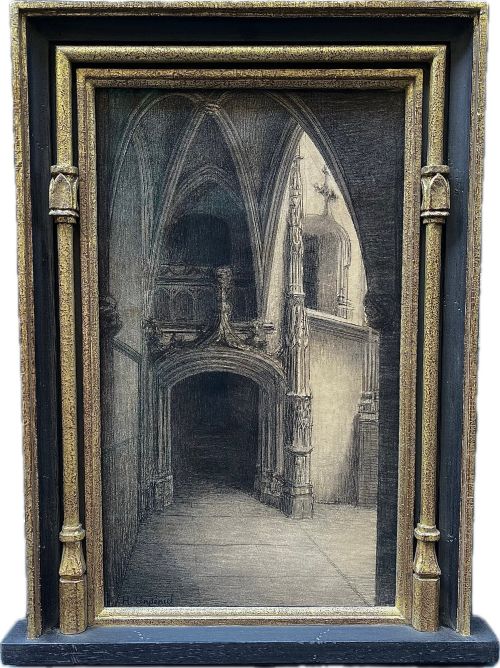
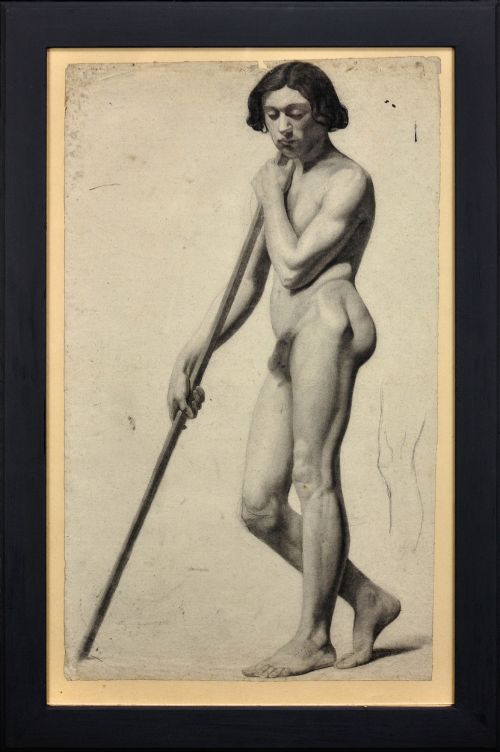


Original Charcoal Study
An original charcoal study captures immediate gesture and preparatory thought on paper, prized by collectors for its direct glimpse into an artist's working process.
Original Charcoal Study
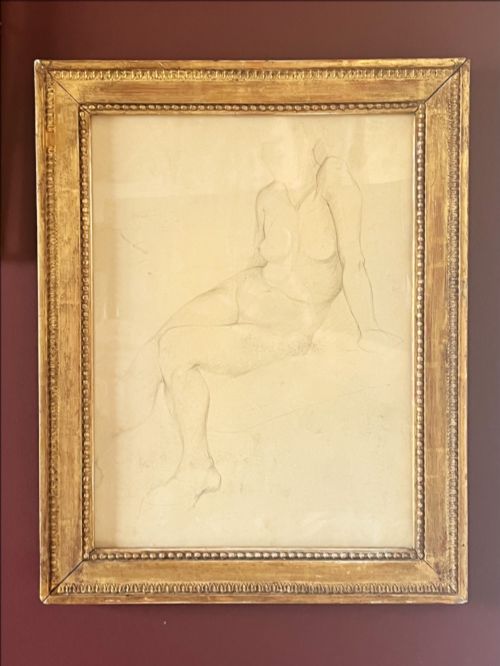
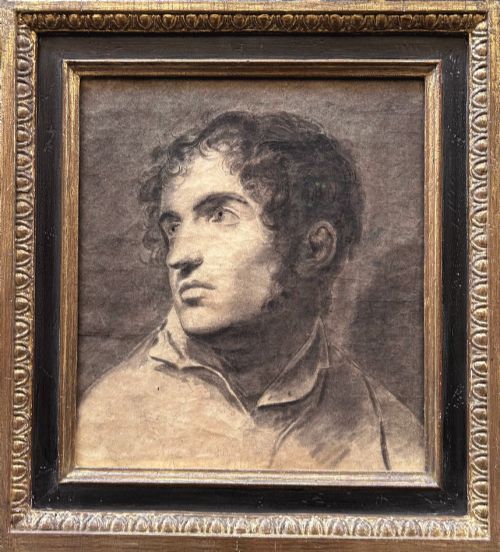
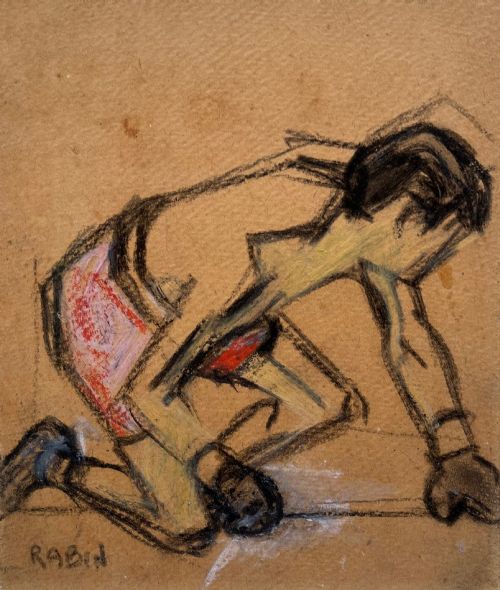
An original charcoal study represents a direct, unmediated creation on paper, capturing rapid preparatory ideas or finished observational work without the barrier of heavy paint layers. These works span academic life drawings, landscape sketches, and portraiture executed across the nineteenth and twentieth centuries.
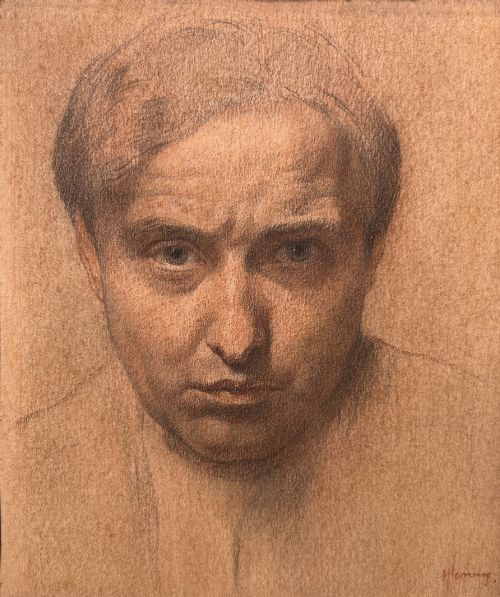
The selections encountered here most frequently include academic life studies of the human figure, expressive portrait heads, and architectural or landscape compositions dating from the nineteenth century through to the mid-twentieth century. Works often reflect formal training in French and British art schools, emphasising structural draftsmanship over decorative finish.
Materials and technique
Artists relied primarily on compressed or vine charcoal applied directly to paper supports, frequently combining the medium with graphite, chalk, or pastel to build tonal contrast and highlight contours. Paper surfaces varied from smooth sheets to textured, heavier weights that gripped the friable medium to hold dense shadows.
Fixative applications were sometimes utilised to prevent smudging, whilst framing in wood and glass protected the delicate, powdery pigment from physical disturbance. Supporting materials like gilt wood frames often reflect the period aesthetic of the mounting rather than the date of the drawing itself.
One unexpected sheet captures the likeness of a self-declared bio-pirate.
Distinctions in quality
The distinction between ordinary exercises and superior works rests on the confidence of the hand and the economy of line used to define form and light. A master draftsman achieves anatomical conviction and volumetric depth with minimal strokes, whereas lesser examples rely on laboured shading to correct inaccurate proportions.
Condition and preservation heavily influence standing, as unfixed charcoal is vulnerable to abrasion, foxing, and acid migration from older backing boards. Surviving sheets that retain their original tonal range and structural integrity without excessive fading represent the higher tier of the medium.
Herbert Johnson Harvey·Samuel Rabin·Henri Charles Angéniol·Henry Arthur Roberts·Demetrios Galanis·Arthur Todd·Winifred Eugene Ballard·John Hoppner·John Macallan Swan·Frank Dobson·Ernest Borough Johnson·George Richmond·Francis Dodd·Henri Joseph Harpignies·Cecil CP Lawson·Juliet Pannett·Harold Hope Read·Jean Betourne·Frederick Goodall
The Original Charcoal Study Glossary
- Academic Realism
- A style of painting and drawing produced under the influence of European academies of art, emphasising precise anatomical accuracy, classical proportion, and rigorous observation from life.
- Deux crayon
- A drawing technique utilising two distinct colours of chalk or crayon, typically black and white or sanguine and chalk, applied to tinted paper to create rapid highlights and shadows.
- Life study
- A drawing or painting executed directly from a live nude or clothed model, serving as a fundamental exercise in observational draftsmanship and proportion.
- Foxing
- The yellowish-brown spots caused by chemical reactions in ageing paper, often accelerated by damp storage conditions or acidic mount boards.
- Preparatory sketch
- A preliminary drawing executed to plan the composition, lighting, or scale of a larger or more finished work in paint or sculpture.
Original Charcoal Study: Frequently Asked Questions
How do I distinguish charcoal from graphite?
Charcoal produces a deep, velvety matte black mark that sits primarily on the surface of the paper, reflecting very little light.
Graphite leaves a shinier, metallic grey line that can be manipulated into smoother, more reflective gradients.
Why are so many studies nudes?
The human figure served as the primary benchmark for technical competence in nineteenth and twentieth-century art academies.
Rendering the nude form taught artists anatomy, volume, and the play of light over complex surfaces.
How should I frame and display a paper drawing?
Drawings on paper require conservation-grade mounting with acid-free mats to prevent chemical damage over time.
Framing must include UV-filtering glass and sufficient space between the paper and the glass to prevent moisture accumulation.
Can I date a drawing without a signature?
Dating relies on examining the paper type, watermark evidence, stylistic conventions, and framing materials.
Costume details in portraits or the specific handwriting on inscriptions often provide narrow chronological windows.