


Orientalist Table Lamps
These orientalist table lamps bring rich global motifs and patinated metals into a room, offering warm illumination alongside layered historical character.
Orientalist Table Lamps
When you search for orientalist table lamps, you find a diverse assembly of decorative lighting fixtures spanning the late nineteenth century through the Art Deco era. The selection draws on distinct cultural aesthetics, ranging from Japanese cloisonne and Chinese taste to Kashmiri lacquer and Middle Eastern metalwork.
How they were made
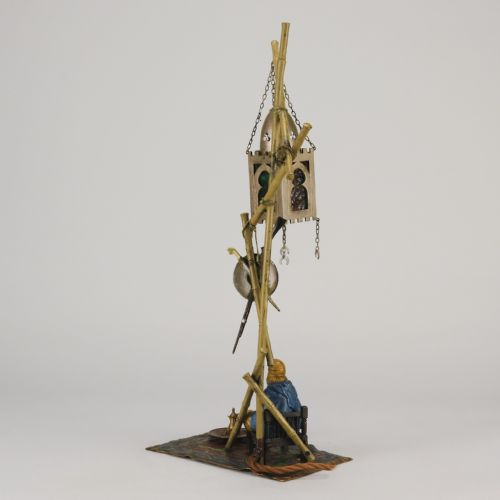
Makers utilised cast and pressed metals, applying cold-painted polychrome details to bronze figures or silver plating to structural forms. Brass and toleware surfaces received careful patination to suggest age and exotic provenance.
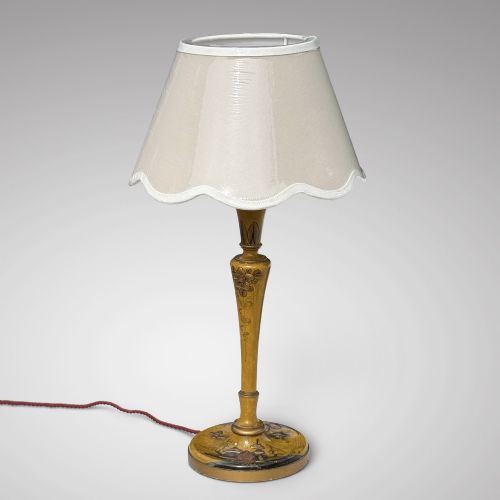
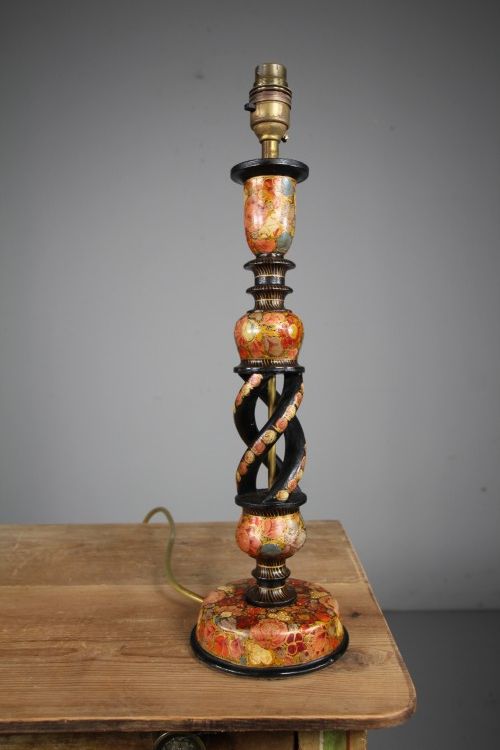
Wooden forms relied on traditional lacquer techniques, often employing ochre or black grounds decorated with Chinoiserie motifs. Papier-mache and porcelain also served as primary bodies, sometimes paired with bespoke fabric shades.
Elephants occasionally hold up the light.
What varies in quality
Quality rests in the precision of the casting and the execution of the surface decoration, whether in the fine cloisonne enamelling of Japanese vessels or the meticulous cold-painting of figural bronzes. Superior pieces retain their original patination and show confident handling by known workshops.
The integrity of the conversion from original object to lamp affects the overall standard, as does the survival of delicate applied lacquer or painted details. Finer examples maintain structural balance and authentic regional ornamentation without crude alterations.
Franz Bergman·Bruno Zach·Argilor
The Orientalist Table Lamps Glossary
- Cold-painted bronze
- A method of painting bronze sculptures with oil-based paints without firing, popular in Vienna and among European foundries. This technique yields vibrant polychrome details on figural lamps.
- Cloisonne
- An ancient enamelwork technique where metal wire is soldered to a base to create compartments filled with vitreous paste. Japanese examples from the late nineteenth century often display intricate floral and geometric patterns.
- Cairoware
- Metalwork produced in Egypt and the Middle East, typically brass inlaid with silver and copper calligraphy or floral designs. European makers frequently adapted these vessels into table lamps during the early twentieth century.
- Chinoiserie
- European artistic interpretation and imitation of Chinese and East Asian artistic traditions. This style manifests in lacquered furniture and lamp bases featuring pagodas and figurative landscapes.
- Toleware
- Enamelled and painted sheet metal items manufactured for domestic use. These pieces provide durable surfaces for rich decorative colour schemes.
Orientalist Table Lamps: Frequently Asked Questions
What materials make up these lamps?
The listings feature a broad mix of materials including brass, bronze, porcelain, wood, lacquer, and toleware. Many incorporate fabric shades or patinated metal bases.
Makers selected these durable mediums to support intricate surface decoration like cold-painted pigments and cloisonne enamel.
How do I date an orientalist lamp?
Dating relies on stylistic markers such as Art Deco geometry, Aesthetic Movement motifs, or Meiji period cloisonne work. Production dates span from the late nineteenth century through the 1930s.
Examining the wiring, construction methods, and base materials helps narrow the decade of manufacture.
Were these always electric lamps?
Many pieces began as decorative vessels, occasional tables, or oil lamps before conversion to electricity. Brass and bronze items often started as ornamental metalwork.
This adaptation process is standard for lighting from the Edwardian era and the interwar period.
How do I style these lamps at home?
These lamps function as focal points on side tables, desks, or occasional furniture within a room. Their strong cultural motifs pair well with neutral backgrounds that let the patinated metal or lacquer stand out.
Consider the scale of the base and the shade to ensure proper proportion on smaller tables.