


Orientalist Desk Lamp
An orientalist desk lamp brings atmospheric regional character to a room through evocative figural and decorative designs from the nineteenth and early twentieth centuries.
Orientalist Desk Lamp
An orientalist desk lamp captures the aesthetic fascination with Eastern and Middle Eastern cultures that influenced European design during the nineteenth and early twentieth centuries. When searching for an orientalist desk lamp, you encounter table lamps spanning the late nineteenth century through the Art Deco period of the 1930s.
Hollywood Regency and Chinoiserie styles also appear among these table lamps, alongside distinctive silver-plated palm tree motifs. Each piece serves as both a functional light source and a sculptural focal point reflecting historical design movements.
How they were made
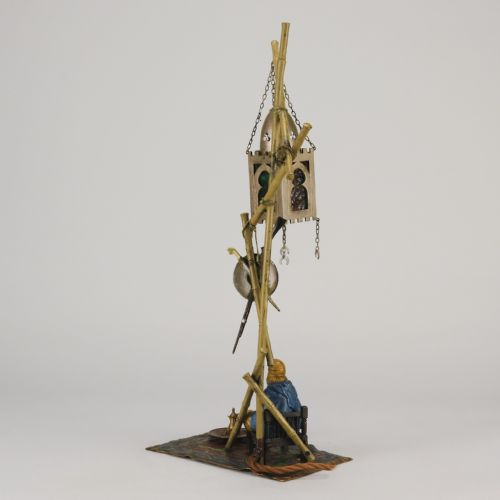
Makers utilised a variety of media including bronze, brass, white metal, and silver plating to form the structural bodies and figural components. Cold-painted finishes were frequently applied to bronze sculptures to achieve detailed polychrome surface effects.
Wooden structures often received traditional treatments such as lacquer and papier-mache to create smooth, decorative finishes. Fabric elements completed the table lamps, paired with metal or lacquered timber bases.
Listings span the late nineteenth century to 1930, featuring materials from bronze and brass to lacquer and papier-mache across seven distinct styles.
What varies in quality
Quality rests upon the fineness of the casting and the execution of surface decoration, particularly in cold-painted bronze figures and cloisonne work. Pieces originating from recognised foundries or identified makers display superior anatomical precision and chasing.
The integrity of applied finishes, such as lacquer, patination, and silver plating, distinguishes finer examples from simpler production. Original material composition and the subtlety of regional motifs further elevate the standard of individual lamps.
Franz Bergman·Bruno Zach
The Orientalist Desk Lamp Glossary
- Cold-painted
- A technique where bronze or metal sculptures are painted with cold enamel paints rather than fired in a kiln. This method allowed for intricate multicoloured detailing on figural lamp bases.
- Cloisonne
- An ancient technique for decorating metalwork objects with coloured glass or enamel compartments separated by strips of metal. Japanese examples of this work appear frequently on nineteenth-century table lamps.
- Chinoiserie
- The European interpretation and imitation of Chinese and East Asian artistic traditions, particularly in decorative arts and lacquerwork. This style heavily influenced decorative lighting during the early twentieth century.
- Patinated
- A surface treatment applied to metals like bronze and white metal to impart an aged or weathered appearance. This process enhances the definition of sculptural details.
- Lacquer
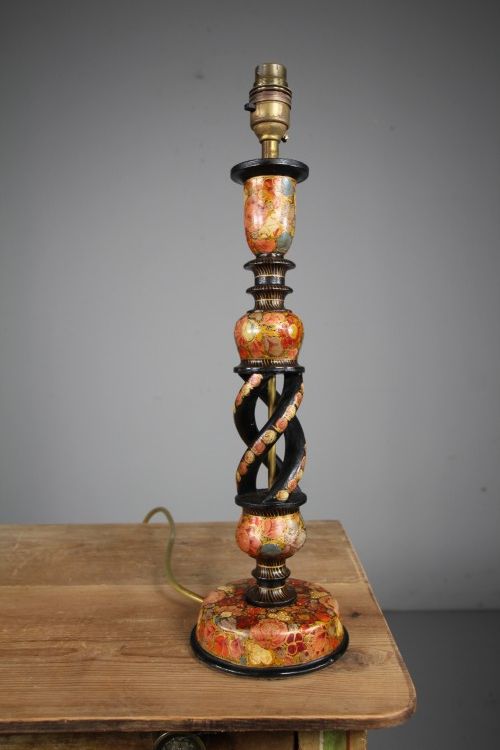
- A durable resin finish applied to wooden and timber bases to produce a hard, smooth surface. Kashmiri and Chinoiserie pieces often employ this technique for decorative effect.
Orientalist Desk Lamp: Frequently Asked Questions
What periods do these lamps cover?
The available lighting primarily spans the late nineteenth century through the 1930s, encompassing the Meiji period, Art Deco, and Hollywood Regency eras.
These dates reflect the height of Western artistic engagement with Eastern and Middle Eastern design motifs.
What materials were used?
Makers worked in a wide array of materials including bronze, brass, white metal, silver plating, and lacquered timber. Fabric and papier-mache also appear in specific regional styles.
Each material dictates the visual weight and character of the individual lamp body.
How do I identify a Chinoiserie lamp?
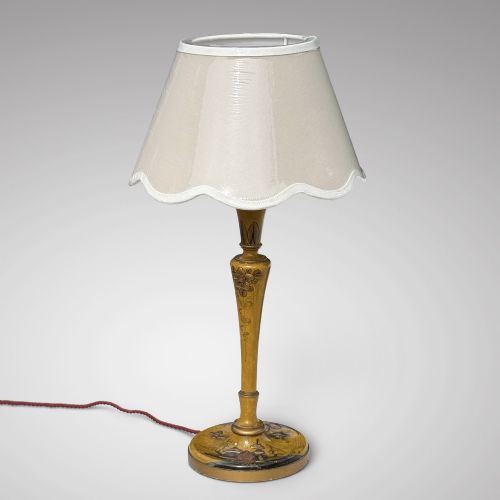
Chinoiserie lamps are identifiable through their use of Ochre lacquer, Asian-inspired motifs, and traditional timber construction. They reflect European artistic interpretations of Chinese aesthetics.
These pieces often feature smooth lacquered finishes and distinct oriental forms.
Where did Kashmiri lamps originate?
Kashmiri lamps originate from the Kashmir region, known for distinct woodwork and lacquering traditions. They often appear as tall table lamps with detailed surface decoration.
These items showcase regional craftsmanship adapted for European domestic interiors.