


Oriental Wall Hanging Mirror
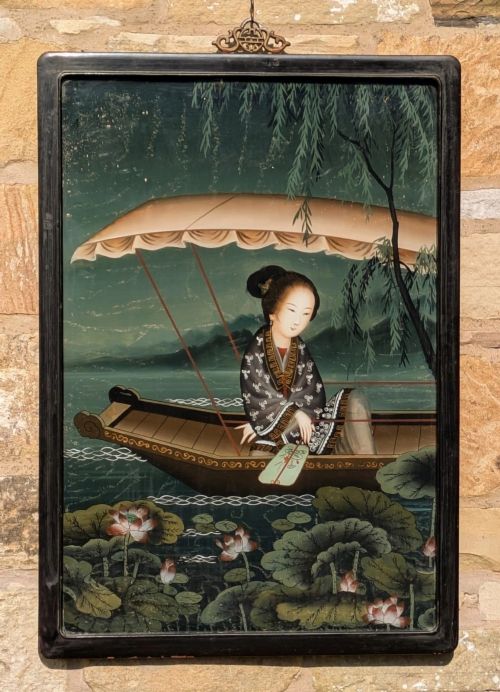
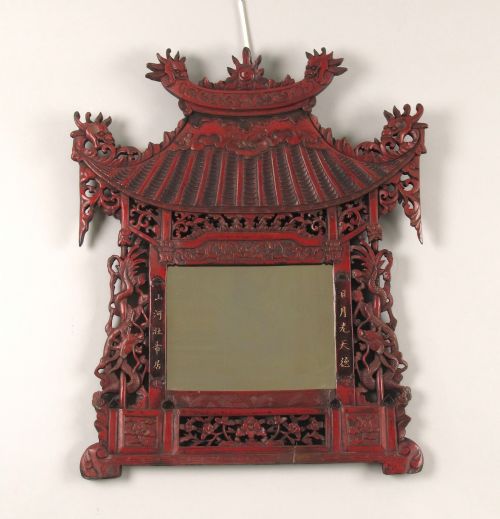
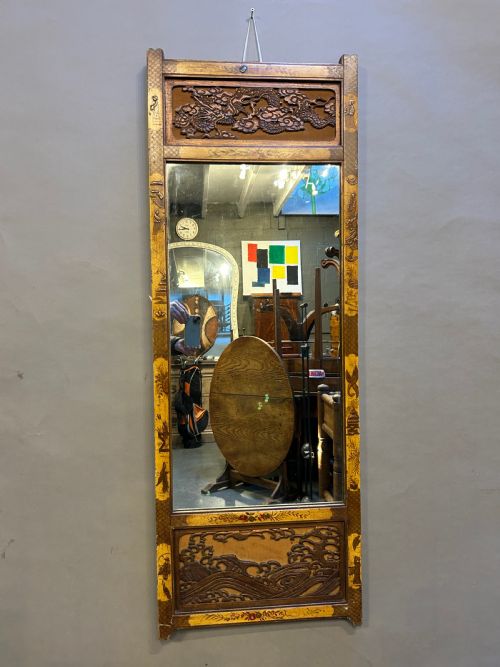
An oriental wall hanging mirror brings decorative lacquer, carved wood, and reverse glass painting into a room with striking visual weight.
Oriental Wall Hanging Mirror
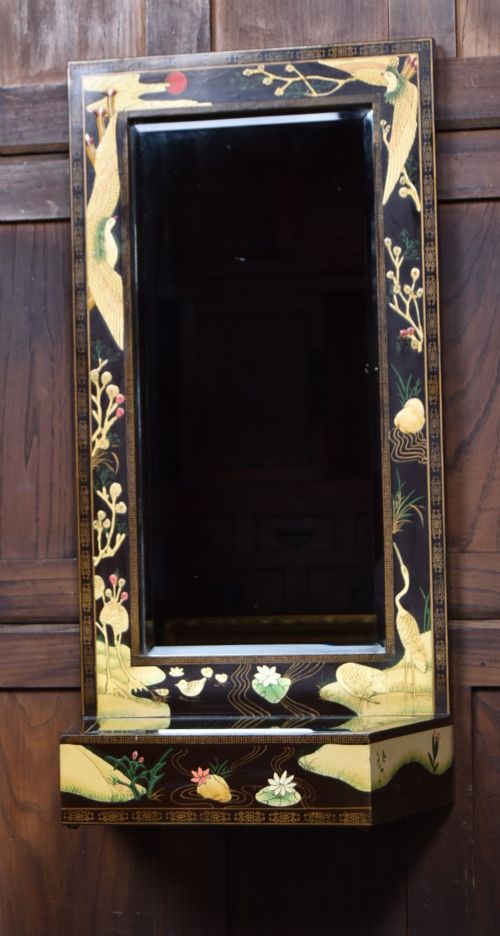
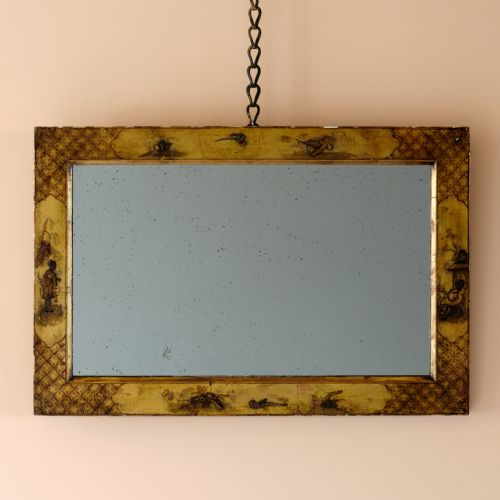
An oriental wall hanging mirror brings together distinct regional styles, predominantly Chinoiserie and Anglo-Indian designs from the nineteenth and early twentieth centuries. These pieces function simultaneously as reflective glass and intricate wall art, drawing the eye through painted details, carved frames, and metallic inlays.
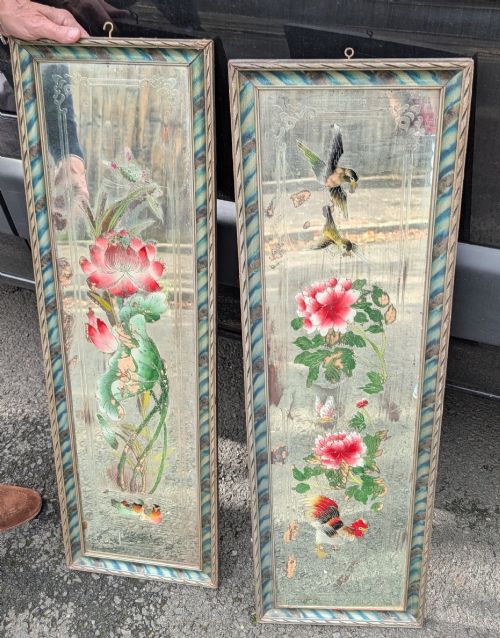
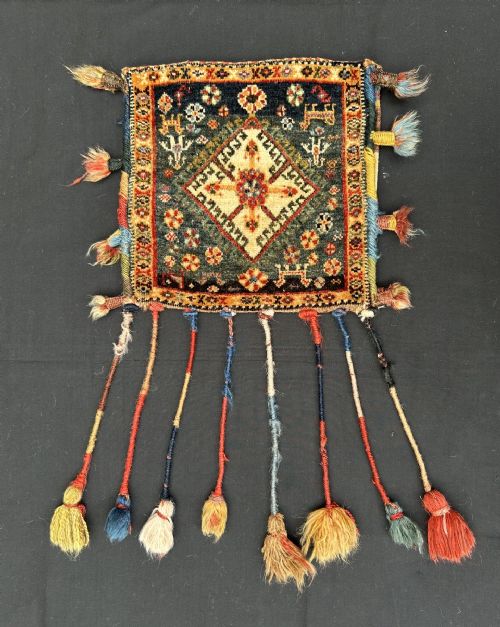
The selection on this page relies heavily on Edwardian interpretations of Chinoiserie, alongside nineteenth-century red lacquer pagoda mirrors and Kashmiri brass-inlaid woodwork. Buyers frequently encounter frames finished with gilt highlights, alongside textiles and reverse glass paintings that share the same decorative heritage.
Origins span Qing Dynasty aesthetics and Persian tribal work, resulting in objects that range from large pier mirrors to smaller oval wall fixtures. Each piece utilises traditional forms to project distant landscapes and motifs into domestic interiors.
How they were made
Makers shaped these frames from solid timbers, applying layers of coloured lacquer and hand-painted details to build up complex surface patterns. Red lacquer grounds and gilt decoration required patient application by skilled hands over carved wooden substrates.
Brass inlay and pierced metalwork defined the Anglo-Indian pieces, where metal sheets were meticulously fitted into wooden channels. Mirror glass was then secured within these ornate structures, accompanied occasionally by reverse paintings executed directly onto the glass panel.
Materials documented across the inventory include wood, glass, lacquer, gilt, brass, and wool.
What varies in quality
The depth of the hand-carving and the complexity of the lacquerwork separate ordinary frames from exceptional examples. Finer pieces display crisp architectural details on pagoda crests and precise registration in painted Chinoiserie scenes.
The integration of brass inlay and the preservation of original mirror glass dictate the overall standard of construction. Superior items retain their original surface patination without obscuring the delicate hand-painted motifs.
The Oriental Wall Hanging Mirror Glossary
- Chinoiserie
- European theatrical interpretation of Chinese and East Asian artistic traditions, popular in furniture and decorative mirrors. It relies on motifs of pagodas, figures, and imaginary landscapes.
- Lacquer
- A durable resin finish built up in multiple layers on a wooden base, often sanded smooth and decorated with paint or gilt. Red and black grounds are traditional.
- Reverse painting on glass
- A technique where the artist paints the image backwards on the rear surface of the glass so it appears correctly when viewed from the front. This method protects the pigment from dust and damage.
- Pier mirror
- A tall mirror designed to hang on the wall space between windows. These pieces often feature elongated proportions to maximise light reflection in a room.
Oriental Wall Hanging Mirror: Frequently Asked Questions
How should I clean the antique glass?
Use a soft microfiber cloth lightly misted with distilled water or a mild vinegar solution applied to the cloth rather than the glass. Avoid spraying liquid directly onto the edges where moisture can seep behind the silvering.
Gentle wiping prevents damage to both the original mirror plate and any surrounding lacquer or painted surface.
Are these mirrors from the Qing Dynasty?
Some pieces on this page reference Qing Dynasty Chinoiserie styles, while others reflect British Edwardian interpretations of those aesthetic traditions. European makers frequently produced furniture and mirrors influenced by Asian design during the nineteenth and early twentieth centuries.
Examining the construction methods and timber helps clarify whether a piece was made in Asia or manufactured in Europe for the domestic market.
What is an Anglo-Indian mirror?
Anglo-Indian mirrors combine traditional Indian woodworking techniques, such as intricate pierced carving and brass wire inlay, with forms suitable for British homes. Workshops in regions like Hoshiarpur specialised in these densely patterned wooden frames.
These pieces showcase contrasting light and dark timbers alongside shimmering metal accents that reflect interior candlelight or daylight.