


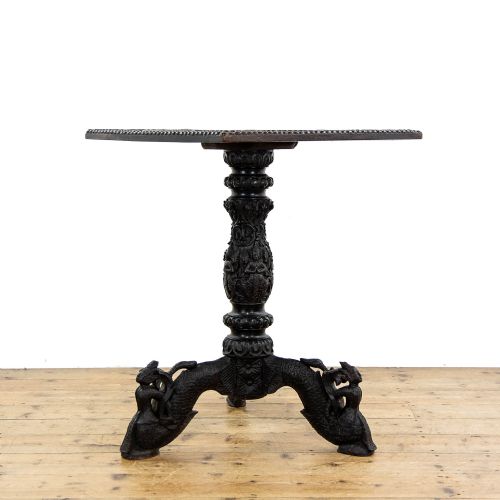
Oriental Teak Side Table
An oriental teak side table brings rich colonial craftsmanship and intricate carving into a room, offering both surface utility and distinct regional character.
Oriental Teak Side Table
An oriental teak side table encompasses a diverse group of nineteenth and early twentieth century occasional furniture originating from colonial trade networks and regional workshops. These pieces frequently manifest through distinct regional aesthetics such as Anglo-Indian, Burmese, and Chinese Export designs.
How They Were Made
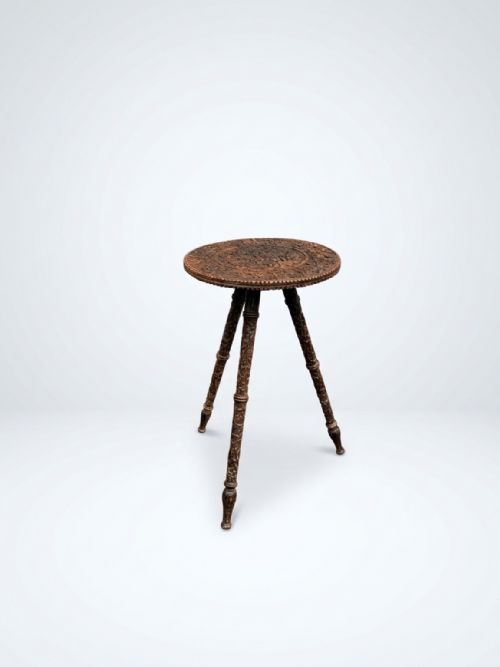
Maker workshops utilised dense tropical timbers, predominantly teak and rosewood, selected for their stability and capacity to hold deep relief carving. Artisans shaped these hardwoods using traditional joinery and hand tools to produce folding frames, tiered stands, and pedestal bases.
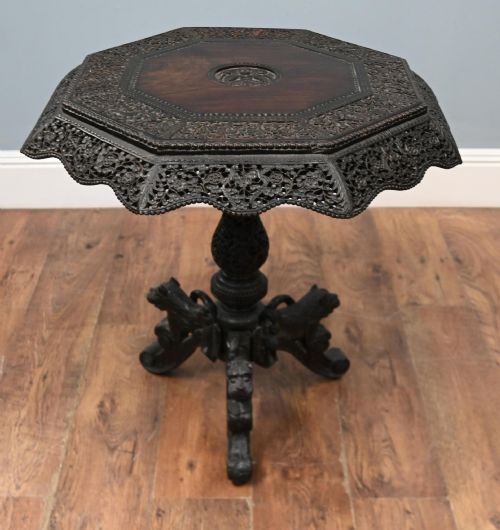
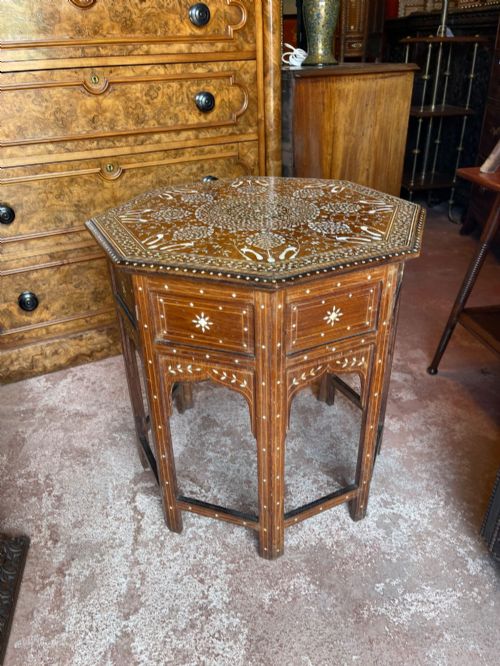
Surface embellishment played a central role in construction, incorporating hand-carved motifs of animals and foliage alongside brass wire inlay and bone or marble inserts. Finished surfaces received wax treatments or paint applications to protect the timber while accentuating the carved details.
Elephants carved into table bases and rims appear frequently, serving as steadfast miniature guardians for your afternoon tea.
What Varies in Quality
The distinction between standard and superior pieces rests on the depth and precision of the hand carving, where deeply undercut foliage and sharply defined figural elements signal master craftsmanship. Simpler village pieces display shallower, more stylised incisions executed with greater haste.
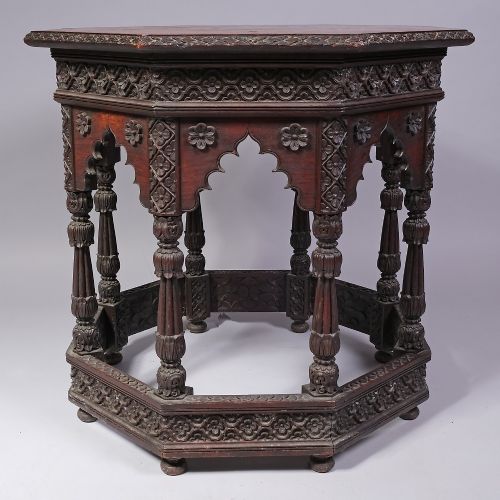
Material selection and decorative integration further separate tiers of quality, visible in the precision of brass inlay work and the structural integrity of dense rosewood or teak frames. Well-executed examples maintain tight joints and balanced proportions across complex forms like folding octagonal structures and multi-tiered tables.
The Oriental Teak Side Table Glossary
- Anglo-Indian
- Furniture produced in India during the British colonial period, combining traditional local motifs and construction with European form and utility. These pieces frequently incorporate dense carving and exotic hardwoods.
- Hoshiarpur
- A North Indian centre known for intricate woodwork, specifically characterised by dense geometric and floral carving combined with bone or brass inlay. Tables from this region are easily identified by their complex surface patterns.
- Octagonal
- Having eight sides, a popular geometric format for Indian and oriental occasional tables that allows for intricate perimeter carving and stable folding or pedestal support. This shape provides convenient access from multiple seating angles.
- Chinoiserie
- European artistic styles reflecting Chinese decorative motifs, often appearing on export furniture and console tables through painted or carved landscapes and figures. This aesthetic bridges Eastern craftsmanship with Western interior fashions.
- Occasional table
- A small, movable table designed for specific, intermittent use rather than central dining, such as holding lamps, drinks, or decorative objects. These versatile items form the majority of carved oriental side furniture.
Oriental Teak Side Table: Frequently Asked Questions
What is an oriental teak side table?
An oriental teak side table is a small occasional table manufactured in regions such as India, Burma, and China during the nineteenth and early twentieth centuries. These tables are defined by dense tropical hardwood construction and elaborate hand-carved ornamentation.
They serve practical roles as lamp stands or display surfaces while introducing distinct colonial and regional design traditions to domestic interiors.
How do I identify an Anglo-Indian table?
Anglo-Indian tables are recognised by their combination of British furniture forms, such as octagonal folding stands or nest tables, with traditional Indian craftsmanship. Look for deeply carved foliage, animal motifs, and contrasting inlay.
Many of these pieces originate from specific production areas like Hoshiarpur or the Bombay presidency, displaying characteristic regional carving styles and dense timbers.
Where should I place a carved side table?
These tables function effectively as accent pieces in living rooms, hallways, or studies where their carved surfaces and rich timber tones can be appreciated. Their modest scale allows them to sit beside armchairs or serve as lamp stands.
Because many examples feature delicate relief carving or inlaid details, placing them away from direct heat sources helps preserve the stability of the teak and rosewood.
Are these tables sturdy enough for daily use?
Solid teak and rosewood provide considerable natural durability, making these tables structurally sound for holding everyday objects like lamps or books. Folding variants and complex multi-tiered stands require careful handling when moved.
Reviewing the tightness of joints and the stability of pedestal or folding bases ensures the selected piece comfortably accommodates intended daily tasks.