


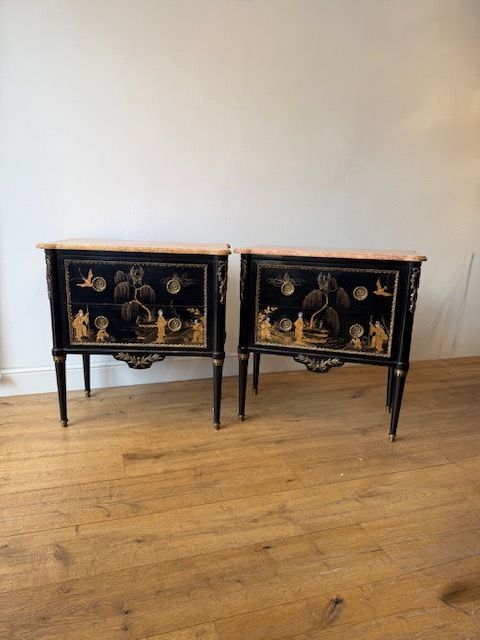
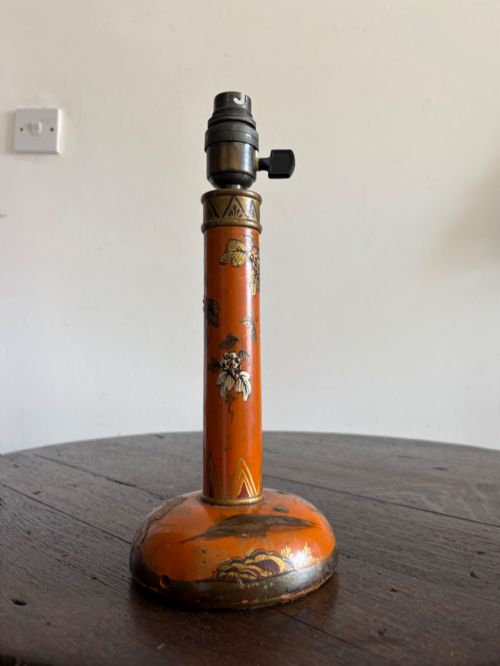


Oriental Small Table
These oriental small table items are compact pieces spanning the Victorian era to the 1930s, offering versatile display surfaces with distinct decorative character.
Oriental Small Table
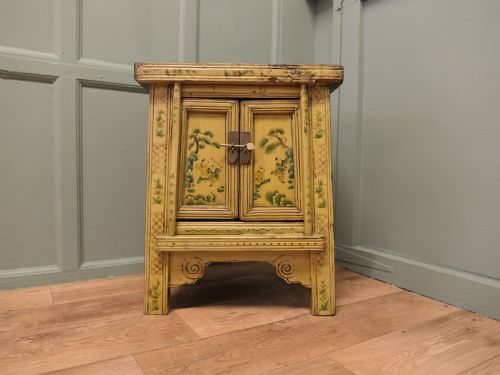
When searching for an oriental small table, you encounter a varied selection of compact furnishings including side tables, plant stands, lamp tables, and small cabinets produced across the nineteenth and early twentieth centuries. These pieces reflect global design influences such as Chinoiserie, Japanese Satsuma, Anglo-Indian carving, and the Aesthetic Movement.
The assortment on this page most frequently presents lacquered wood, elm, and hardwood constructions dating from the Victorian period through to the 1930s. Forms range from low Kang tables and opium tables to dropleaf lamp tables and tabletop cabinets.
Makers and workshops of the nineteenth and early twentieth centuries applied traditional Eastern motifs to forms suited for Western domestic interiors. The resulting items function as occasional surfaces, jardiniere stands, and small storage units.
Materials and construction methods
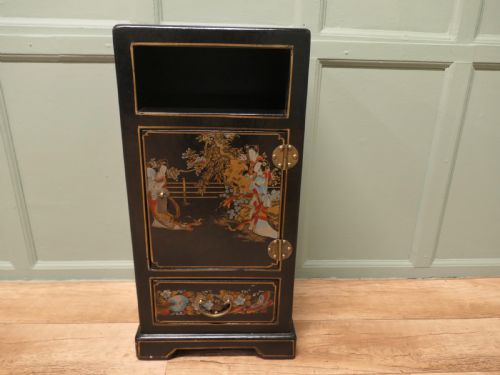
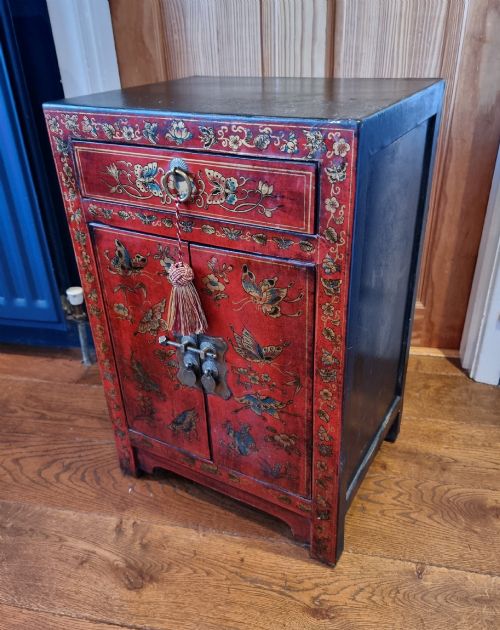
Carpenters and cabinetmakers utilised native timbers such as Chinese elm and various dense hardwoods, alongside softer woods prepared for lacquer and paint. Surface decoration frequently involved hand-painted Chinoiserie finishes, black or mandarin orange lacquer, and intricate surface carving.
Certain pieces incorporate applied brass, bronze, marble inserts, or inlaid elements. Structural joinery adheres to traditional regional techniques appropriate for small-scale tables, stands, and table cabinets.
Oriental Small Table Retail Price Guide 2026
Typical asking prices for oriental small table among the pieces listed under this phrase on Sellingantiques today, from the lower quarter to the upper quarter. They describe what is for sale here now, not the wider market.
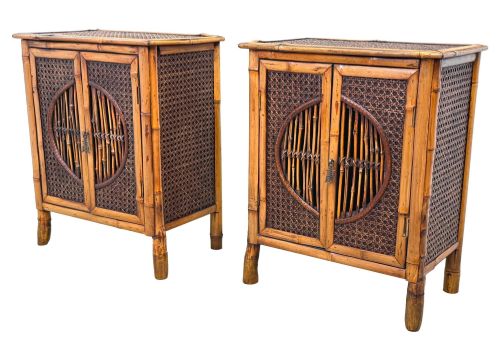
Among the more surprising small-scale furnishings are miniature bamboo cupboards and tiny table clocks dressed in full Chinoiserie lacquer.
Distinctions in craftsmanship and condition
The upper tier of these pieces displays crisp hand-carving, finely executed lacquering, and stable joinery in dense hardwoods or properly seasoned elm. Lesser examples rely on simplified surface decoration and standard commercial construction from the early twentieth century.
The integrity of the lacquer surface, the precision of painted details, and the preservation of original mounts or marble inserts differentiate finer examples from standard decorative items.
The Oriental Small Table Glossary
- Chinoiserie
- European decorative style reflecting Chinese artistic influences, commonly seen in hand-painted lacquer finishes on furniture and small tables. This technique gained particular popularity during the Victorian era and the 1920s.
- Kang table
- A low domestic table originating in China, traditionally used for dining, writing, or resting on a heated brick platform. Examples found in Western collections are typically rendered in carved hardwood.
- Jardinère stand
- A tall or low support designed specifically to hold a flowerpot or plant bowl. These stands often incorporate marble tops or inlaid surfaces to resist moisture.
- Kodansu
- A small Japanese tabletop cabinet featuring multiple drawers and compartments. These portable storage pieces frequently employ black lacquer and delicate metal hardware.
- Aesthetic Movement
- Nineteenth-century design movement emphasising beauty and craftsmanship over strict historical revival. Pieces from this aesthetic often incorporate Japanese motifs and ebonised finishes.
Oriental Small Table: Frequently Asked Questions
How were these small tables used?
Original uses varied widely depending on the specific form, ranging from low Kang tables for seating areas to elevated stands for holding lamps, plants, or decorative objects.
Tabletop cabinets and side cupboards provided small-scale storage for valuables, while occasional tables functioned easily in various rooms as movable display surfaces.
How do I identify Victorian pieces?
Victorian examples generally date from the nineteenth century and often exhibit characteristic ebonisation, heavy turned or tripartite bases, and distinct Aesthetic Movement or Japonisme influences.
Construction methods typical of this period involve dense hardwoods, elm, or applied brass elements paired with traditional European framing techniques.
What materials are common?
Common materials include Chinese elm, various dense hardwoods, lacquered wood, and occasionally marble or bronze. Surfaces frequently feature hand-painted lacquer, intricate carved details, or inlaid top panels.
These materials reflect both traditional Asian cabinetmaking and the specific export requirements of the late nineteenth and early twentieth centuries.