


Oriental Side Chairs
Oriental side chairs bring sculptural form and rich timber into a room, offering functional seating rooted in centuries of Asian and European design traditions.
Oriental Side Chairs
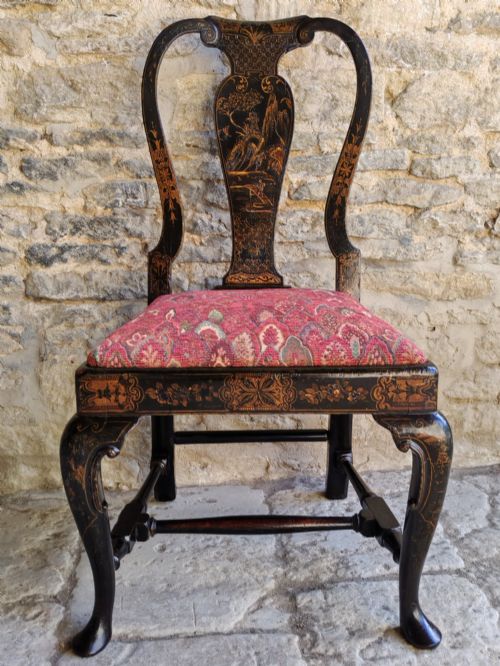
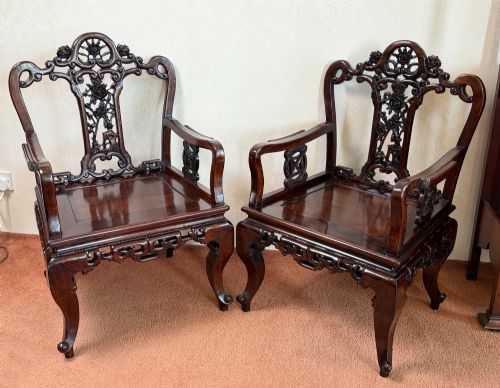
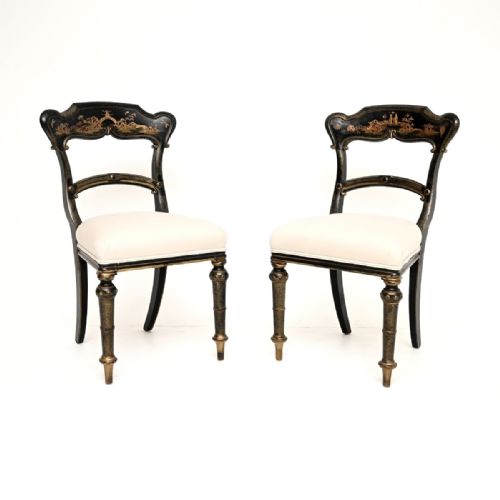
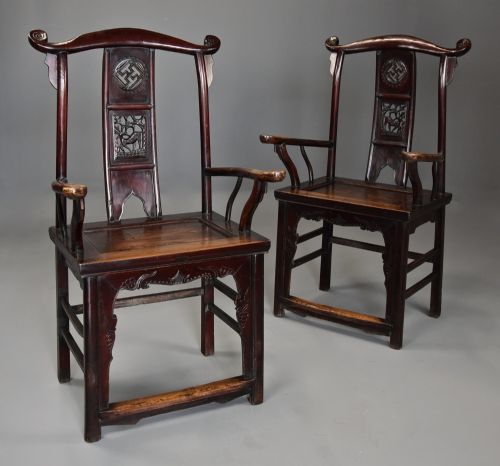
Makers drew on varied regional aesthetics, producing everything from austere elm lamp hanger chairs to ornate Qing dynasty throne chairs in dense rosewood and hongmu. European interpretations also appear through Victorian chinoiserie and Regency bamboo iterations that emulate Eastern motifs.
Buyers encounter single seats alongside matched pairs and larger sets of hall furniture. The selection ranges from restrained hardwood frames to decorative lacquered surfaces finished in black, red, or gilt details.
Materials and Construction
Cabinetmakers utilised dense Asian hardwoods such as huanghuali, rosewood, hongmu, and elm to build rigid, durable frames. These timbers often received intricate hand-carvings along the splats and crest rails without relying on metal fasteners.
Surface decoration frequently involved layers of lacquer applied in black or red hues, sometimes accented with gilt painting or integrated with woven cane and upholstered fabric inserts. Traditional joinery techniques allowed wood to expand and contract naturally over decades.
Period representation includes eighteenth-century examples alongside Victorian chinoiserie and twentieth-century regional chairs.
Assessing Quality
Superior examples distinguish themselves through the selection and density of the timber, displaying rich natural grain and deep patination earned through age. Finer pieces maintain crisp, deeply undercut carvings on the splats and aprons rather than soft or shallow detailing.
Structural integrity relies on the preservation of original joinery and finish, where surviving red or black lacquer retains its depth without heavy modern intervention. Matched pairs and complete sets command higher regard for their consistency in proportion and decorative scheme.
The Oriental Side Chairs Glossary
- Yokeback chair
- A traditional Chinese seating form featuring a creilt rail that curves outwards resembling a scholar's yoke. These chairs often incorporate a shaped central splat supporting the sitter's back.
- Elm
- A resilient hardwood favoured by Chinese regional joiners for its fibrous grain and strength in structural framing. It takes carving well and develops a warm patina over time.
- Lacquer
- A durable resin finish applied in multiple thin coats to wood surfaces, providing a smooth protective coating. It often serves as a base for painted Chinoiserie scenes or gilt decoration.
- Qing Dynasty
- The final imperial dynasty of China lasting from sixteen forty-four to nineteen twelve, known for prolific furniture production in dense hardwoods like zitan and hongmu.
- Hongmu
- A translation meaning red wood, categorising dense and heavy tropical hardwoods used in fine Chinese cabinetmaking. It encompasses timbers like rosewood varieties.
Oriental Side Chairs: Frequently Asked Questions
How were oriental side chairs used originally?
These chairs served primarily as formal seating in reception halls, studies, and ancestral altars rather than everyday lounging. Their upright postures reflected traditional social etiquette and posture.
Pairs or sets were arranged symmetrically within rooms to project status and order, while specific forms like lamp hanger chairs held functional roles in lighting placement.
How do I care for lacquered and hardwood chairs?
Maintain these pieces by keeping them away from direct sunlight and sudden temperature shifts that cause timber to split. Dust gently with a dry cloth and avoid harsh chemical polishes.
Wax can nourish exposed hardwood surfaces periodically, while lacquered finishes require minimal intervention beyond careful handling to preserve the painted layers.
How do I distinguish eighteenth-century pieces from later copies?
Early pieces exhibit tool marks consistent with hand-working, natural wear patterns around footrests, and timber shrinkage appropriate for age. Joinery relies on traditional interlocking methods without modern glues or screws.
Later nineteenth and twentieth-century interpretations often feature heavier machine-cut elements or lacquering techniques that lack the depth and organic patination of earlier examples.
Can these chairs be used in modern dining rooms?
Their compact footprints make them well suited as accent seats, desk chairs, or occasional seating around dining tables. Their sculptural silhouettes add contrast to contemporary interiors.
Consider the seat height and daily comfort requirements when selecting them for prolonged sitting, as many historic forms prioritize upright posture.