






Oriental Screen Divider
An oriental screen divider organises space and catches the eye with rich lacquer, carved panels, and intricate folding designs.
Oriental Screen Divider
An oriental screen divider functions as a moveable partition or decorative focal point within a room, appearing in forms ranging from grand multi-fold panels to compact table screens. When exploring this selection, buyers encounter folding room dividers, dressing screens, and fire screens designed to shape interior spaces.
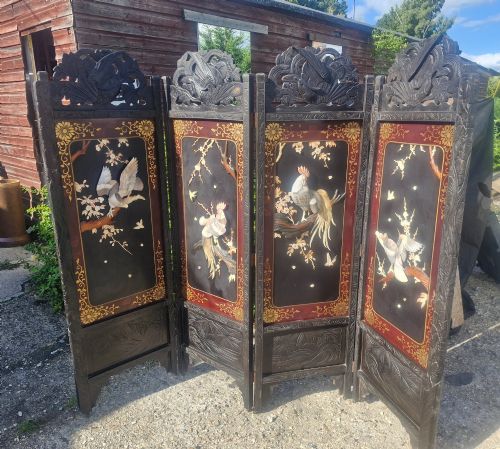
The pieces on this page span several centuries and styles, drawing heavily on Chinese Qing Dynasty traditions, Japanese Meiji craftsmanship, and British interpretations such as Chinoiserie and Chinese Chippendale. Most examples date from the nineteenth and early twentieth centuries, reflecting diverse global tastes in interior decoration.
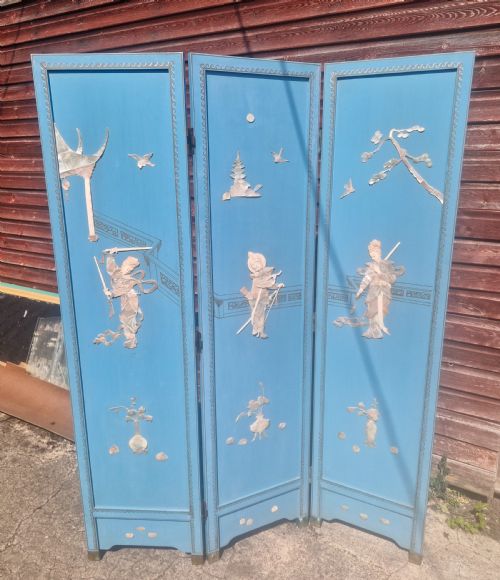
Makers utilised various formats, including large eight-fold black lacquer barriers and smaller three-fold or four-fold dressing screens. Alongside large room divisions, smaller table screens offer intricate craftsmanship on a miniature scale for desks and surfaces.
Materials and construction methods
Craftsmen built these screens using sturdy substrates of hardwood, lacquered wood, and papier-mâché, applying layers of black and coloured lacquer to create smooth, durable surfaces. Many panels incorporate detailed surface decoration including gold leaf, painted motifs, and textile inserts of silk and cotton.
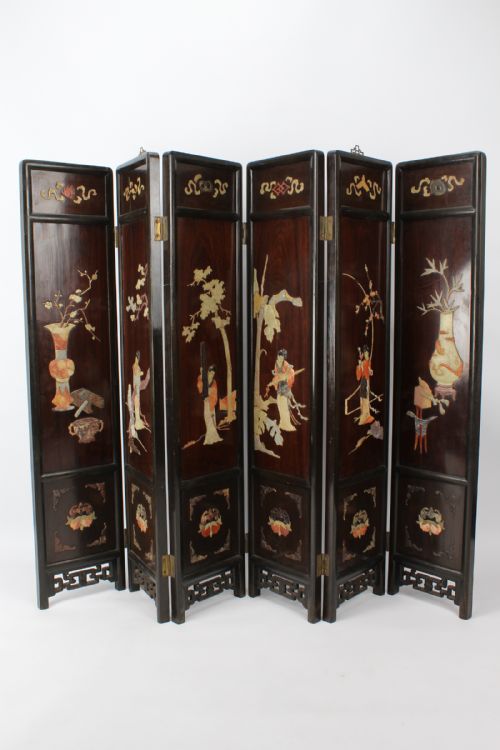
Surface ornamentation often relies on relief work and inlay techniques, utilising carved bone, hardstone, and brass fittings. Folding hinges connect the multiple panels, allowing the screens to articulate smoothly and stand securely in various configurations.
Oriental Screen Divider Retail Price Guide 2026
Typical asking prices for oriental screen divider among the pieces listed under this phrase on Sellingantiques today, from the lower quarter to the upper quarter. They describe what is for sale here now, not the wider market.
Several Victorian dressing screens served double duty as photographic backdrops for studio portraits before finding their way into domestic parlours.
Assessing quality and craftsmanship
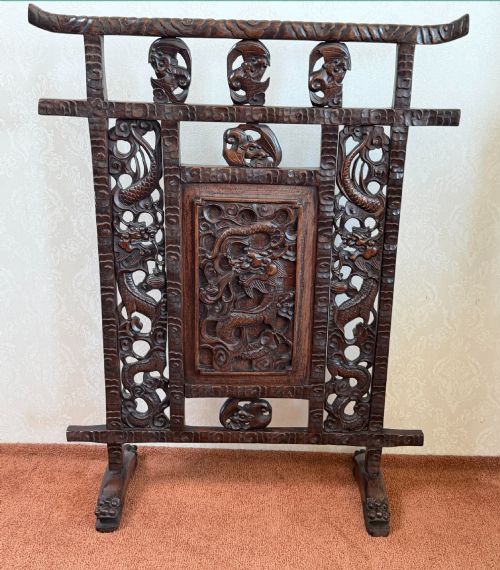
The quality of an oriental screen divider rests upon the depth of the carving, the richness of the lacquer work, and the execution of applied details like bone or hardstone inlay. Superior examples display crisp detail in deep relief figures and secure, integrated joinery across multiple folds.
Subtleties in the hand-painted motifs and the preservation of original gold leaf and silk panels distinguish finer pieces from simpler decorative items. The weight and stability of the hardwood frames further indicate the standard of production.
The Oriental Screen Divider Glossary
- Coromandel lacquer
- A Chinese incised lacquer technique where designs are cut into a dark ground and filled with colours or gold. This method creates a textured, multi-layered surface.
- Chinoiserie
- A European style that reflects Chinese artistic influences, popular in furniture and interior decoration. It reinterprets Asian motifs through Western design principles.
- Table screen
- A smaller decorative screen mounted on a stand for display on a desk, table, or cabinet. These pieces focus on intricate miniature carvings and panel details.
- Hardstone
- A collective term for decorative stones such as jade, agate, and soapstone used for inlay work. Craftsmen carve these minerals to form flowers, figures, and landscapes.
Oriental Screen Divider: Frequently Asked Questions
How do I use a room divider at home?
A folding screen creates private zones in open-plan rooms or hides utilitarian areas without permanent building work. You can angle the panels to fit corners or stretch them flat against a wall as a decorative backdrop.
Smaller dressing screens suit bedrooms for changing, while table screens add focal points to sideboards and desks.
What is the difference between Chinese and Japanese screens?
Chinese screens often feature deep incised Coromandel lacquer, dark hardwood frames, and narrative scenes involving figures and landscapes. They tend to be heavier and built with multiple folding panels.
Japanese screens frequently highlight painted silk surfaces, lighter framing, and delicate bone or ivory inlay depicting nature and birds.
How many folds do these screens typically have?
The selection includes pieces ranging from three and four folds up to extensive eight-fold barriers. Larger screens require adequate floor space to angle properly for stability.
Three or four-fold versions suit smaller rooms or dressing areas where a full-size partition overwhelms the space.
Can these screens be used as fire screens?
Certain historic examples function specifically as fire screens, designed to shield occupants from the direct heat of an open hearth. These usually feature single or smaller folding panels.
Most items listed as room dividers are intended for space partitioning rather than fireplace use.